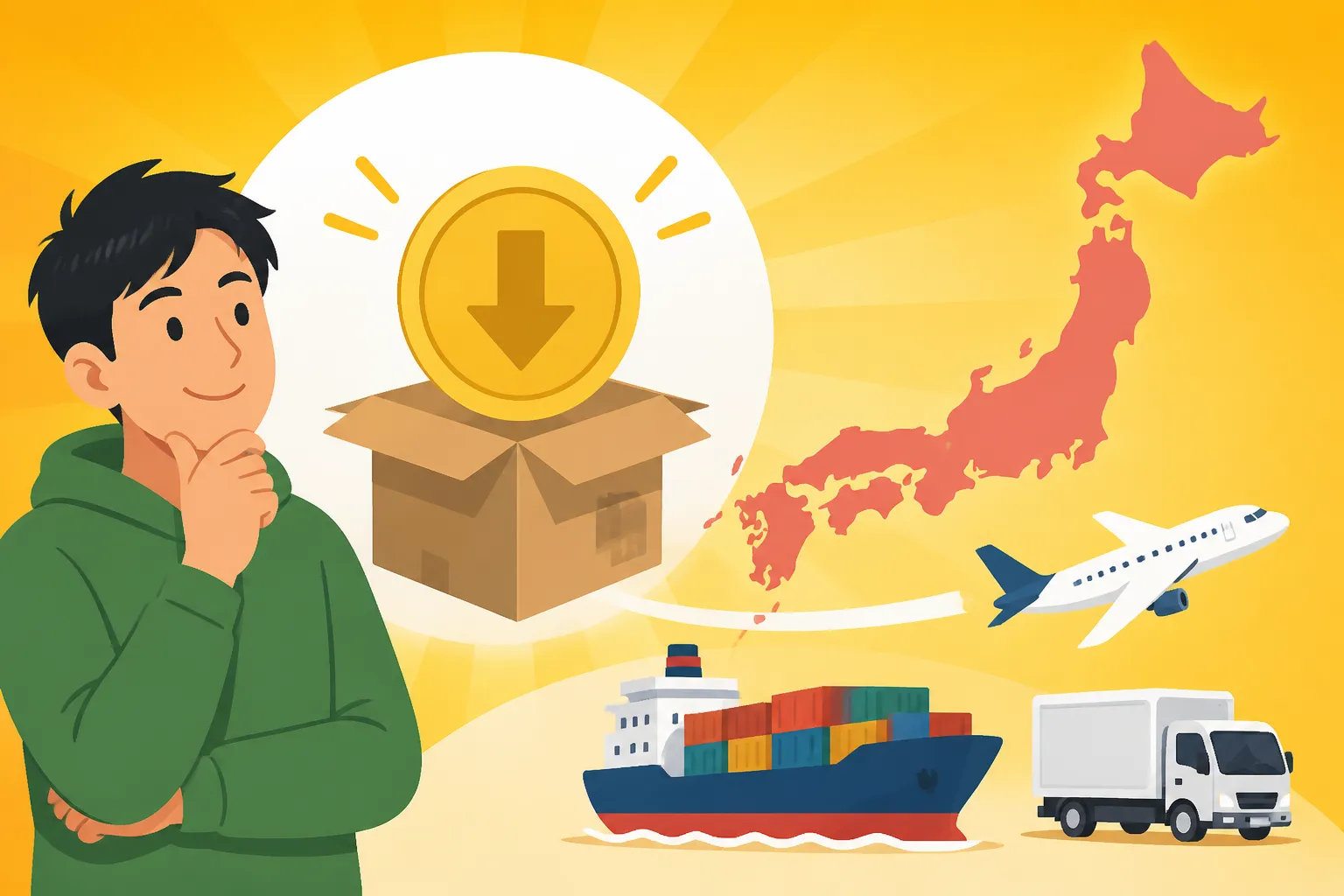
What’s the Cheapest Way to Ship from Japan?
Oh, the age-old question that keeps every expat and Japanophile up at night: "What's the cheapest way to get my precious goods from Japan to my doorstep without selling a kidney?" Trust me, I've been there, staring at shipping manifests with dread, wondering if that limited-edition omiyage was really worth the international postage. This guide is here to unravel the mysteries of cost-effective shipping from Japan, focusing on the most economical methods and savvy strategies to keep your wallet happy.
Disclosure: This post may contain affiliate links. We may earn a commission at no extra cost to you if you make a purchase through these links. Read full disclosure.
Understanding the Factors That Drive Shipping Costs from Japan
Before we dive into the nitty-gritty of affordable shipping methods, it’s essential to grasp what exactly makes those costs fluctuate so wildly. It’s not just about the distance; several variables contribute to the final price tag, and understanding them is your first step towards becoming a shipping sensei.
Weight vs. Dimensional Weight: The Silent Cost-Inflator
One of the biggest culprits for unexpected shipping costs is often misunderstood: dimensional weight. You might think your package is light, but if it’s bulky, shipping carriers will charge you based on its "dimensional weight" rather than its actual weight. This happens when a package takes up a lot of space in an airplane or truck, even if it doesn't weigh much. For example, a box full of fluffy stuffed animals might be lightweight, but its large size means it displaces other potential cargo, so carriers will calculate the cost as if it were heavier.
Japan Post and other international carriers like DHL, FedEx, and UPS all use variations of this calculation. They typically use a formula (length x width x height / a specific divisor) to determine this. Always try to pack items as compactly as possible to avoid this surcharge. It's a bitter pill to swallow when you realize your carefully selected, lightweight Japanese snacks suddenly cost a fortune to ship because they're in a massive box with too much empty space.
Destination, Remote Area Surcharges, and Fuel Adjustments
Where your package is going makes a huge difference. Shipping to a major city in the US, UK, or Australia might be one price, but sending it to a remote village in a landlocked country will almost certainly incur higher costs. Many carriers apply "remote area surcharges" for destinations outside their main delivery zones, and these can add a surprising amount to your bill. It’s worth checking if your exact postcode falls into such a category.
Beyond that, fluctuating fuel prices impact all shipping rates. Many carriers include a "fuel surcharge" that changes weekly or monthly, so the price you see today might be slightly different tomorrow. This is often a percentage of the base shipping cost, so the more expensive the base, the more the fuel surcharge adds up. It’s a constant dance with global economics that we, as international shippers, unfortunately have to pay for.
Customs, Duties, and Taxes: The Hidden Fees
Ah, customs. The bane of every international shopper's existence. When your package enters another country, it often becomes subject to import duties, taxes (like VAT or GST), and customs clearance fees. These aren't shipping costs charged by the carrier directly but are levied by the destination country's government. However, many carriers will pay these fees on your behalf and then charge you upon delivery, sometimes with an additional "advancement fee" for doing so.
The threshold for these duties varies wildly by country and by the type of goods. Some countries have a de minimis value below which no duties are charged, while others are stricter. For example, importing anything above a certain value into the EU or Canada usually incurs VAT/GST and duties. Always research your home country's import regulations to avoid sticker shock. You can find more detailed information on this in our guide to Buying from Japan: Customs, Duties, and Import Taxes Explained.
Japan Post’s Most Economical International Services
When it comes to pure affordability directly from Japan, the national postal service, Japan Post, is often your best bet. While private couriers like DHL and FedEx offer speed, they come at a premium. Japan Post offers a range of services, but if saving money is your top priority, you'll want to focus on a few key options.
Surface Mail (Funabin): The Slow, Steady, and Super Cheap Option
If you're in absolutely no rush and your items aren't perishable, Surface Mail (船便, Funabin) is unequivocally the cheapest way to ship from Japan. This method involves your package traveling by sea, meaning transit times can be excruciatingly long—think anywhere from 1 to 3 months, or even longer to some destinations. It's not for the impatient, but the cost savings are substantial, especially for heavier items that would incur exorbitant fees via air.
I once sent a box full of winter clothes and books back to my home country via surface mail before moving. It took nearly three months to arrive, but the cost was a fraction of what airmail would have been. The key here is patience. Tracking for surface mail can be rudimentary or non-existent once it leaves Japan, and updates are few and far between. It’s best suited for non-urgent items, bulky goods, or things you don't mind waiting for, like a large collection of manga or ceramic dishes. Just remember that it’s usually treated with less priority, so robust packaging is essential to protect your items from the long journey.
Economy Air (SAL): A Balancing Act (When Available)
Note: As of my last check, Japan Post's SAL (Surface Air Lifted) service has largely been suspended or rolled into other services for many international destinations due to various factors, including pandemic-related disruptions and evolving postal agreements. Always check the most current Japan Post international shipping availability for your specific country before counting on it.
However, historically, SAL was a fantastic middle-ground option. It used ground transportation within Japan and the destination country, but used air transport for the international leg, essentially filling up cargo space on planes when available. This made it cheaper than regular airmail but faster than surface mail, typically taking 2-6 weeks. If SAL ever makes a widespread return, it’s worth considering for items that aren't hyper-urgent but still need to arrive within a reasonable timeframe, like clothing, small electronics, or less fragile goods. It often offered some level of tracking, though less detailed than EMS.
Small Packet / ePacket Light (Kokusai Yubin)
For smaller, lighter packages (typically under 2 kg or 4.4 lbs), Japan Post offers "Small Packet" services. These can be sent via airmail or, when available, as "ePacket Light" (registered SAL). These are often the cheapest options for sending individual small items like a single book, a few trinkets, or a small piece of clothing directly.
- Small Packet (Airmail): Generally reliable, offers decent speed (1-3 weeks), and is relatively affordable for lightweight parcels. Basic tracking might be included, or available as an add-on.
- ePacket Light: This was essentially the registered SAL version for small packets, offering a balance of cost and some tracking. Again, its availability is currently quite limited, so always verify.
These services are perfect for sending a small gift or a single item purchased from a Japanese online store that ships directly via Japan Post. They offer a good balance of cost and speed for very small shipments, much like sending a registered letter, but for parcels.
Here's a quick comparison of Japan Post's general options (note: prices are highly variable and examples only):
| Shipping Method | Estimated Speed | Tracking | Cost-Effectiveness (for similar weight) | Best For |
|---|---|---|---|---|
| Surface Mail (Funabin) | 1-3+ Months | Limited, Slow Updates | Cheapest | Heavy, non-urgent, bulky items like books, clothes, ceramics. |
| Economy Air (SAL) | 2-6 Weeks (if available) | Basic | Mid-range, good value for money | Non-urgent, lighter items, small electronics. |
| Small Packet (Airmail) | 1-3 Weeks | Basic/Optional | Affordable for very small items | Single books, small gifts, documents. |
| EMS (Express Mail) | 3-7 Days | Detailed, Fast | Most Expensive | Urgent, valuable, time-sensitive items. |
| Private Couriers (DHL/FedEx) | 2-5 Days | Highly Detailed, Fast | Very Expensive | High-value, critical, very time-sensitive items. |
Leveraging Proxy and Forwarding Services for Ultimate Savings
This is where the real game-changer comes in, especially if you plan to buy multiple items from different Japanese online stores or auction sites. Direct shipping from each vendor can quickly add up, but proxy and forwarding services offer invaluable solutions for cost reduction.
Package Consolidation: Your Secret Weapon for Lower Costs
The biggest advantage of using services like Buyee or ZenMarket is the ability to consolidate multiple packages into one larger shipment. Imagine you've bought a rare manga from Yahoo Auctions, a limited-edition figure from a Japanese web store, and some skincare products from a local drugstore. If each item ships individually, you'll pay a base shipping fee for each parcel, plus potentially a dimensional weight charge for each. This is incredibly inefficient and expensive.
With a proxy or forwarding service, all your purchases are sent to their warehouse in Japan. Once everything arrives, you can instruct them to combine all your separate items into a single, larger box. While the combined package will be heavier, you save immensely by paying only one base international shipping fee and streamlining customs processing. This strategy drastically reduces the per-item shipping cost, making your overall purchases far more economical. Our guide on How Package Consolidation Saves You Money delves deeper into this.
For example, I recently bought some specific art supplies from a niche Japanese online store and a few vintage trinkets from Mercari Japan. If I'd shipped them separately, the individual shipping fees would have been prohibitive. But by sending them all to my ZenMarket warehouse and consolidating them, I cut my international shipping costs by more than half. It’s truly a lifesaver for collectors and avid shoppers.
Choosing the Right Service: Buyee and ZenMarket
When it comes to proxy shopping and consolidation, two names frequently come up: Buyee and ZenMarket. Both offer robust services, but their fee structures and user interfaces might appeal to different needs.
- Buyee: Often integrated directly into popular Japanese shopping sites like Yahoo Auctions Japan, Mercari, and Rakuten. They offer various consolidation options, including basic consolidation and protective packaging services. Buyee's fees can sometimes be a bit higher per transaction, but their seamless integration makes them very user-friendly for beginners.
- ZenMarket: Known for its transparent fee structure (a flat service fee per item) and excellent customer service. They allow you to order from virtually any Japanese online store, even those that don't directly integrate with proxy services. Their consolidation service is a core offering, and many users find their interface intuitive for managing multiple purchases and shipping options. They also have a reputation for careful packing, which is crucial when your items have traveled a long way!
When comparing services, consider not just the base service fee but also:
- Consolidation fees: Some charge per package consolidated, others a flat rate.
- Protective packaging options: Important for fragile items, often an extra cost.
- Payment processing fees: Can vary.
- Available shipping methods: Do they offer the cheapest Japan Post options (like surface mail) to your country?
- Customer support: English-speaking support is a huge plus.
You can compare them in detail with our resource on the Best Japan Proxy Shopping Services Compared.
Strategic Shopping: Maximizing Consolidation
To truly leverage consolidation, you need a strategy:
- Plan your purchases: Instead of buying one item and shipping it immediately, wait until you have a few things you want to send.
- Monitor warehouse storage limits: Proxy services typically offer free storage for a certain period (e.g., 30-60 days). Plan to have all your items arrive within this window to avoid storage fees.
- Consider item types: Group items that can be safely packed together. Don't put a delicate glass vase with a heavy cast-iron teapot unless you opt for extensive protective packaging.
By thinking a bit ahead, you can significantly reduce your overall shipping expenses. It takes a little more coordination, but the savings are well worth it, especially if you're a regular shopper of Japanese goods.
Further Strategies for Cost-Effective Shipping
Beyond choosing the right service and method, there are other tactical moves you can make to chip away at those shipping costs.
Optimizing Packaging: Less Is More (Sometimes)
Remember dimensional weight? The bulkier your package, the more expensive it gets.
- Remove unnecessary packaging: If you're shipping items like action figures that come in large display boxes, consider if you truly need the original box or if the figure itself is enough. Many proxy services offer an option to remove original retail packaging before consolidating to reduce volume.
- Compact packing: If you're packing yourself, use the smallest possible box that can safely contain your items. Fill empty spaces with light packing materials like crumpled newspaper or bubble wrap, but don't overstuff to the point of bulging.
- Choose lighter materials: If you have a choice, opt for lighter boxes or mailers. Every gram adds up, especially for expensive airfreight.
A friend of mine used to ship back entire sets of anime DVDs in their original large box sets. When I showed her how much she could save by having the discs removed from the bulky cases and shipped only with the disc art and inserts, her shipping costs plummeted!
Timing Your Shipments: Avoiding Peak Seasons and Special Offers
While not as dramatic as consolidation, timing can play a small role:
- Avoid major holidays: Shipping during peak seasons like Christmas, New Year's, or Golden Week in Japan can lead to delays and potentially higher demand-based pricing, especially for express services.
- Look for shipping promotions: Occasionally, proxy services or even Japan Post might run promotions offering discounts on certain shipping methods or routes. Keep an eye out for these, especially if you’re not in a hurry.
These smaller adjustments might not slash hundreds of dollars off your bill, but every little bit helps when you're trying to stretch your yen.
When to Self-Ship vs. Use a Service
For very small, individual items purchased from major retailers like Amazon Japan that already offer international shipping, it might be cheaper to let them ship directly. The reason is that these large retailers often have negotiated bulk shipping rates that are lower than what an individual or even a proxy service might pay for a single, small item.
However, if you're buying from:
- Multiple vendors: Consolidation is key, so a proxy service is almost always cheaper.
- Japanese-only websites: Proxy services are essential as these sites often don't ship internationally.
- Auction sites or secondhand markets (e.g., Yahoo Auctions, Mercari Japan): Sellers rarely ship internationally, making a proxy service indispensable.
The decision often boils down to convenience vs. cost. For a single item that can ship direct, calculate the cost. For anything more complex, a proxy like Buyee or ZenMarket will likely be the most economical route. For those contemplating which shipping carrier to use, our guide DHL vs FedEx vs EMS from Japan: Which Is Best? offers a comprehensive breakdown, though for the cheapest option, Japan Post usually wins.
Finding the cheapest way to ship from Japan really boils down to balancing patience with strategic planning. Surface mail is the undisputed champion of low costs for large, non-urgent items, while package consolidation through services like Buyee or ZenMarket unlocks significant savings for multiple purchases. Understand the hidden costs, optimize your packaging, and you'll navigate the world of international shipping from Japan like a pro!
Disclaimer
Please remember that shipping policies, availability, and pricing can change rapidly due to global events, carrier updates, and regulatory shifts. Always check the official websites of Japan Post and any chosen proxy or forwarding service for the most current information applicable to your specific destination and package details. This guide provides general information and recommendations based on typical scenarios.





