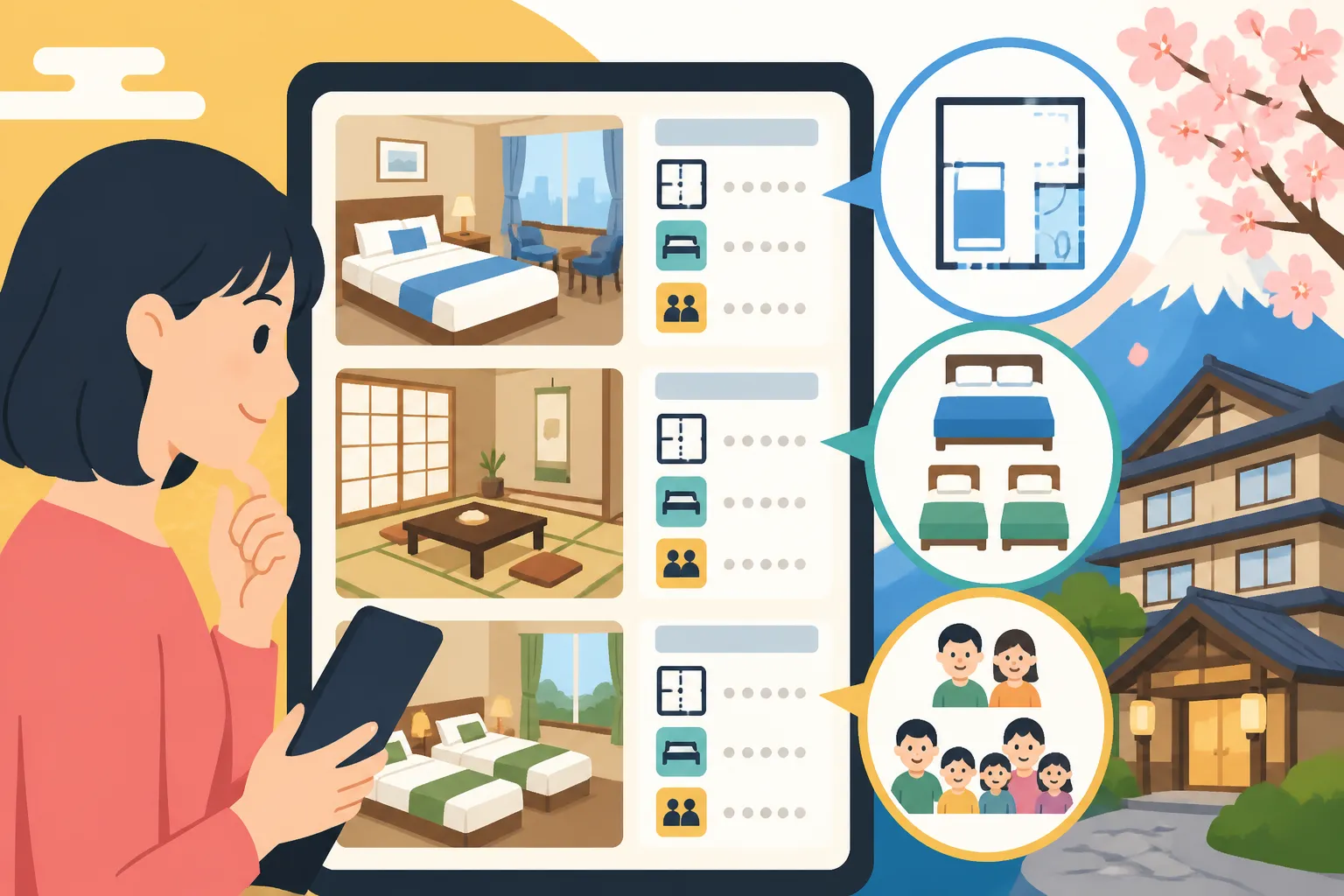
Reading Japanese Hotel Listings: Room Size, Bed Types, and Occupancy Terms
Oh, the joy (and sometimes, utter confusion!) of booking a hotel room in Japan. You’ve found the perfect spot, the photos look amazing, but then you hit the listing details and suddenly, you’re swimming in a sea of unfamiliar terms like "semi-double," "compact twin," or mysterious square meterage that doesn't quite translate to your home country's expectations. Trust me, we've all been there, squinting at our screens, wondering if a "double" means two separate beds or if that "12m²" room is actually big enough to, well, breathe in. This guide is here to demystify those perplexing Japanese hotel listings, arming you with the knowledge to book your ideal stay confidently, especially when using user-friendly platforms like Agoda.
Disclosure: This post may contain affiliate links. We may earn a commission at no extra cost to you if you make a purchase through these links. Read full disclosure.
Deciphering Japanese Room Sizes and Layouts
One of the biggest surprises for many first-time visitors or new expats is just how compact hotel rooms in Japan can be, especially in major cities like Tokyo or Osaka. What might be considered a small room elsewhere could be a perfectly standard, even mid-sized, offering here. The key is to understand the terminology and what those numbers actually mean for your personal space.
Understanding Square Metres (m²) and Layouts
When you see a room size listed in square meters (m²), don't just convert it directly in your head to square feet and call it a day. The efficiency of Japanese design means that every square centimetre is utilized, but it's still often a smaller footprint than you might be accustomed to.
- 10-14m² (around 100-150 sq ft): This is often your "budget single" or "compact double/semi-double" territory. Expect just enough space for a bed, a small desk, and perhaps a narrow path to the bathroom. If you have large luggage, prepare to do some creative maneuvering or even keep one suitcase closed and upright. These rooms are perfect for solo travelers or couples who truly just need a place to sleep and are out exploring all day. It’s definitely manageable, but don’t plan on doing yoga in there. Agoda often provides clear floor plans or detailed photo galleries, which become your best friend in visualizing these compact spaces.
- 15-18m² (around 160-190 sq ft): This is a fairly standard size for a single or comfortable double room. You'll likely have a bit more space to walk around, a slightly larger desk area, and potentially a small armchair. This is a good sweet spot for couples or those with moderate luggage. You might even fit a carry-on and a full-sized suitcase open on the floor.
- 19-25m² (around 200-270 sq ft): Now we're talking about a more spacious experience, often labeled as a "superior double" or "twin." Here, you'll have ample room for two people, their luggage, and space to relax a bit more comfortably. If you're traveling with a partner and value personal space, aim for rooms in this range or higher. For families, look for rooms towards the upper end of this scale or specifically designated family rooms on Agoda.
- 26m² and above (280+ sq ft): These are generally considered spacious rooms, often "deluxe twins," "corner rooms," or suites. You'll find generous living areas, separate seating, and plenty of room to spread out. If you're staying for an extended period, traveling with significant luggage, or simply enjoy a larger personal space, these are wonderful options. For a guide on managing your belongings, check out Luggage Forwarding Takkyubin: How to Travel Hands-Free.
Common Room Types Beyond the Basic
Beyond just the size, Japanese hotels use specific terms for room configurations that are worth understanding before you book. These aren't always intuitive for international guests.
- Single Room: This is pretty straightforward – a room for one person, usually with a single bed. The size can vary from extremely compact to quite comfortable.
- Semi-Double Room: This is perhaps the most confusing for many. It's a room with one bed that is slightly larger than a single bed but smaller than a standard double. It's often perfectly fine for one person wanting more space, or two people who are very comfortable sharing a snug bed (think a cozy plane ride, but horizontal). It’s common in business hotels and is a budget-friendly option for couples, but be warned: it’s snug! Agoda listings typically highlight if a room is a "semi-double" with clear bed dimensions, which is a lifesaver.
- Double Room: Typically features one standard double bed. Again, "standard" in Japan might be smaller than what you're used to back home. Always check the actual bed dimensions if provided.
- Twin Room: This means two separate single beds in one room. This is a very popular option for friends traveling together or couples who prefer separate sleeping arrangements. The beds themselves are usually standard single size.
- Triple Room / Quad Room: These rooms are designed for three or four guests, respectively. A triple might have three single beds, or a double bed and a sofa bed, or two beds with a futon. A quad room will have four beds. If you're traveling with family or a group, these are fantastic options. When searching on Agoda, make sure to input the correct number of guests, including children, to see these suitable options. Consider reading Family-Friendly Accommodation: What ‘Kids OK’ Really Means for more insights into traveling with kids.
- Japanese-Style Room (Washitsu): These rooms feature tatami mat flooring and typically include a low table and cushions. Sleeping is on futons laid out on the tatami mats, usually by staff while you're out for dinner. This is a beautiful, traditional experience often found in ryokan. It offers a unique cultural immersion. You can learn more about this in Hotels vs Ryokan vs Minshuku: Choosing the Right Stay and Ryokan Etiquette: Yukata, Kaiseki, and Quiet Hours. Agoda often has filters to specifically search for these types of accommodations, making it easy to find that authentic experience.
- Western-Style Room: This is what most foreigners expect – a room with conventional beds and Western-style furniture.
- Japanese/Western-Style Room: A hybrid, featuring both tatami area and Western beds. This gives you the best of both worlds!
Navigating Japanese Bedding Terminology
Understanding the bed sizes is paramount to a good night's sleep, especially if you're traveling as a couple or simply value your sprawling space. Japanese bed dimensions can sometimes be a bit different from international standards, leading to unexpected coziness.
Decoding Bed Sizes: From Single to King
Here's a quick rundown of common Japanese bed sizes and what they typically measure up to. Keep in mind these are general guidelines; always check the specific dimensions if listed on Agoda.
| Bed Type | Typical Width (cm) | Typical Length (cm) | Notes for Foreigners |
|---|---|---|---|
| Single | 90-100 | 190-200 | Standard for one person. Can feel narrow if you're used to wider singles. |
| Semi-Double | 120 | 190-200 | Crucial to note! Often advertised for two but best for one, or very close couples. |
| Double | 140 | 190-200 | Smaller than a US/UK Queen. Manageable for two, but less space than you might expect. |
| Queen | 150-160 | 190-200 | Closer to a Western Queen, more comfortable for two. Not universally common. |
| King | 180-200 | 190-200 | Most spacious option for two. Still, check length if you're very tall. |
The "semi-double" is truly the one to watch out for. While technically it can accommodate two people, it's a tight squeeze for anyone accustomed to a queen or king-sized bed. Imagine a larger twin or a very small double, and you're getting close. If you're a couple and value your personal sleep space, consistently opt for a "double" or, even better, a "twin" room with two separate beds, or a larger "queen" or "king" if available and within budget.
Platforms like Agoda are generally good at providing explicit bed dimensions, which is incredibly helpful. Make sure to scroll down and expand those room details. It's often the small print that prevents a big surprise.
Futons and Other Sleeping Arrangements
Beyond the standard Western-style beds, Japan offers traditional sleeping arrangements that are an integral part of its hospitality culture, particularly in ryokans and some guesthouses.
- Futons: These are traditional Japanese mattresses that are laid directly on the tatami floor. They are surprisingly comfortable, offering firm support, and are typically stored away during the day to maximize room space. Many guests find sleeping on a futon to be a delightful and authentic experience. In traditional inns, staff often prepare your futons while you're at dinner, adding to the charm. Don't be shy about trying them; they're a core part of the Japanese Cultural Etiquette 101 for Newcomers experience.
- Extra Beds: Some hotels, especially those catering to families, might offer an "extra bed" option. This could be a rollaway bed, a sofa bed, or even a basic futon in a Western-style room if there’s space. If this is a concern, verify the type of extra bed with the hotel or scrutinize Agoda's room photos for visual clues. Keep in mind that rollaway beds might not be as comfortable as a permanent bed, so manage expectations if you're relying on one for a crucial night's sleep.
Occupancy Rules and Booking for Groups
Japan's hotels are quite strict when it comes to occupancy limits. Unlike some countries where a "double" room might implicitly allow for a small child to sleep in an existing bed without extra charge, Japan has clear, often rigid, rules that are important to respect.
Strict Occupancy Limits and Why They Matter
Japanese hotels adhere to strict fire safety regulations and local ordinances, which dictate the maximum number of people allowed per room. This isn't just a suggestion; it's a rule that hotels enforce without exception.
- Consequences of Over-Occupancy: Trying to sneak in an extra person beyond the stated occupancy can lead to several problems. At best, you might be asked to pay an additional fee for an upgrade to a larger room or even be required to book a second room, which can be a significant unexpected expense. At worst, the hotel might refuse to check you in, leaving you scrambling for last-minute accommodation. Trust me, you don't want to start your trip dealing with that kind of stress!
- Booking Accurately: This is where platforms like Agoda shine. When searching, always input the exact number of adults and children in your party. Agoda's system will then only show you rooms that legally and safely accommodate your group size, saving you from potential headaches later. Don't be tempted to book for fewer people just to see more (potentially cheaper) options, as you might run into issues at check-in.
Child Policies and Extra Guest Charges
Traveling with children adds another layer to occupancy rules. Each hotel has its own policy, and it's vital to understand them upfront.
- "Free for Children Sharing Existing Beds": Many hotels offer free stays for young children (often under 6 or 12, depending on the hotel) if they sleep in the existing beds with their parents. However, this is usually limited to one child per bed, or sometimes one child per room. If you have two kids and a standard double bed, this might not apply, or you might be expected to pay for an "extra bed" even if the child is young. This is a common scenario where Agoda's detailed room descriptions are invaluable; look for the "Child Policy" section carefully.
- Additional Charges: For older children or any guest exceeding the standard room occupancy, expect an additional charge. This fee can vary widely, from a nominal amount to nearly the cost of another adult's stay. Some hotels might consider children above a certain age (e.g., 12 or 13) as adults for pricing purposes. Always factor these potential charges into your budget. For other budget-saving tips, you might find Cost of Living in Japan 2026 – Expenses Breakdown helpful.
Here's a simplified example of how hotel occupancy rules might work:
| Room Type | Stated Occupancy | Child Policy (Example) | Agoda Search Tip |
|---|---|---|---|
| Single | 1 adult | No children allowed. | Input 1 Adult. |
| Semi-Double | 2 adults (tight) | 1 child (under 6) free if sharing bed with parents. No extra bed option. | Input 2 Adults + 1 Child (age) for accurate results. |
| Double | 2 adults | 1 child (under 12) free if sharing bed. Some may allow 2 children in larger Doubles. | Input total adults and children with ages. |
| Twin | 2 adults | 1-2 children (under 12) free if sharing existing beds (1 child per bed). Space for an extra bed/futon might be available for a fee. | Input total adults and children, specifying ages for best matches. |
| Triple/Quad | 3-4 adults | Policies vary, generally more flexible for families, but usually 1 child per bed if free. Extra bed options more likely. | Always input exact numbers of adults and children. |
When you're trying to figure out if your family of three or four will fit, it's always best to be overly cautious. Input all guests, including children and their ages, into Agoda's search. It will then filter results to show you only the rooms that officially permit your group size, removing much of the guesswork.
Practical Booking Tips for Expats and Tourists
Booking a hotel in Japan doesn't have to be a daunting task. With a little understanding and the right tools, you can navigate the nuances and secure a comfortable stay.
Utilizing Online Travel Agencies (OTAs) Effectively
Online Travel Agencies (OTAs) like Agoda are truly invaluable when planning your stay in Japan. They act as your personal translator and guide through the booking maze.
- Filters are Your Friend: Agoda offers robust filtering options. Don't just search by date and location; dive into filters for "room size," "bed type," "number of guests," and even specific amenities like "non-smoking rooms" or "family rooms." This helps narrow down choices to precisely what you need, sidestepping those confusing "semi-double" surprises when you have specific requirements.
- Photos and Descriptions are Key: Always, always, always pore over the photos and read the detailed room descriptions. Many Agoda listings include actual room dimensions, a list of bed sizes, and sometimes even a floor plan. If it's a traditional Japanese room, photos will show tatami mats and futons clearly. Use these visual and textual clues to mentally map out your space and confirm bedding.
- Review Sections Offer Real-World Insights: Before finalizing any booking, take a few minutes to read recent guest reviews on Agoda. Fellow travelers, especially those from Western countries, often comment specifically on room size, bed comfort, and how well the occupancy rules worked for them. These candid insights can provide invaluable "on-the-ground" information that official descriptions might miss. Look for recurring themes or specific comments relevant to your concerns.
- Simplifying Complex Terms: One of the best things about using an international platform like Agoda is that they work hard to translate and clarify these sometimes-confusing Japanese hotel terms into easily digestible English. They standardize the information, often providing direct comparisons or dimensions, which is far more helpful than trying to decipher a Japanese-only hotel website. This makes the entire booking process smoother and less prone to misunderstandings. For even more helpful apps during your travels, check out Must-Have Apps for Living in Japan: Navigation, Translation & More.
What to Do If You're Still Unsure
Even with the best preparation, sometimes a listing might still leave you with questions. It's better to clarify before you arrive than face an unpleasant surprise.
- Contact the Hotel Directly: If an Agoda listing doesn't provide enough detail, or if you have a very specific request (e.g., "Can two adults and an infant sleep in this semi-double room with our own travel crib?"), don't hesitate to reach out to the hotel directly. Most mid-to-large size hotels in major tourist areas will have English-speaking staff or at least an email address for international inquiries. Be polite, be specific, and allow them time to respond.
- Double-Check Your Confirmation: Once you've booked, review your confirmation email or the booking details on Agoda very carefully. Ensure that the room type, bed configuration, and the number of guests listed accurately reflect what you intended to book. If anything looks off, contact Agoda's customer service immediately to rectify it. Prevention is always better than a cure, especially when it comes to travel logistics! For more general information on planning your stay, you might find The November 2026 Tax-Free Kiosk System: A Step-by-Step Airport Guide useful for shopping aspects after your accommodation is sorted.
By understanding the unique terminology and using platforms like Agoda effectively, you can bypass the potential pitfalls of booking accommodation in Japan. You’ll be able to confidently choose a room that perfectly fits your needs, ensuring your trip is filled with comfortable nights and wonderful memories. Happy travels!
Disclaimer
This article is for general informational purposes only and does not constitute professional advice. Laws, prices and regulations vary by location and change over time. Consult a qualified professional for guidance on your specific situation.





