Gyuto vs Western Chef’s Knife: Key Differences
A Gyuto and a Western chef’s knife differ in blade profile, steel hardness, edge angle, and maintenance requirements for home cooks.
Santoku and gyuto knives differ in blade profile, length, and cutting technique, helping you choose the best Japanese kitchen tool.
Japanese knife maintenance with camellia oil prevents rust on carbon steel blades while appropriate honing oils lubricate sharpening stones.
Japanese tamagoyaki pans feature distinct rectangular shapes and traditional materials like copper, cast iron, and stainless steel for rolling eggs.
Traditional Japanese graters in copper, ceramic, and steel extract flavor and texture from ginger, garlic, and daikon radish.
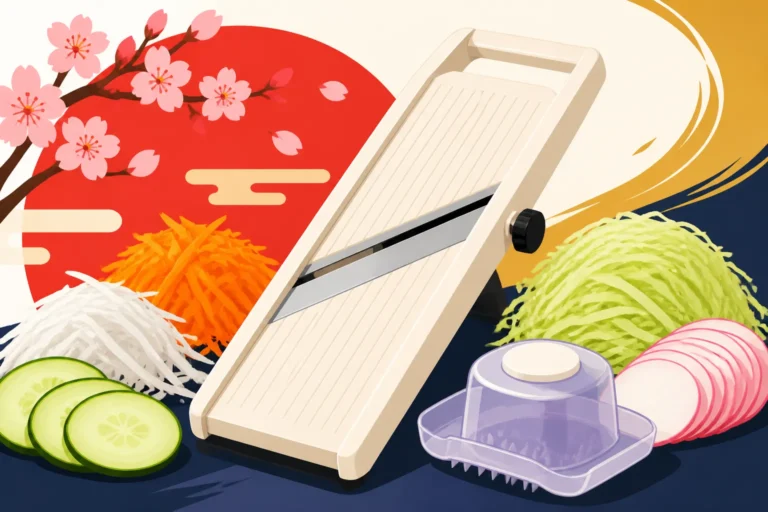
Japanese mandoline slicers and Benriner models provide precise vegetable cutting using high-carbon stainless steel blades and adjustable thickness.
Japanese kitchen scissors feature high carbon stainless steel blades, detachable designs, and integrated bottle openers for small apartment living.
Professional knife sharpening services in Japan provide expert repairs and convenience, while DIY whetstone sharpening offers a rewarding, personal skill.
Honing rods and whetstones differ significantly in purpose, as rods realign rolled edges daily while whetstones grind away steel to restore true sharpness.
A home knife sharpening kit allows you to maintain whetstones, honing rods, and leather strops to keep Japanese blades sharp.