Natural vs Synthetic Whetstones
Natural and synthetic whetstones differ in origin, composition, and consistency, helping users choose the right option for Japanese kitchen knives.
Single-bevel knife sharpening requires mastering blade anatomy, choosing the right whetstones, and maintaining correct angles for both sides.
Stropping removes microscopic burrs from a Japanese knife blade, extending the edge lifespan between full sharpenings using leather or balsa mediums.
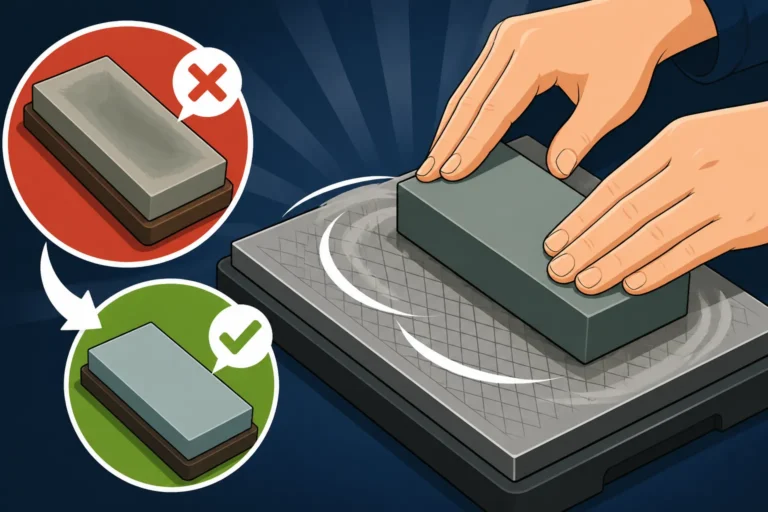
A dished whetstone ruins Japanese knife edges, but flattening tools like diamond plates, sandpaper, and lapping stones restore a flat sharpening surface.
Proper knife storage protects Japanese blades from chipping, prevents accidental cuts, and maintains edge retention during transport or home use.
The complex history, modern forging techniques, core steel types, and performance benefits of Japanese Damascus kitchen knives are explained.
Carbon steel Japanese knives offer unmatched edge retention and unique patina development, requiring careful maintenance for optimal culinary performance.
Stainless steel Japanese knives offer sharp cutting performance and easy maintenance, avoiding rust issues while suiting busy kitchen routines.
Japanese steak knives feature hard steel blades and acute edge angles that slice smoothly through meat without tearing fibers.
Japanese boning knives, including honesuki and garasuki types, offer superior precision, hardness, and geometry for butchery tasks.