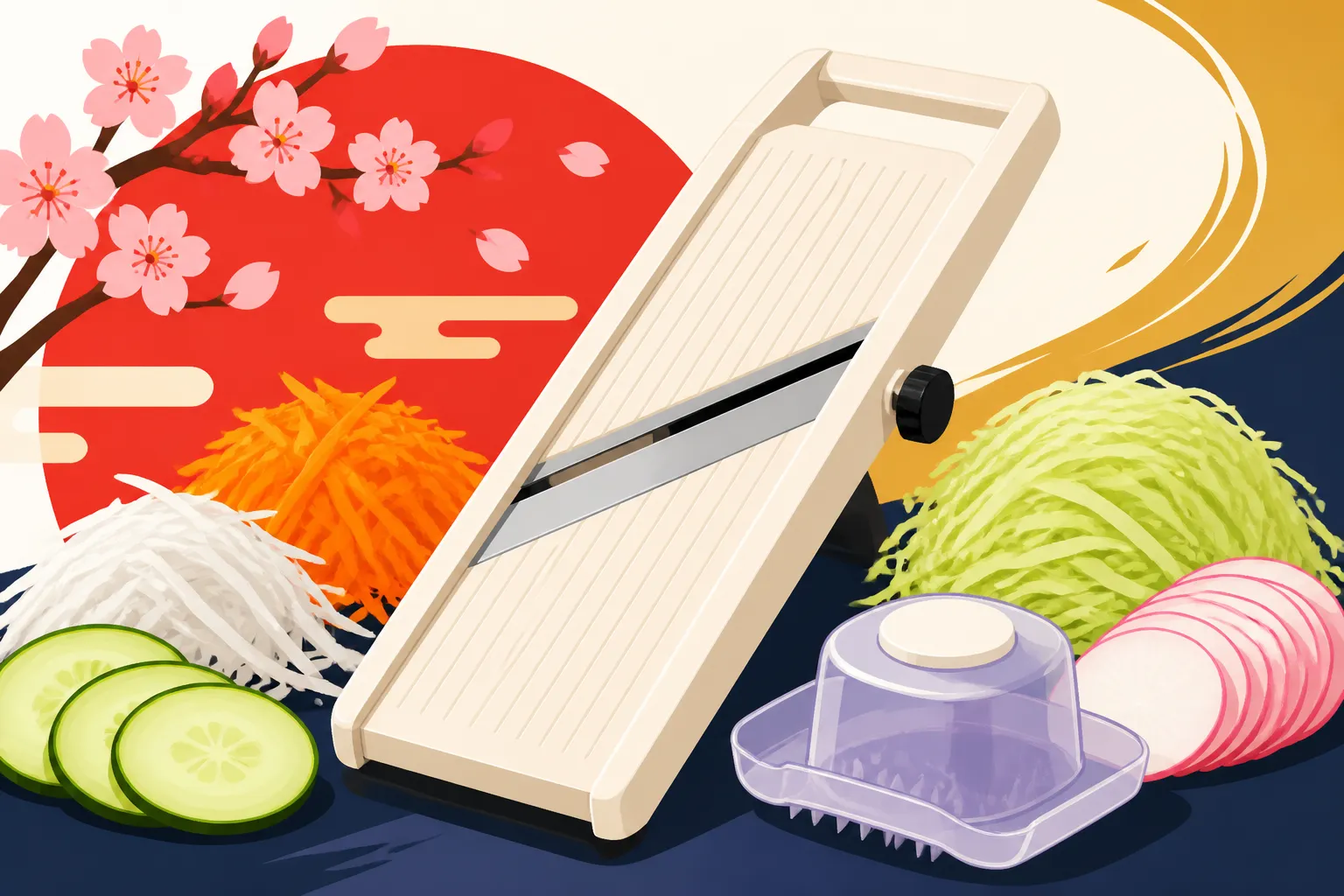
Japanese Mandoline Slicers (Benriner) Guide
Moving to Japan, you quickly realize that precision is a way of life, and nowhere is this more evident than in the kitchen. If you've ever stared forlornly at a recipe calling for perfectly uniform julienned vegetables or paper-thin daikon slices, only to end up with a pile of uneven, chunky pieces, then you know the struggle. This guide is going to walk you through the magical world of Japanese mandoline slicers, especially the iconic Benriner, transforming your kitchen frustrations into culinary triumphs.
Disclosure: This post may contain affiliate links. We may earn a commission at no extra cost to you if you make a purchase through these links. Read full disclosure.
The Magic of Japanese Mandoline Slicers: Beyond Just Benriner
When you first land in Japan, you're often swept up in the whirlwind of adapting to new customs, navigating public transport, and trying to understand why your rubbish sorting is causing so much angst. What often gets overlooked is how deeply efficient and specialized Japanese kitchen tools are. You might think, "A slicer is a slicer, right?" Oh, my dear friend, you couldn't be more wrong. A Japanese mandoline isn't just another kitchen gadget; it's a game-changer.
Why a Japanese Mandoline and Not Just Any Slicer?
The difference truly lies in the engineering and the cultural emphasis on precision. Generic mandolines from back home, while perhaps adequate for basic tasks, often lack the razor-sharp blades and robust, thoughtful design that characterize their Japanese counterparts. Japanese mandolines, epitomized by brands like Benriner, are crafted with incredibly sharp, high-carbon stainless steel blades, often honed to a single bevel, much like traditional Japanese knives. This allows them to glide through vegetables with minimal effort, creating unbelievably consistent slices. Think about preparing an elegant sashimi platter at home, needing that exact thickness for your daikon radish garnish, or crafting delicate cucumber slices for sunomono. A lesser mandoline will tear and bruise the vegetables, leaving you with a watery mess. A good Japanese mandoline, however, produces clean cuts that preserve the integrity and texture of the food. It's the kind of precision that makes you feel like a professional chef, even if you’re just trying to impress your Japanese neighbors at a potluck.
The Unsung Hero of the Home Kitchen
In many Japanese households, a mandoline slicer is as essential as a good chef's knife. It’s not just for advanced techniques; it streamlines everyday meal prep. Imagine prepping a mountain of cabbage for tonkatsu in minutes, creating a mound of feathery strands that soak up the sauce beautifully, or making quick work of onions for a stir-fry, ensuring every piece cooks evenly. This consistency isn't just aesthetically pleasing; it directly impacts the taste and texture of your dishes. When everything is the same size, it cooks at the same rate, avoiding that dreaded mix of raw and overcooked pieces. For those of us used to less precise tools, encountering a Japanese mandoline for the first time is a revelation. It takes the tediousness out of repetitive slicing tasks, making healthy home cooking much more approachable. It’s an investment in your culinary sanity, especially when you’re still settling into life in Japan.
Diving Deep into Benriner: The Gold Standard
Among the pantheon of Japanese kitchen tools, Benriner stands out like a shining beacon. For decades, it has been the go-to brand for home cooks and professional chefs alike, synonymous with reliability and unparalleled performance. If you've seen a mandoline slicer in a Japanese kitchen, chances are it's a Benriner.
A Legacy of Sharpness: What Makes Benriner Special
Benriner's success isn't just about marketing; it's about a relentless commitment to quality. The company has been manufacturing mandolines since 1940, and their design has remained largely unchanged because it simply works. The key is their proprietary high-carbon stainless steel blades. These aren't your average blades; they're incredibly sharp and retain their edge remarkably well. A standard Benriner model typically comes with three interchangeable julienne blades (fine, medium, and coarse) in addition to the straight slicing blade. This versatility allows you to create a range of cuts: paper-thin slices for carpaccio, delicate matchsticks for salads, or thicker fries. The body of the mandoline is made from durable, food-safe plastic, making it lightweight yet sturdy enough to withstand years of heavy use. The design is elegantly simple, which also makes it incredibly easy to clean – a huge plus when dealing with sticky or oily vegetables. Many expats find Benriner products through specialty retailers like Hocho-Knife, which often carry a wide range of Japanese cutlery and kitchen tools.
Understanding the Different Benriner Models
While the "classic" Benriner is perhaps the most well-known, the brand offers a few different models to cater to various needs. It's not a "one size fits all" situation, especially if you're tackling larger vegetables or need a wider cutting surface.
- The Classic Benriner (Green or Ivory): This is the iconic model, usually around 6.4 cm (2.5 inches) wide. It's perfect for most common vegetables like cucumbers, carrots, onions, and potatoes. It's compact, easy to store, and comes with the standard set of julienne blades. This is often the first choice for home cooks in smaller Japanese kitchens.
- The Jumbo Benriner: As the name suggests, this one offers a wider cutting surface, typically around 9.5 cm (3.75 inches). If you're often slicing larger items like cabbage, wider potatoes, or larger bell peppers, the jumbo model will save you a lot of hassle. It still includes the interchangeable julienne blades.
- The Wide Benriner: Stepping up in size, the wide model can be around 12.8 cm (5 inches). This is a fantastic option for those who do a lot of large-scale prep or often work with larger produce.
- The Professional Benriner: This is generally the largest model, sometimes exceeding 16 cm (6.3 inches) in width. It’s often preferred in restaurant settings or by serious home chefs who demand the absolute maximum cutting surface for high-volume tasks. These professional models might also feature slightly more robust construction and enhanced safety features.
Choosing the right model depends on your typical cooking habits and the size of your produce. For an expat in a typical Japanese apartment, the Classic or Jumbo Benriner is often more than sufficient.
Here's a quick comparison to help you decide:
| Model Type | Cutting Width (Approx.) | Best For | Key Features |
|---|---|---|---|
| Classic | 6.4 cm (2.5 in) | Everyday vegetables, smaller items | Compact, standard julienne blades, simple design |
| Jumbo | 9.5 cm (3.75 in) | Larger vegetables, more versatile | Wider cutting surface, standard julienne blades |
| Wide | 12.8 cm (5 in) | Large-scale prep, larger produce | Significant cutting area, stable |
| Professional | 16 cm (6.3 in) | High-volume use, catering, very large items | Widest surface, often more robust construction |
Getting Started: Using Your Benriner Safely and Effectively
Okay, you've got your beautiful Benriner in hand. Now comes the exciting part: actually using it! But a word of caution right upfront: these blades are exceptionally sharp. This isn't a toy, and a moment of inattention can lead to a nasty cut. Safety first, always!
The Learning Curve: First-Time Setup and Adjustments
Unboxing a Benriner for the first time might seem a little intimidating, but it's remarkably straightforward. The main slicing blade is usually already installed. To adjust the thickness of your slices, you'll typically find a screw or knob on the underside of the mandoline. By turning this, you raise or lower the bed against the fixed blade, allowing you to achieve anything from gossamer-thin slices of potato for chips to thicker cuts for gratin. Test it out with a small piece of vegetable until you get the desired thickness.
If you want to create julienne cuts, you'll need to remove the main slicing blade (carefully!) and insert one of the tooth-like julienne blades into the designated slot. These blades come in different spacing for fine, medium, or coarse julienne. Again, experiment with a scrap piece of vegetable to get a feel for the cut.
Crucial Safety Tips:
- Always use the safety guard: Every Benriner comes with a handguard. It might feel awkward at first, but it is there for a reason. It protects your fingers as the vegetable gets smaller. Never try to slice the last bit of a vegetable without it.
- Wear cut-resistant gloves: Seriously, invest in a pair of cut-resistant gloves. They’re relatively inexpensive and provide an extra layer of protection. Accidents happen, especially when you're distracted or tired.
- Work on a stable surface: Place your mandoline on a non-slip surface or over a bowl to collect your slices. Many Benriners have a small notch or foot that helps them sit securely on the rim of a bowl.
- Slow and steady: Don't rush. Let the sharpness of the blade do the work. Apply gentle, consistent pressure.
Learning to handle it feels like mastering a new skill, much like navigating Tokyo on a Budget: Free & Cheap Activities for New Expats or Japanese Cultural Etiquette 101 for Newcomers. Give yourself some grace and practice makes perfect.
Mastering Basic Cuts: Julienne, Slices, and Beyond
Once you're comfortable with the safety aspects, you'll be amazed at the sheer variety of cuts you can achieve.
- Paper-thin Slices: Perfect for cucumber salad (sunomono), potato chips, or a beautiful carpaccio. Adjust the blade to its lowest setting.
- Medium Slices: Ideal for gratin, stir-fries, or even a simple side of sliced onions.
- Julienne (Matchsticks): Use one of the julienne blades. This cut is fantastic for carrots in stir-fries, daikon radish for garnishes, or potatoes for French fries. To make perfectly straight matchsticks, ensure your vegetable is trimmed to a uniform rectangular shape before you start slicing.
- Fine Julienne: This delicate cut is wonderful for spring rolls, finely shredded ginger, or as a garnish that almost melts into the dish.
Think about how challenging it is to get perfectly even potato slices with a knife for a homemade gratin. With a Benriner, it’s a breeze, and the even thickness ensures consistent cooking, leading to that perfect creamy texture. Or consider making katsuo no tataki (seared bonito) and needing incredibly fine slices of garlic and onion for the sauce; a Benriner tackles this with ease. You'll find yourself reaching for it far more often than you ever anticipated.
Caring for Your Benriner: Maintenance for Lasting Sharpness
A Japanese mandoline, especially one from a reputable brand like Benriner, is built to last. However, like any precision tool, it requires proper care and maintenance to ensure its longevity and continued peak performance. Neglecting it is like buying a Best Japanese Chef Knife Under $100 and then just leaving it in the sink – a travesty!
Cleaning and Storage Best Practices
Cleaning your Benriner immediately after use is paramount. Bits of vegetable can dry and get stuck in the blades and crevices, making cleaning harder later and potentially dulling the edge.
- Rinse immediately: Under running water, rinse off any food particles. Use a brush (a dish brush or even an old toothbrush works well) to gently dislodge anything stuck, especially around the julienne blades.
- Avoid abrasive sponges: While the plastic body is durable, harsh scrubbers can scratch it. More importantly, they can damage the delicate edge of the blades.
- Hand wash only: Never put your Benriner in the dishwasher. The high heat and harsh detergents can damage the plastic, and more critically, they will dull the super-sharp blades very quickly.
- Dry thoroughly: After washing, wipe the blades and body completely dry with a cloth. This is especially important for the metal blades to prevent rust, even if they are stainless steel.
- Safe storage: Store your mandoline in a way that protects the blades and yourself. Many come with a blade cover for the main slicing blade. Keep the julienne blades in their protective plastic cases or in a designated compartment where they won't accidentally cut you or other kitchen items. A kitchen drawer is fine, but ensure the blades are covered.
Proper care will make your Benriner last for years, potentially even decades. It’s a tool that can become a generational heirloom, much like a well-maintained cast iron pot or a cherished family recipe.
Blade Maintenance: When and How to Replace or Sharpen
Even the sharpest blades will eventually dull with regular use. With Benriner, this isn't usually a quick process, but it's inevitable.
- When to replace: Benriner's blades are designed to be replaceable. You'll notice a decline in performance – instead of cleanly slicing, the mandoline might start tearing or crushing vegetables, requiring more force. This is your cue. Replacement blades (both the straight slicing blade and the julienne inserts) are readily available online and at specialty kitchen stores in Japan, often sold by retailers like FN Sharp. Replacing them is generally a simple process of unscrewing the old blade and screwing in the new one, but always exercise extreme caution.
- Can you sharpen them?: While it's technically possible for an experienced professional to sharpen mandoline blades, it's generally not recommended for the average home cook. The blades are thin and designed for a specific type of sharpness that is hard to replicate without specialized equipment. For the cost and convenience, buying a new replacement blade is usually the best option.
- Inspecting for damage: Regularly check your blades for any chips or bends. If you drop the mandoline or hit a hard surface with the blade, it could chip. A damaged blade isn't just inefficient; it can be dangerous. Replace it immediately if you spot any damage.
By taking care of your Benriner, you're ensuring that it remains a reliable workhorse in your kitchen, delivering perfectly sliced vegetables every time, allowing you to focus on the joy of cooking rather than the frustration of uneven cuts.
Pros and Cons of Owning a Japanese Mandoline
Deciding whether to add a Japanese mandoline to your kitchen arsenal is a personal choice. While I'm a huge fan, it's only fair to lay out the good and the bad. Living in Japan often means making careful choices about what limited space you have, so every kitchen gadget needs to earn its keep!
The Unmatched Benefits for Expat Cooks
For many expats, a Japanese mandoline quickly becomes an indispensable tool.
- Unrivaled Precision and Consistency: This is the absolute biggest selling point. You simply cannot achieve the same level of uniformity and thinness with a knife, no matter how skilled you are, as quickly and effortlessly as you can with a good mandoline. This precision elevates the presentation and taste of your dishes.
- Time-Saving for Repetitive Tasks: Imagine needing to slice a large amount of cabbage for coleslaw, onions for a curry, or potatoes for gratin. What might take 15-20 minutes with a knife can be done in a fraction of the time with a mandoline, leaving you more time to enjoy your meal or explore Tokyo in the Rain: Indoor Spots and Cozy Cafés.
- Elevates Home Cooking: With consistent, beautiful cuts, your homemade dishes will look and taste more professional. It encourages you to experiment with new recipes that might have seemed too daunting before, like delicate vegetable garnishes for your homemade sushi or finely shredded carrots for Asian salads.
- Better Texture and Flavor: Evenly sliced vegetables cook evenly. This means no more crunchy bits in your stir-fry while other pieces are mushy. The clean cut also preserves the cellular structure of the vegetable better than a rough knife chop, which can lead to better texture and less watery results.
- Relatively Affordable for the Value: While not as cheap as a basic peeler, a quality Benriner mandoline is a one-time investment that pays dividends in convenience and culinary satisfaction for many years. When you compare it to other kitchen appliances, its cost-to-value ratio is excellent.
Potential Downsides and How to Mitigate Them
No tool is without its drawbacks, and the Japanese mandoline is no exception.
- Significant Safety Risk: This is the most crucial con. The blades are extremely sharp, and without proper care and consistent use of the safety guard and/or cut-resistant gloves, serious injury is a very real possibility. I’ve heard horror stories from friends who got complacent. Mitigate this by always being mindful, investing in good gloves, and never rushing.
- Cleaning Can Be Tricky: While generally easy to rinse, those julienne blades have many small nooks and crannies where food can get stuck. Again, a small brush is your best friend here, and immediate cleaning prevents dried-on food from becoming a permanent fixture.
- Storage Space: Even the classic Benriner takes up some drawer space. In a typically small Japanese kitchen, every inch counts. You’ll need to dedicate a safe spot where the blades are covered and won't snag other items or fingers. Consider a Maximizing Small Spaces: Storage Tips for Tiny Apartments in Japan approach to organize your kitchen.
- Learning Curve for Consistency: While it offers precision, achieving truly perfect results still requires a bit of practice. Getting the right angle and pressure, especially with the handguard, takes a few tries. Don't get discouraged if your first few attempts aren't Instagram-perfect.
- Not for Everything: A mandoline is excellent for certain tasks, but it's not a replacement for your chef's knife. You can't chop, dice, or perform intricate cuts with it. It's a specialized tool for slicing.
Despite the potential downsides, for many expats living in Japan who love to cook, the benefits far outweigh the risks, provided you commit to safe handling.
Where to Buy and What to Look For
So, you're convinced and ready to welcome a Japanese mandoline into your life. Great! The next step is knowing where to find one and how to ensure you're getting a genuine, quality product.
Shopping in Japan vs. Online: Navigating the Options
You have a few good avenues to explore when purchasing a Japanese mandoline.
-
In Japan:
- Department Stores (Depachika): High-end department stores like Isetan, Mitsukoshi, or Takashimaya often have excellent kitchenware sections. You might find a good selection of Benriner models here. The staff are usually knowledgeable, though English assistance might be limited outside of major tourist hubs.
- Specialty Kitchen Stores (Kappabashi Street): If you're in Tokyo, a visit to Kappabashi Kitchen Town is an absolute must, even if you’re just looking for Japanese Knife Saya and Storage Solutions. This street is a paradise for chefs and home cooks, brimming with every kitchen tool imaginable. You'll find multiple stores selling Benriner and other Japanese mandoline brands, often at competitive prices. It's a fantastic cultural experience too!
- Home Centers (ホームセンター): Larger home improvement stores like Cainz Home or Kohnan sometimes carry a selection of kitchen gadgets, including mandolines. These tend to be more budget-friendly options, but Benriner is a common find.
- Smaller Local Shops: Keep an eye out in local shopping streets (shotengai). Sometimes smaller, independent kitchenware stores will have a surprising array of high-quality items.
-
Online:
- Amazon Japan: Unsurprisingly, Amazon Japan is a reliable source. You'll find various Benriner models and often competitive pricing. Just be sure to check seller reviews to ensure authenticity.
- Specialty Online Retailers: This is where brands like Hocho-Knife and FN Sharp come in. These are dedicated to Japanese cutlery and kitchen tools, often offering international shipping if you're buying from abroad or want a wider selection than what a local store might carry. They often have detailed product descriptions and excellent customer service, which can be invaluable when buying a specialized item.
- Rakuten and Yahoo Shopping: Japan's other major online marketplaces also carry Benriner products from various sellers. Similar to Amazon, compare sellers and read reviews.
Spotting Fakes and Ensuring Authenticity
Unfortunately, popular brands often attract counterfeits. While Benriner isn't as heavily faked as some luxury goods, it's wise to be cautious.
- Buy from Reputable Retailers: Stick to the places mentioned above: established department stores, well-known kitchenware shops (especially on Kappabashi), or trusted online retailers like Hocho-Knife or FN Sharp.
- Check the Packaging: Genuine Benriner products usually come in distinct packaging with clear branding. Fakes often have shoddy packaging, misspellings, or generic branding.
- Examine the Blades: The quality of the blade is a dead giveaway. Real Benriner blades are incredibly sharp, uniform, and precisely fitted. Fakes often have duller, less refined blades that might feel flimsy or have visible imperfections.
- Material Quality: The plastic body of a genuine Benriner feels sturdy and well-made, not brittle or cheap.
- Price: If a deal seems too good to be true, it probably is. While you might find discounts, a dramatically lower price point compared to other retailers should raise a red flag.
Investing in an authentic Benriner or another high-quality Japanese mandoline is an investment in your cooking journey. It will save you time, improve your knife skills (indirectly, by showing you what precision looks like!), and elevate your dishes to a whole new level. So go forth, slice with confidence, and enjoy the delicious results!
Disclaimer
Please remember that the information provided in this guide is for general informational purposes only and does not constitute professional advice. While we strive to provide accurate and up-to-date information, circumstances and regulations can change. Always exercise caution when using sharp kitchen tools, and consult official sources or a professional if you have specific concerns or questions.





