
Koban and Police Box 101: How to Report Incidents in Japan
Japan’s koban police boxes are your neighborhood help desks for safety, directions, and everyday problems. Learn when to walk into a koban, when to call 110 or 119, what to say, what to bring, and how lost-and-found, bicycle registration, and non-emergency police advice work—step-by-step.
Disclosure: This post may contain affiliate links. We may earn a commission at no extra cost to you if you make a purchase through these links. Read full disclosure.
Why koban matter for residents and travelers
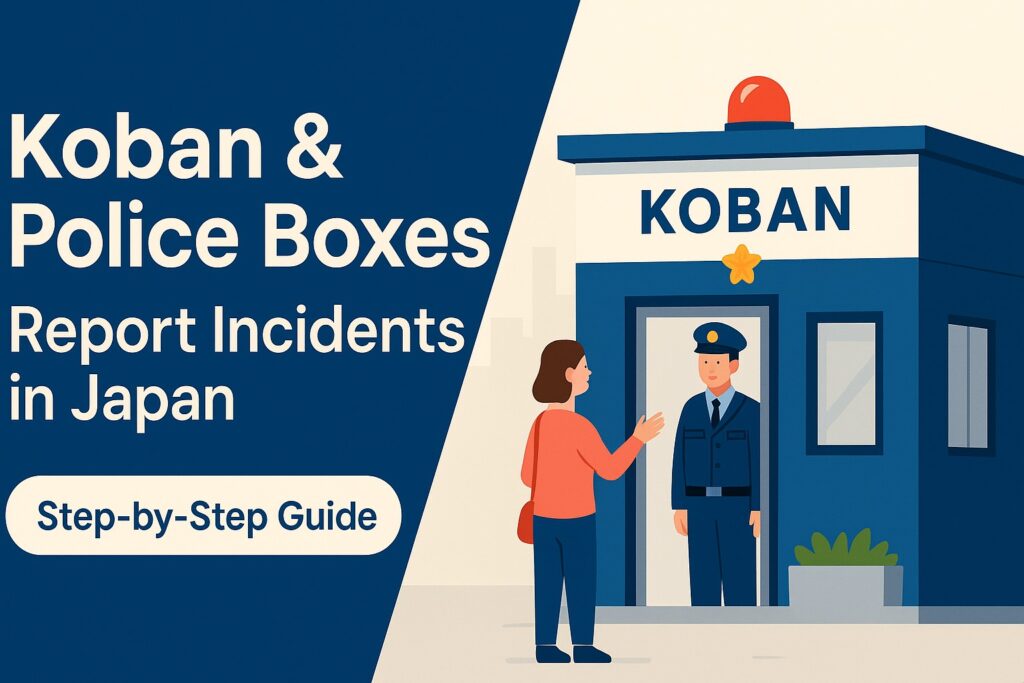
Japan’s community policing system relies on small neighborhood stations called kōban (police boxes) and chūzaisho (residential police boxes). Staffed by uniformed officers, they handle patrols, first response, advice, lost-and-found, and local safety. There are roughly 6,300 kōban and a similar number of chūzaisho nationwide, each attached to a larger police station and covering a specific area.
If you’ve just moved to Japan, think of a kōban as your nearest in-person gateway to the police. You can walk in for help with directions, to report minor incidents, or to file paperwork such as a lost property report.
Emergency numbers you must memorize
- 110 – Police emergencies. Crimes, suspicious persons, traffic accidents, immediate danger. Free from any phone, 24/7. If you don’t speak Japanese, the operator can connect an interpreter—stay on the line.
- 119 – Fire and ambulance. Medical emergencies and fires. Guidance is available in multiple languages via interpretation services.
- 118 – Japan Coast Guard. Incidents at sea, drowning, maritime accidents.
- #9110 – Police consultation hotline (non-emergencies). Advice and referrals when you’re unsure what to do; connects to your prefecture’s General Advisory Center (examples: Tokyo).
You can place 110/119 calls free of charge from mobile phones and public pay phones (look for the red emergency button on older units).
Koban vs 110 vs 119 vs #9110
Use this quick guide to choose the best first step.
| Situation | Best first step | Why | Notes |
|---|---|---|---|
| Crime in progress, danger, traffic accident | Call 110 | Immediate police response | Interpreters can be added to the call. |
| Fire, medical emergency, serious injury | Call 119 | Dispatches fire/ambulance | National guidance available; multi-language via interpretation. |
| Maritime emergency | Call 118 | Reaches Coast Guard | For incidents at sea, beaches, or rivers. |
| Lost wallet/phone, directions, paperwork, minor issues | Go to a kōban | In-person help and forms | They handle advice and lost-and-found. |
| Not sure if it’s a police emergency | Call #9110 | Consultation and referrals | Non-emergency advice line (prefectural). |
For day-to-day living tips related to safety and neighbors, see Noise and Etiquette in Japanese Apartments, Biking in Japan, and Setting Up Utilities in Japan.
How to find a kōban near you
Kōban are common near train stations, shopping streets, and busy intersections. In Tokyo alone there are hundreds; Osaka Prefectural Police also publish KOBAN maps by area. If you need directions to the nearest post, ask any station staff or look for the small police box building marked 交番.
Helpful tool for Tokyo residents: the DigiPolice app from the Tokyo Metropolitan Police Department includes police station/kōban search along with safety alerts.
Step-by-step: Reporting an incident at a kōban
- Walk in and explain the issue. Bring a photo ID (passport or residence card). For lost items, officers will help you complete a Lost Property Report; for theft, they’ll take a statement and may issue paperwork you can use for insurance.
- Share clear facts. What happened, where, when, who was involved, and any damage or loss.
- Provide contact details. A reachable Japanese phone number helps the police follow up, especially for lost property.
- Get your receipt or copy. Keep any reference or report number they give you.
- Follow instructions. You may be asked to visit the main station if more formal procedures are needed.
If your Japanese is limited, officers can often work with simple English, maps, or translation apps; for emergencies via 110, an interpreter can be added to the call.
While you’re out, bookmark related guides like Japanese SIM Cards and Internet, Tokyo Subway Guide, and Weekend Getaways from Tokyo for later.
What to say when you call 110
Stay calm and cover these points:
- What happened: “There was a traffic accident / robbery / break-in.”
- Where you are: nearest station, landmark, or street—spell names if needed.
- When it occurred: “Just now / five minutes ago.”
- Injuries: “One person injured / bleeding.”
- Your name and phone number.
Calls are free from mobiles and public phones. If your Japanese is limited, tell the operator; they can connect an interpreter—don’t hang up.
For city-specific pointers, Shibuya City’s English page lists the sequence of questions and examples of phrases dispatchers may ask.
How lost and found works in Japan
Japan’s police run a very organized lost property system:
- File a Lost Property Report at any police office or kōban (Tokyo provides downloadable forms you submit in person).
- Provide a Japanese phone number so they can contact you if your item turns up.
- If your item is found, you’ll need ID and the reference number to pick it up; in Tokyo, the Lost and Found Center’s business hours are weekdays 8:30–16:30 (excluding holidays and Dec 29–Jan 3).
- If you find property, Japan’s Civil Code gives finders rights (possible reward and reimbursement) if you report promptly (usually within 7 days, or 24 hours if the item is under a facility manager). Report at a police station or kōban.
For practical moving support, you might also want Moving Companies in Japan, How to Pay Bills in Japan, and Finding International Groceries.
Bicycle registration and theft
In most prefectures, bicycles must have anti-crime registration (防犯登録). Shops typically handle it when you buy a bike; registration helps police return stolen bicycles. If ownership changes, re-register the bike in your name.
Some prefectural pages mention you can complete certain registration tasks at police facilities or affiliated counters and list typical fees (often a few hundred yen) and validity periods. Rules vary by location; follow your local prefectural police guidance.
Using pay phones for emergencies
If your mobile dies or you have no signal, public telephones can still place 110/119/118 calls without coins or a card. On many units, lift the receiver and press the red emergency button before dialing; on newer models, dial the number directly.
Keep a 10-yen coin or a prepaid card in your wallet anyway for general calls—NTT East and West still maintain a public phone network nationwide.
Non-emergency police consultations
Not every problem is an emergency. If you’re unsure, or you need advice on matters like stalking, domestic violence, scams, or neighborhood trouble, call #9110. The hotline routes you to your prefectural police General Advisory Center (e.g., Tokyo), which can advise or refer you to the right office.
If you prefer to speak in person, visit your nearest kōban for initial guidance. Tokyo’s multicultural information service reminds residents there are 800+ kōban across the city, and officers can accept lost items and advice.
Victim support after you report
If you experience a crime, the Japanese police provide a range of victim support services: information on investigations, accompaniment to hospitals or court, dedicated consultation rooms, and benefit payments for serious harm. Private victim-support groups also collaborate with police.
For legal advice in English, Houterasu (Japan Legal Support Center) can connect you with attorneys and offers a multilingual information service.
The Ministry of Justice also publishes an English pamphlet for crime victims outlining support through each stage of the criminal process.
Practical Japanese for police and emergencies
Use plain, short phrases. Say the key word first.
- Police: Keisatsu
- Emergency: Kinkyū
- Help: Tasukete
- Crime: Jiken
- Accident: Jiko
- There is a fire: Kaji desu
- I need an ambulance: Kyūkyūsha onegai shimasu
- My wallet is lost: Saifu o nakushimashita
- I’m at [Station/Exit]: [Eki] no [Deguchi] desu
Pair this with a digital map pin to show your exact location. For travel days, bookmark Tokyo Subway Guide, Weekend Getaways from Tokyo, and Eating Out in Japan.
What to bring to a kōban or police station
| Visit reason | Bring | Why it helps |
|---|---|---|
| Lost property report | Passport or residence card, item details, Japanese phone number | Confirms identity; police contact you if item is found. |
| Picking up found item | Government ID, notification letter or reference number | Required for release; hours vary (e.g., Tokyo Lost and Found Center weekdays 8:30–16:30). |
| Theft report / traffic incident | ID, timeline, location, photos, serial numbers or receipts | Supports investigation and insurance claims. |
| Bicycle matters | Bike itself, purchase slip or prior registration, your ID | Confirms ownership for registration or recovery. |
Common scenarios and what to do
You witnessed a traffic accident
Move to a safe place and call 110. Describe the location and any injuries; police can also coordinate an ambulance if needed. Shibuya City’s guidance outlines the essentials to note (license plate, names, time).
Your phone was stolen on the train
As soon as it’s safe, go to the nearest kōban or police station to file a theft report. If you lost it rather than had it stolen, file a Lost Property Report; rail operators often hold items for a short period before transferring them to the police.
You found a wallet
Turn it in promptly at any kōban or station. Reporting on time preserves potential finder rights (reward and reimbursement) under national rules.
You’re being followed or harassed
If you feel in danger, call 110. For ongoing concerns, call #9110 for advice and referrals. Tokyo also offers the DigiPolice app with anti-groper features and safety info.
For broader safety planning at home, see Types of Housing in Japan, Expat Housing Guide, and Cost of Living in Japan.
Accessibility and language support
- Phone interpretation: If you can’t communicate in Japanese when calling 110, do not hang up; the call center can connect an interpreter.
- Hearing or speech difficulties: The official 110 app from Japan’s National Police Agency lets eligible users send text or images to police headquarters where voice calls are difficult.
- In person: Kōban officers can assist with simple English, maps, and forms; for complex situations they may refer you to the main station or add interpretation.
Addressing and location tips that help police find you
Japanese addresses are often given as city-ward, district (chōme), block (ban), building (gō). If you’re unsure:
- Give the nearest station and exit, intersection, or landmark.
- Read signboards aloud (shop name, convenience store corner, bus stop).
- Drop a map pin and say “I will show the pin to the officer” when they arrive.
Tokyo’s own multilingual safety guide encourages residents to seek help at a kōban or call #9110 for advice if you’re not sure whom to contact.
Quick checklist to keep by the door
- Save 110 / 119 / 118 / #9110 in your phone.
- Photograph serial numbers for laptops/phones/bicycles.
- Keep a simple Japanese phrase list in Notes.
- Install DigiPolice if you live in Tokyo.
- Know the location of your nearest kōban and hospital.
- Keep a copy of your ID and basic insurance info.
And for everyday life setup, don’t miss Japan SIM and Internet Guide, How to Pay Bills in Japan, and Moving Companies in Japan.
Frequently asked questions
Is it OK to go to a kōban just to ask for directions?
Yes. Kōban are designed for community support—directions and advice are common walk-in requests.
If I call 110 from a foreign mobile, will it work?
Yes. Emergency calls are free from mobiles and public phones; public phones don’t require coins/cards for 110, 119, or 118.
What if I’m not sure whether it’s an emergency?
When in doubt about police matters, you can call #9110 for guidance. If there’s immediate danger, call 110.
Can the police help if I’m a victim of a crime?
Yes. The National Police Agency provides victim support (information, accompaniment, dedicated rooms, and benefit payments for serious harm) and collaborates with private groups.
How do I report something at sea?
Call 118 for the Japan Coast Guard.
Final word
Japan’s kōban network makes it easy to get help close to home, and the 110/119/118 system is reliable, fast, and multilingual when needed. Save the numbers, learn a few phrases, and don’t hesitate to walk into a kōban—Japan’s neighborhood officers are there to help.
Read More: Getting Along with Neighbors, Setting Up Utilities in Japan, Biking in Japan, Tokyo Subway Guide, Cost of Living in Japan, and Weekend Getaways from Tokyo.
Disclaimer
This article is for general informational purposes only and does not constitute professional advice. Laws, prices and regulations vary by location and change over time. Consult a qualified professional for guidance on your specific situation.





