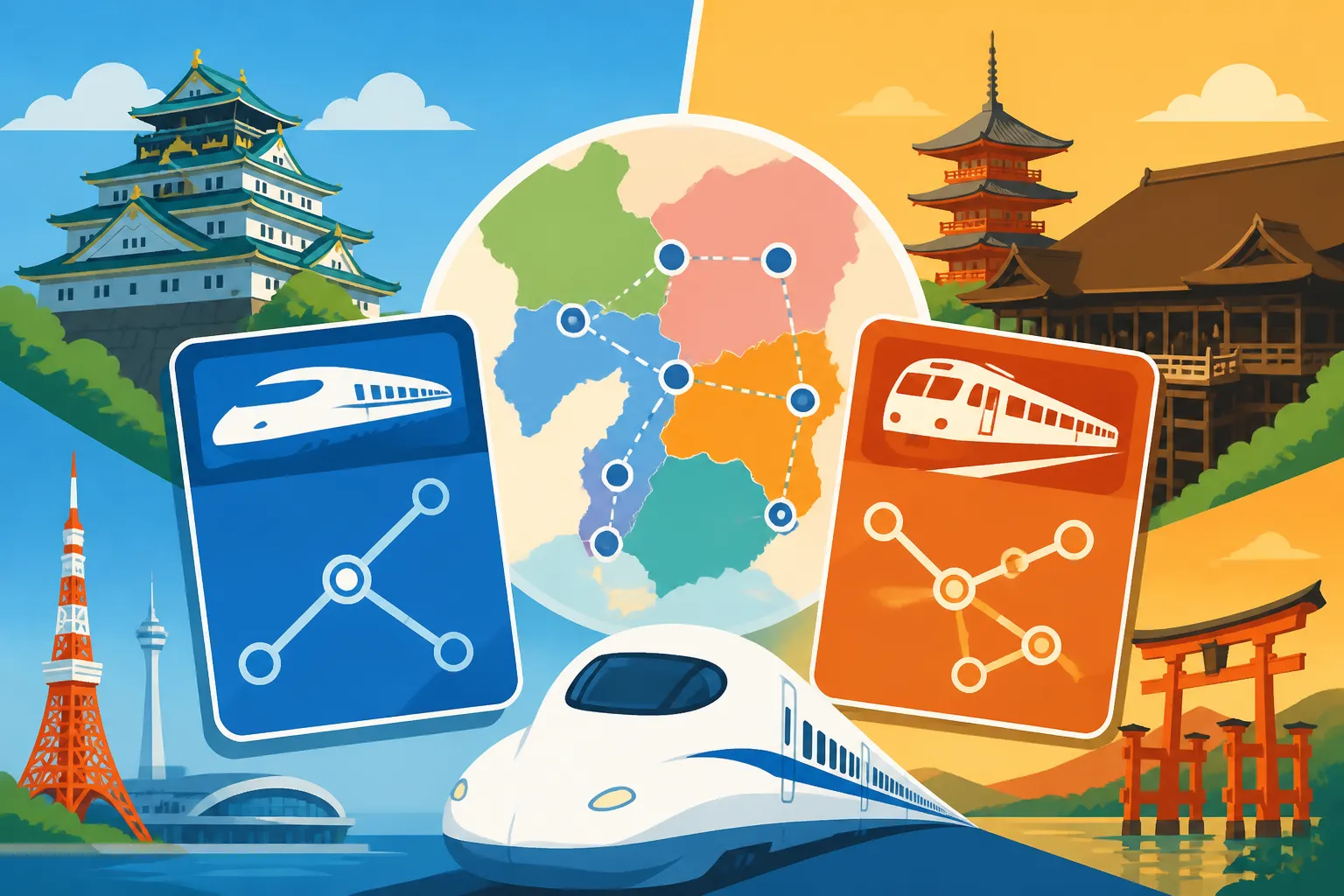
Kansai Thru Pass and Regional Combos: A Route-Based Comparison
Ah, the Kansai region! It's a truly magnificent part of Japan, steeped in history and vibrant culture, but let's be honest, trying to figure out the best way to get around can feel like deciphering ancient scrolls. With its myriad of train lines, both JR and private, bus networks, and various passes, it's easy to get overwhelmed. This guide is going to cut through the confusion and help you navigate the Kansai Thru Pass and other regional transport options, giving you a route-based comparison to simplify your adventures.
Disclosure: This post may contain affiliate links. We may earn a commission at no extra cost to you if you make a purchase through these links. Read full disclosure.
Understanding the Kansai Thru Pass KTP
When you first land in Japan, especially in a bustling region like Kansai, the sheer number of transportation options can be daunting. It’s not just the JR lines; you have Hankyu, Keihan, Kintetsu, Nankai, and so many more! The Kansai Thru Pass (KTP) often pops up as a savior, but it’s crucial to understand what it actually offers, and more importantly, what it doesn't.
What Exactly is the Kansai Thru Pass?
The Kansai Thru Pass, or KTP as it's affectionately known among seasoned travelers and expats, is a multi-day ticket designed to offer unlimited rides on non-JR trains, subways, and buses across a wide area of the Kansai region. Think of it as your golden ticket to explore Kyoto, Osaka, Nara, Kobe, and even farther afield to places like Koyasan or Himeji, all without constantly fumbling for cash or trying to top up an IC card. It's available for either two or three consecutive days, and crucially, these don't have to be calendar days – you can activate it on any day and use it for the corresponding number of days. This flexibility is a huge plus, especially if you plan a few days of local exploration interspersed with longer, non-pass-covered trips.
However, here’s the kicker, and this often trips up newcomers: it explicitly excludes Japan Rail (JR) lines. This means if your itinerary heavily relies on Shinkansen or local JR trains, the KTP might not be the most economical choice. You'll still need to buy separate tickets or use an IC card for any JR portions of your journey. Many of us expats have learned this the hard way, meticulously planning a route only to realize a crucial leg was JR-operated. But for those who embrace the extensive private railway networks, the KTP opens up a world of convenient, cost-effective travel, allowing you to seamlessly transfer between cities like Osaka (on the Osaka Metro) and Kyoto (on the Hankyu or Keihan lines).
Benefits and Drawbacks for Expats and Tourists
For us living in or frequently visiting Japan, the KTP brings both incredible convenience and some potential headaches. On the benefit side, the biggest win is undoubtedly the sheer freedom it offers on private lines. Imagine this: you're exploring the charming backstreets of Kyoto, decide on a whim to head to a specific cafe in Osaka, and then maybe catch the sunset in Kobe, all without once worrying about individual ticket prices or finding the right vending machine. It’s a psychological relief, knowing you can hop on and off buses and trains without a second thought. This is especially true if you plan on using city buses extensively in places like Kyoto, where they can add up quickly.
However, the drawbacks are significant and need careful consideration. The most glaring one, as mentioned, is the complete exclusion of JR lines. Many of Japan's most iconic long-distance routes, including the Shinkansen, are JR, and often the fastest way to get between major cities like Shin-Osaka and Kyoto Station is via JR. If your itinerary involves a lot of quick inter-city travel on JR, the KTP will only cover the local private lines. This means you might end up paying for both the pass and individual JR tickets, effectively doubling your transport costs for certain legs of your journey. Another point to ponder is the "consecutive days" aspect. While you can choose your start date, once activated, the KTP runs its course. If you have a day in between where you just want to relax locally or are using a different mode of transport, that day is still counted against your pass's validity.
The pricing can also be a bit opaque. Sometimes, with careful planning using an IC card like Suica or ICOCA and opting for the most direct (often JR) routes, you might find that individual tickets end up being slightly cheaper than the KTP, especially for shorter stays or very focused itineraries. You need to crunch the numbers for your specific travel plans. IC Cards Explained Suica, PASMO, ICOCA Where They Work will give you a good overview of those.
Where to Buy the Kansai Thru Pass
Alright, so you've weighed the pros and cons and decided the KTP is for you. Smart move! Now, where do you get your hands on one of these? The good news is, it's quite accessible. You can purchase it at major airports like Kansai International Airport (KIX) upon arrival, at certain train stations, or tourist information centers throughout the Kansai region. Look for specific counters, usually clearly marked.
However, for sheer convenience and often better planning, I highly recommend buying your Kansai Thru Pass in advance through platforms like Klook. Klook is a fantastic resource for travelers and expats in Japan, offering pre-booked tickets for various attractions and transportation passes. The process on Klook is incredibly simple: you select your desired pass (two or three days), complete the purchase online, and then receive a voucher, usually via email. You can then redeem this voucher at designated counters, often right at KIX or major stations. Buying on Klook saves you the hassle of currency exchange or navigating potentially confusing ticket machines immediately after a long flight, which, let's face it, is the last thing anyone wants to do. Plus, Klook sometimes offers deals or bundles that can make it even more economical. It’s a simple way to streamline your arrival and get straight to exploring.
Navigating Kansai's Regional Combos: Beyond the KTP
While the Kansai Thru Pass is a popular choice, it's not the only game in town. The Kansai region is diverse, and so are its transportation passes. Sometimes, a more localized pass or a combination of different tickets might serve your specific itinerary better, especially if you’re diving deep into one city or using a mix of JR and private lines.
Specific Regional Passes for Deeper Exploration
If your plans center heavily around one or two major cities, consider looking into city-specific passes. For instance, Kyoto offers a Kyoto Sightseeing Pass, which covers city buses and subway lines for a day or two. This can be fantastic if you're spending all your time hopping between temples and districts within Kyoto, as the KTP also covers these, but a dedicated Kyoto pass might be cheaper if Kyoto is your only stop. Kyoto Beyond the Classics Quiet Temples and Scenic Walks can give you some inspiration for where to use it.
Similarly, Osaka boasts the Osaka Amazing Pass. This is more than just a transport pass; it provides unlimited rides on Osaka's subways, trams, and buses, plus free entry to many of Osaka's top attractions like Osaka Castle, the Umeda Sky Building, and the Tempozan Ferris Wheel. If you plan to visit several of these sights in a day or two, the savings from the free entries alone make this pass incredibly worthwhile, far surpassing the value of just transport. It's truly an "amazing" deal for Osaka exploration. For foodies, don't miss using it to get around to all the best spots mentioned in Osaka Street Food Guide Dotonbori and Beyond!
For those venturing to Nara, a more focused Nara Bus Pass can sometimes be a better fit if you're primarily concerned with getting between the station and the deer park, and don't plan extensive travel beyond the city. This pass, along with a good walk, is often sufficient for a day trip to Nara Day Trip Deer Park Etiquette and Temple Route. The key here is to assess your planned activities and see if a specialized pass unlocks greater value through included attractions or more efficient local transit.
The JR Pass Dilemma: When to Opt for JR vs. Private Lines
Here's where many expats and tourists grapple: do you stick to the KTP and its private line coverage, or do you invest in a Japan Rail Pass (or a regional JR variant)? The national Japan Rail Pass, while offering incredible value for nationwide travel, is usually overkill if you're only staying in Kansai. However, there are regional JR passes, like the Kansai Area Pass or Kansai Wide Area Pass, which do cover JR lines within Kansai, including the Shinkansen between Shin-Osaka and Kyoto, and faster limited express trains to places like Himeji.
The decision hinges on your travel style and destinations. If speed is paramount, and your itinerary includes significant distances covered by JR, a regional JR Pass might be superior. For example, if you're making multiple round trips between Kyoto and Osaka, the rapid JR trains are often faster and more direct than the private lines. And if you're planning a trip to Hiroshima or further west, a wider JR pass becomes almost essential. But if you prefer a more leisurely pace, enjoy exploring smaller towns on private lines, or have specific attractions in mind that are better accessed by non-JR transport, then the KTP or a combination of private passes could be your answer. Don’t forget, for most JR Pass holders, booking individual Shinkansen tickets still comes with rules and potential supplements, so checking Shinkansen Tickets Booking, Seat Types, and Luggage Rules is always a good idea.
Crafting Your Own Itinerary with Individual Tickets
Sometimes, the best "pass" is no pass at all. For those with highly specific, less intensive, or very spread-out travel plans, simply buying individual tickets or relying on your trusty IC card can be the most cost-effective and flexible option. This is often the case if you're only making one or two short trips a day, or if your destinations are scattered across different transport networks in a way that no single pass truly optimizes.
The beauty of IC cards (like ICOCA, Suica, or PASMO – all are generally interchangeable in Kansai) is their sheer simplicity. You tap to enter, tap to exit, and the correct fare is automatically deducted. No fumbling with change, no trying to figure out complex fare maps at ticket machines. For digital nomads or those on a longer stay, this often becomes the default. You can also easily check your balance and top up at any station or even at convenience stores. Plus, using an IC card gives you the ultimate flexibility to switch between JR, private lines, and buses as needed, without being constrained by the coverage of a specific pass. While it won’t give you "unlimited rides," for lighter travel days or very targeted journeys, it can definitely come out cheaper than an unused or under-utilized pass. Remember to always have some cash on hand too, as not all smaller buses or shops accept IC cards.
Route-Based Comparisons: Making Your Choice Easier
Let's get down to the brass tacks and compare passes based on common routes you might take in Kansai. This is where the rubber meets the road, and you figure out what actually works for your adventure.
Osaka to Kyoto and Nara: Classic Kansai Triangle Routes
This is arguably the most common travel triangle for anyone visiting or living in Kansai. You'll likely find yourself zipping between these three cultural and urban hubs.
-
Osaka to Kyoto:
- JR: The fastest and most direct route is typically the JR Special Rapid Service (Shin-kaisoku) from Osaka Station to Kyoto Station, taking about 30 minutes. If you're using a regional JR Pass, this is covered.
- Kansai Thru Pass (KTP): With the KTP, you'll use private railways. From Umeda (Osaka) to Kyoto, you can take the Hankyu Kyoto Line (to Karasuma or Kawaramachi in central Kyoto) or the Keihan Main Line (to Gion-Shijo or Sanjo in Kyoto). These routes take a bit longer (45-60 minutes depending on express services and specific destination) but often drop you closer to popular sightseeing areas without needing a subway transfer from Kyoto Station. If your accommodation or first sightseeing spot is near, say, Gion, the Keihan line might be more convenient than arriving at Kyoto Station via JR and then transferring.
- Individual Tickets/IC Card: For a single trip, an IC card is fine. The cost difference between JR and private lines is usually minimal for one trip, but the KTP really shines if you're doing multiple round trips or combining it with other private line travel.
-
Osaka to Nara:
- JR: The JR Yamatoji Line from Tennoji Station (Osaka) or Osaka Station (with a transfer at Tennoji) goes directly to JR Nara Station. This is generally the quickest option, taking around 35-50 minutes.
- Kansai Thru Pass (KTP): You'll primarily use the Kintetsu Nara Line. From Namba (Osaka) to Kintetsu Nara Station is about 40 minutes on a rapid express. Kintetsu Nara Station is often considered more convenient for accessing Nara Park and its major temples than JR Nara Station, as it's a shorter walk to the main attractions.
- Individual Tickets/IC Card: Again, individual tickets are fine for one-off trips. The choice often comes down to which station in Nara is closer to your desired starting point for sightseeing.
-
Kyoto to Nara:
- JR: The JR Nara Line (Miyakoji Rapid Service) takes about 45-50 minutes from Kyoto Station to JR Nara Station.
- Kansai Thru Pass (KTP): The Kintetsu Kyoto Line is your friend here, taking about 35-45 minutes on a limited express from Kyoto Station to Kintetsu Nara Station. Again, the convenience of Kintetsu Nara Station’s location is a strong selling point.
- Individual Tickets/IC Card: Both JR and Kintetsu offer direct connections. Factor in which station exit aligns best with your plans in Nara.
Venturing to Kobe and Himeji: Western Kansai Adventures
Moving west, Kobe and Himeji offer different experiences, and your pass strategy might shift accordingly.
-
Osaka to Kobe:
- JR: The JR Special Rapid Service is super fast, getting you from Osaka Station to Sannomiya (Kobe's main hub) in just over 20 minutes. This is generally the go-to for speed.
- Kansai Thru Pass (KTP): You can take the Hankyu Kobe Line or the Hanshin Main Line from Umeda (Osaka) to Sannomiya (Hankyu) or Kobe-Sannomiya (Hanshin). These take about 30-35 minutes. If you're specifically headed to areas like Motomachi or Chinatown, the Hanshin line often has stops that are a bit more direct. Kobe Weekend Guide Harbor Cafés and Mountain Views will help you explore all the city has to offer.
- Individual Tickets/IC Card: Both are quick and relatively inexpensive for single journeys.
-
Kobe to Himeji:
- JR: This route is generally best done via JR. The JR Special Rapid Service from Sannomiya to Himeji takes around 40 minutes. Himeji Castle is a short walk from JR Himeji Station.
- Kansai Thru Pass (KTP): The KTP does not cover the direct journey to Himeji. You would have to take a private line, like the Sanyo Electric Railway, but this typically involves more transfers and takes considerably longer (often over an hour) than the direct JR train. For Himeji, leaning on JR is usually the most efficient choice, even if it means buying a separate ticket.
- Individual Tickets/IC Card: Unless you have a specific regional JR pass covering this, an individual JR ticket or IC card fare is the standard.
Beyond the Main Hubs: Koyasan and Rural Kansai
For those looking to venture off the beaten path into more spiritual or scenic areas, the KTP often shines, as these areas are frequently served by private lines.
-
Koyasan: This sacred mountain destination is a prime example of where the KTP offers excellent value.
- Kansai Thru Pass (KTP): From Osaka's Nankai Namba Station, you can take the Nankai Koya Line directly to Gokurakubashi Station, where you transfer to the funicular (cable car) up to Koyasan. The entire journey, including the funicular, is covered by the KTP. This is a significant cost saving, as individual tickets for this scenic journey can add up.
- JR/Individual Tickets/IC Card: JR does not go to Koyasan. You'd be relying on individual Nankai tickets, which can be pricey for a round trip. This is a clear win for the KTP if Koyasan is on your itinerary.
-
Other Rural Spots: Many charming smaller towns and scenic areas in Kansai are best accessed by private railways. The KTP provides flexibility to explore these without worrying about ticket costs. However, always double-check the KTP coverage map for your specific destination, as some truly remote areas might require local buses or even taxis not covered by any pass. For deeper insights into local transport, refer to How to Use Japan’s Train System Local, Limited Express, Shinkansen.
Here's a quick comparison table to help visualize the main differences for common routes:
| Route | JR (Speed/Coverage) | Kansai Thru Pass (Private Lines/Coverage) | Best Choice for… |
|---|---|---|---|
| Osaka ↔ Kyoto | Fastest (30 min), direct to Kyoto Station | Slower (45-60 min), direct to central Kyoto (Karasuma, Kawaramachi, Gion) | Speed/Kyoto Station: JR Pass / IC card; Central Kyoto Sightseeing: KTP |
| Osaka ↔ Nara | Fast (35-50 min) to JR Nara Station | Fast (40 min) to Kintetsu Nara Station (closer to Park) | Speed/JR Nara: JR Pass / IC card; Nara Park access: KTP |
| Osaka ↔ Kobe | Fastest (20 min) to Sannomiya | Slower (30-35 min) to Sannomiya (Hankyu/Hanshin) | Speed: JR Pass / IC card; Specific Kobe areas (Motomachi): KTP |
| Kobe ↔ Himeji | Recommended (40 min) to Himeji Station | Indirect, slower (1+ hr) via private lines (not ideal) | Himeji Castle: JR Pass / IC card (strongly recommended) |
| Osaka ↔ Koyasan | Not applicable | Direct (2 hr) via Nankai Koya Line + Funicular (all covered) | Spiritual Retreats: KTP |
Practical Tips for Maximizing Your Kansai Travel
Alright, you've got the lowdown on the passes. Now, let's talk about some real-world advice to make your Kansai adventures as smooth as possible, regardless of which pass you choose.
Language Barriers and Navigation Apps
Let’s be real, even after years here, the sheer amount of Japanese text at train stations can be a headache. Don't let language barriers hold you back! Most major stations in Kansai, especially in Osaka and Kyoto, have English signage and often English-speaking staff at information counters. However, for everyday navigation, your smartphone will be your best friend. Google Maps is surprisingly accurate for public transport directions in Japan, often detailing exact platform numbers, transfer times, and even delays. Apps like Japan Transit Planner (Jorudan) or Navitime Japan are also invaluable. They allow you to input your start and end points and will show you various routes, including options specifically for JR, private lines, and KTP-covered routes. This is fantastic for planning and ensuring you stay within your pass's coverage.
Remember, though, that sometimes these apps might recommend a JR route even if you have a KTP, simply because it’s the fastest. Always double-check that the lines suggested are indeed covered by your pass if you're trying to maximize its value. And if you're ever truly lost or confused, don't hesitate to ask station staff – even with limited English, they are usually incredibly helpful and will point you in the right direction. Just be polite and patient! Best Apps for Translating Complex Medical Symptoms to Japanese Doctors can also offer general tips on overcoming language barriers.
The Importance of Flexibility and Planning Ahead
While spontaneity is a beautiful thing, a little planning goes a long way in Japan, especially when it comes to maximizing your transport passes. Before you even arrive, sketch out a rough itinerary of the major cities and attractions you want to hit. This will give you a clearer picture of whether a KTP, a regional JR pass, or a collection of city-specific passes makes the most financial sense. Consider if you'll be doing mostly urban sightseeing (where private lines are often excellent) or extensive long-distance travel.
However, don't over-plan to the point of rigidity. Japan is full of unexpected delights, from hidden temples in Kyoto to charming local markets in Osaka. Build some flexibility into your schedule. Having an IC card on hand, even if you have a pass, can be a lifesaver for those impromptu detours or if you accidentally wander onto a non-covered line. Also, be mindful of peak travel times, especially during rush hour in big cities. Even with a pass, packed trains are a reality. Plan to travel during off-peak hours if possible to enjoy a more comfortable journey. You can learn more about general travel etiquette and rules in Traveling With Large Luggage: Rules and Courtesies and How to Use Japan’s Train System Local, Limited Express, Shinkansen.
How Klook Simplifies Your Kansai Pass Purchases
I can't stress this enough: for many expats and tourists, especially those just getting their bearings, using Klook to purchase your Kansai Thru Pass or other regional passes is a game-changer. It takes one significant stress point out of your arrival experience. Imagine stepping off a long flight, navigating customs, and then having to immediately figure out which specific counter sells which pass, potentially dealing with queues or language issues. It's just not fun.
When you purchase through Klook, you can do all the heavy lifting from the comfort of your home well before your trip. You'll receive clear instructions on where to redeem your voucher – typically at easily accessible locations at KIX or major stations like Osaka or Kyoto. This means less time at ticket counters, more time exploring! Beyond just passes, Klook also offers a vast array of tours and activities across Kansai, from cultural experiences in Kyoto to theme park tickets in Osaka. It's a convenient one-stop shop for booking much of your trip, ensuring you have your transport sorted and can jump right into your adventures. Whether it's the KTP, an Osaka Amazing Pass, or even a specific tour, Klook streamlines the process, leaving you free to immerse yourself in the wonders of Kansai.
| Pass Type | Coverage | Best For | Where to Buy (Key Options) | Klook Availability |
|---|---|---|---|---|
| Kansai Thru Pass | Non-JR trains, subways, buses (Kansai wide) | Extensive multi-city travel on private lines, Koyasan, flexible days | KIX, major stations, Tourist Info Centers | Yes |
| Osaka Amazing Pass | Osaka Metro/Buses + Many attractions | Concentrated sightseeing in Osaka, budget-conscious attraction visits | Osaka Metro stations, Tourist Info Centers | Yes |
| Kyoto Sightseeing Pass | Kyoto City Buses + Subway | Intensive Kyoto city exploration on public transport | Kyoto Station Bus Ticket Center, Subway stations | Yes |
| Regional JR Passes | JR trains (incl. some Shinkansen/Limited Express) | Fast inter-city travel on JR lines, specific JR destinations (e.g., Himeji) | JR Ticket Offices (Midori no Madoguchi), select travel agents worldwide | Yes |
The myriad of passes in Kansai can seem confusing, but with a bit of understanding about your travel style and desired routes, you can pick the perfect companion for your journey. Happy travels!
Disclaimer
This article is for general informational purposes only and does not constitute professional advice. Laws, prices and regulations vary by location and change over time. Consult a qualified professional for guidance on your specific situation.





