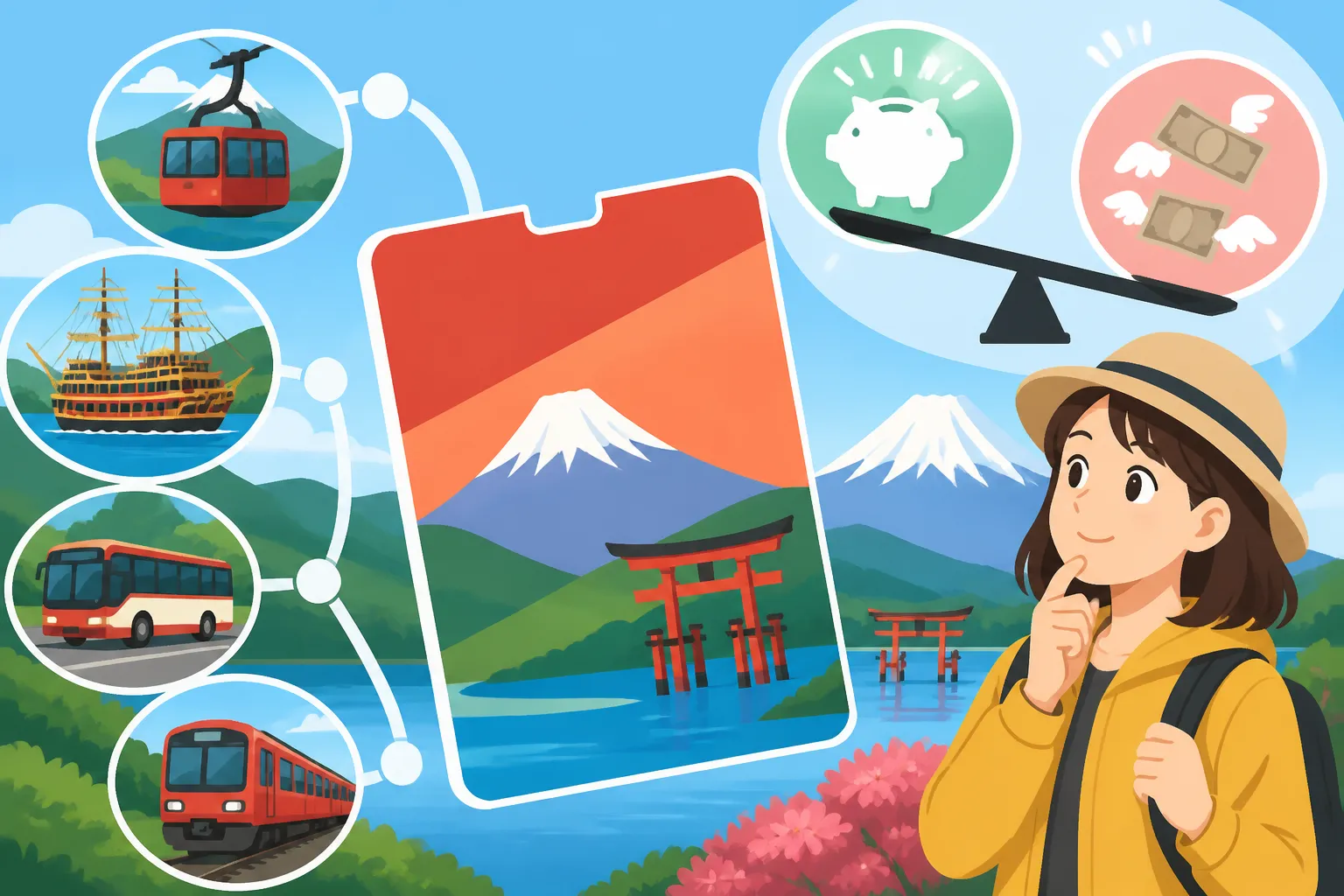
Hakone Free Pass: What It Covers and When It Actually Saves Money
Navigating Japan's incredible public transportation system can feel like cracking a secret code, especially when you're venturing out of the big cities to a scenic wonderland like Hakone. The thought of juggling multiple tickets for trains, buses, cable cars, and even pirate ships to see Mt. Fuji can be overwhelming and quickly drain your wallet. That's where the Hakone Free Pass comes in, a lifesaver for many travelers, and securing yours through a platform like Klook can simplify your trip immensely.
Disclosure: This post may contain affiliate links. We may earn a commission at no extra cost to you if you make a purchase through these links. Read full disclosure.
What Exactly Is the Hakone Free Pass?
When you’re dreaming of misty lakes, steaming volcanic vents, and sweeping views of Mount Fuji, Hakone is often high on the list. But getting around this mountainous region, which boasts a unique "Golden Route" of attractions, involves a dizzying array of transport methods. The Hakone Free Pass is designed to bundle all of that into one convenient ticket, making your adventure both easier and, often, more economical.
A Multi-Transport Ticket and Discount Card
Think of the Hakone Free Pass not just as a ticket, but as your golden key to unlocking Hakone. It grants you unlimited rides on a specific network of transportation services within the Hakone area. This isn't just about getting from point A to point B; it's about seamless travel through a picturesque landscape, without the constant hassle of buying individual tickets. The pass typically comes in 2-day or 3-day versions, allowing you to tailor it to the length of your stay, whether you're rushing through the highlights or taking a more leisurely pace. Beyond transport, it doubles as a discount card, offering reduced entry fees or special offers at numerous museums, art galleries, restaurants, and even some of Hakone's renowned onsen hot springs.
Key Transportation Covered
The real magic of the Hakone Free Pass lies in its comprehensive coverage of the region's diverse transport network. This isn't just a bus pass; it's an all-access ticket to the iconic Hakone experience. You get unlimited rides on:
- Hakone Tozan Railway: The charming switchback train that winds its way up the mountainside from Hakone-Yumoto to Gora.
- Hakone Tozan Cable Car: Connecting Gora to Sounzan, offering steep inclines and stunning views.
- Hakone Ropeway: A breathtaking aerial gondola journey over volcanic landscapes and across the valley to Togendai, often providing spectacular views of Mt. Fuji on clear days. Just remember to check for any volcanic activity warnings that might temporarily close sections!
- Hakone Sightseeing Cruise: The famous "pirate ship" cruise across Lake Ashi, offering prime photo opportunities of Mt. Fuji, Hakone Shrine's torii gate, and the surrounding scenery.
- Hakone Tozan Bus: An extensive network of buses that can take you to almost any corner of Hakone, including Moto-Hakone, Hakone-machi, Sengokuhara, and even a quick trip down to Odawara.
- Odakyu Hakone Highway Bus: For those coming from or going back to Shinjuku, parts of this bus route are also covered.
Having this all covered means you can hop on and off these various modes of transport without a second thought, allowing for spontaneous detours or simply taking in the scenery at your own pace. It removes a layer of logistical stress that can often plague foreign visitors. For broader context on getting around the country, check out our guide on How to Use Japan’s Train System Local, Limited Express, Shinkansen.
Savings on Attractions and Facilities
Beyond the obvious transport benefits, the Hakone Free Pass sweetens the deal with discounts at a considerable number of attractions and facilities. This isn't just a token ¥50 off; these can add up to significant savings, especially if you plan to visit a few major spots. Imagine showing your pass for reduced admission to world-class art institutions like the Hakone Open-Air Museum, with its incredible outdoor sculptures and Picasso collection, or the captivating Hakone Venetian Glass Museum. Many local onsen, like the popular Hakone Kowakien Yunessun (a hot spring theme park, mind you!), also offer discounts, making that relaxing soak even more appealing.
These discounts extend to various shops and restaurants too, so it's always worth asking "Free Pass discount available?" (フリーパス割引ありますか? furii pasu waribiki arimasu ka?) before you pay. You'll typically find a comprehensive list of participating locations in the leaflet that comes with your physical pass, which is a treasure trove of potential savings. Just present your physical Hakone Free Pass at the ticket counter or before ordering, and enjoy the perks.
When Does the Hakone Free Pass Truly Save You Money?
This is the million-dollar question for many travelers: is it actually worth it, or am I just buying a fancy piece of paper? The answer, as with most things travel-related, depends entirely on your planned itinerary. For some, it's an absolute no-brainer; for others, individual tickets might be sufficient.
Analyzing Your Itinerary: The "Golden Route" Test
The Hakone Free Pass is practically tailor-made for those who intend to experience Hakone's famous "Golden Route." This popular circuit takes you through most of the iconic modes of transport and past major sights. Here’s how it generally works:
- Odawara / Hakone-Yumoto: Start your journey. If coming from Shinjuku, the Odakyu Romancecar is extra, but then your pass kicks in from Hakone-Yumoto.
- Hakone Tozan Railway: Ride from Hakone-Yumoto to Gora.
- Hakone Tozan Cable Car: Connect from Gora to Sounzan.
- Hakone Ropeway: Glide from Sounzan over Owakudani (volcanic area) to Togendai.
- Hakone Sightseeing Cruise: Sail across Lake Ashi from Togendai to Moto-Hakone or Hakone-machi.
- Hakone Tozan Bus: Take a bus from Moto-Hakone or Hakone-machi back to Hakone-Yumoto (or Odawara).
If you plan to do this entire loop, even just once, and then perhaps add a bus trip to an onsen or a museum, the pass almost always pays for itself. The combined cost of individual tickets for each leg of the Golden Route can quickly surpass the cost of the 2-day Hakone Free Pass. For travelers basing themselves in Tokyo, securing this pass is a strategic move, complementing your wider city transit plans using something like Top 10 Tips for Using Tokyo Subways & Trains Transport Guide.
Factors for Cost-Effectiveness: Number of Days and Activities
The value proposition of the Hakone Free Pass strengthens significantly with the number of days you spend in the region and the sheer volume of activities you undertake.
- One Day Wonders: If you're planning a lightning-fast day trip, just hitting one or two specific spots, and not doing the full Golden Route, the pass might not be the most economical choice. For example, if you just want to take the Hakone Tozan Railway to Gora, visit the Open-Air Museum, and head back, calculate those individual fares first. However, if that one day still involves the entire Golden Route, it's usually still worth it for the transport alone, let alone any discounts.
- Two or Three Days of Exploration: This is where the pass truly shines. With 2 or 3 days, you have the luxury of exploring beyond the main route. You can revisit a spot, take a scenic bus ride to a hidden gem, or spend half a day soaking in a hot spring without worrying about accumulating transport costs. The more you use the covered transportation, and the more attractions you visit with the included discounts, the higher your savings. It removes the internal debate of "should I take another bus, or walk to save money?" which lets you focus on enjoying your trip.
Consider this: a round trip from Shinjuku to Odawara, plus all segments of the Golden Route, plus entry to one or two museums or an onsen visit, will almost certainly exceed the cost of the 2-day pass. The flexibility to easily access various Hotels vs Ryokan vs Minshuku Choosing the Right Stay options scattered across Hakone also adds to the convenience factor for longer stays.
| Travel Item | Individual Cost (Estimate) | Free Pass Coverage |
|---|---|---|
| Odakyu Line (Shinjuku-Odawara) | ~¥900 | Optional add-on |
| Hakone Tozan Railway (Odawara-Gora) | ~¥800 | Covered |
| Hakone Tozan Cable Car (Gora-Sounzan) | ~¥430 | Covered |
| Hakone Ropeway (Sounzan-Togendai) | ~¥1,400 | Covered |
| Hakone Sightseeing Cruise (Togendai-Moto-H) | ~¥1,200 | Covered |
| Hakone Tozan Bus (Moto-H-Hakone-Yumoto) | ~¥1,000 | Covered |
| Hakone Open-Air Museum Entry | ~¥1,800 | Discounted |
| Total (sample) | ~¥7,530 | ¥6,100 (2-day) |
Note: The Free Pass price listed in this table is an example price for the 2-day pass including the round-trip from Shinjuku. Prices vary depending on starting point and duration. Always check current pricing.
As you can see from this simplified example, even with just one major attraction and completing the standard Golden Route, the pass already starts to look like a winner. For more immersive experiences, you might even look into Ryokan Etiquette: Yukata, Kaiseki, and Quiet Hours to prepare for an authentic stay.
The Convenience Factor: Beyond Just Money
Sometimes, saving money isn't the only metric that matters when you're traveling. The sheer convenience offered by the Hakone Free Pass is invaluable, especially for international visitors grappling with a new language and potentially confusing ticket machines.
Imagine this scenario: you're at Owakudani, the volcanic valley, the air thick with sulfur, and you've just enjoyed a black egg. You want to get to Lake Ashi for the pirate ship cruise. Instead of queuing at a ticket machine, figuring out the fare, and fumbling with cash or trying to use an IC Cards Explained Suica PASMO ICOCA Where They Work which might not cover specific sections, you simply flash your Hakone Free Pass to the attendant at the Hakone Ropeway, then again at the cruise terminal. No stress, no fuss.
This freedom to spontaneously hop on and off any covered transport, without stopping to calculate fares or buy tickets, frees up mental space. It allows you to focus on the stunning scenery, the unique cultural experiences, and simply being in Hakone. For many, this peace of mind is worth a premium, making the pass a worthwhile investment even if the monetary savings aren't monumental. It smooths out the rough edges of travel, allowing you to immerse yourself fully in the beauty of Hakone.
Where to Buy Your Hakone Free Pass (and why Klook is your best bet)
Once you've decided the Hakone Free Pass is right for your adventure, the next step is actually getting your hands on one. While there are a few ways to purchase it, for many international visitors, buying online in advance is the most stress-free and efficient option.
Purchasing Options: Online vs. In-Person
You have several avenues for buying the Hakone Free Pass:
- Odakyu Shinjuku Station: If you're starting your journey from Tokyo, the Odakyu Sightseeing Service Center at Shinjuku Station is a popular spot. You can buy the pass here, often with the option to include the round-trip Odakyu train fare from Shinjuku to Odawara. Expect potential queues, especially during peak travel times.
- Odawara Station: For those arriving via Shinkansen or other train lines, Odawara Station is the gateway to Hakone. You can purchase the pass here at the Odakyu Travel Service Center or ticket machines.
- Hakone-Yumoto Station: The main entry point within Hakone itself, offering similar purchasing options.
- Other Odakyu Line Stations: Certain other stations on the Odakyu line also sell the pass.
While buying in person gives you a physical ticket immediately, it often means navigating Japanese ticketing systems or waiting in lines, which can be a minor headache if you're not fluent in Japanese. This is where the convenience of online booking truly shines, allowing you to prepare everything before you even land in Japan.
Why Klook Shines for Expats and Tourists
For foreign visitors, including expats living in Japan and tourists alike, Klook is often the easiest and most reliable platform for purchasing the Hakone Free Pass. I’ve personally used them for various activities around Japan, and they just make things so simple.
First off, Klook offers a seamless online booking experience. You can browse, select your pass duration (2-day or 3-day), and purchase in English, eliminating any language barriers. The process is straightforward, and you receive an instant e-voucher. This means you can secure your pass from the comfort of your home, days or weeks before your trip, and not waste precious vacation time queueing up.
Secondly, Klook is known for competitive pricing and occasionally runs promotions, so you might even snag a better deal than buying directly. But the biggest draw is truly the convenience. Imagine arriving at Shinjuku Station, which can be a bustling labyrinth, and being able to bypass the ticket lines because your pass is already sorted. You just head to a designated counter, flash your Klook voucher on your phone, and collect your physical pass. It’s a smooth, hassle-free redemption process that sets the tone for a relaxed trip.
Using Klook doesn't just apply to Hakone; it's a fantastic resource for planning and booking all sorts of activities and transport across Japan, simplifying your entire itinerary. They cater specifically to international travelers, understanding the needs and potential pain points, and making them a true hero when it comes to travel logistics. So, don't hesitate – secure your Hakone Free Pass through Klook today and make your Hakone journey as smooth as possible!
How to Redeem Your Klook Voucher
Redeeming your Klook e-voucher for the physical Hakone Free Pass is a simple process, but knowing the exact steps will save you time and confusion.
- Locate the Redemption Point: The primary redemption points are typically the Odakyu Sightseeing Service Center at Shinjuku Station (for those starting in Tokyo) or the Odakyu Travel Service Center at Odawara Station (if you're arriving via Shinkansen). These centers are staffed with English-speaking personnel, which is a huge relief.
- Present Your Voucher: Show your Klook e-voucher (either printed or on your smartphone) along with your passport. They’ll confirm your booking details.
- Receive Your Pass: You'll be handed your physical Hakone Free Pass and an English leaflet detailing the covered transportation, discounted attractions, and a map of the Hakone area. Keep this leaflet handy, as it's a great reference!
It's really that easy. This pre-booking method ensures you spend less time on logistics and more time enjoying the beautiful scenery. For tips on sending your heavier luggage ahead to your accommodation while you explore, check out our guide on Luggage Forwarding Takkyubin How to Travel Hands-Free.
Planning Your Hakone Adventure with the Free Pass
Having your Hakone Free Pass in hand is just the first step. To truly make the most of it, a little planning goes a long way. This isn't just about maximizing savings, but maximizing your experience in this beautiful region.
Sample 2-Day "Golden Route" Itinerary
Let's sketch out a classic 2-day itinerary that perfectly utilizes your Hakone Free Pass, assuming you're starting from Tokyo:
Day 1: Ascent and Art
- Morning (7:00 AM – 9:00 AM): Depart Shinjuku Station via the Odakyu Romancecar (purchased separately, or just take a regular Odakyu train if your pass includes that leg) to Hakone-Yumoto. Enjoy the scenic ride.
- Late Morning (9:00 AM – 12:00 PM): Arrive at Hakone-Yumoto. Begin using your Hakone Free Pass on the Hakone Tozan Railway, a charming mountain train, making your way up to Gora.
- Lunch (12:00 PM – 1:00 PM): Grab lunch near Gora Station. There are many local eateries offering soba, udon, and other Japanese delights.
- Afternoon (1:00 PM – 4:00 PM): Take the short walk or a quick bus ride to the Hakone Open-Air Museum. Spend a few hours exploring its vast grounds and impressive collection of outdoor sculptures, using your pass for a discount on entry.
- Late Afternoon (4:00 PM – 6:00 PM): From Gora, take the Hakone Tozan Cable Car to Sounzan. Check into your ryokan or hotel. Many prefer to stay in Gora or Sengokuhara for easy access to onsen.
- Evening: Enjoy a traditional kaiseki dinner at your ryokan, followed by a relaxing dip in an onsen. Remember to brush up on Onsen Rules for Foreigners: Tattoos, Towels, Washing before you go!
Day 2: Volcanic Vistas and Lake Cruising
- Morning (9:00 AM – 11:00 AM): From Sounzan, embark on the Hakone Ropeway. Enjoy panoramic views of the volcanic landscape, and if it’s a clear day, Mount Fuji. Disembark at Owakudani, the active volcanic valley, to see the sulfurous vents and try the famous black eggs.
- Late Morning (11:00 AM – 1:00 PM): Continue your Hakone Ropeway journey down to Togendai on the shores of Lake Ashi.
- Lunch (1:00 PM – 2:00 PM): Have lunch with a lake view in Togendai.
- Afternoon (2:00 PM – 4:00 PM): Board the iconic Hakone Sightseeing Cruise, often featuring pirate ship designs, across Lake Ashi. Take in the stunning scenery, including the famous Hakone Shrine torii gate rising from the water. Disembark at Moto-Hakone or Hakone-machi.
- Late Afternoon (4:00 PM – 5:00 PM): Explore the area around Hakone Shrine, perhaps walking through its peaceful grounds.
- Evening: Take a Hakone Tozan Bus back to Hakone-Yumoto (and then to Odawara/Shinjuku if departing).
This itinerary is just a suggestion, but it maximizes the utility of your Hakone Free Pass and ensures you see many of the region’s highlights. It’s also a great way to experience Japan’s meticulous transportation network in action. For those looking for further adventure near Tokyo, consider another wonderful escape like Kawaguchiko Best Mt Fuji Viewpoints and Photo Spots.
Maximizing Your Pass with Strategic Stops
The Hakone Free Pass isn't just about following the crowds. With a little planning, you can use its unlimited transport to uncover some hidden gems and get even more value.
- Art & Culture Beyond the Open-Air Museum: While the Open-Air Museum is fantastic, use the bus lines covered by your pass to visit other unique spots. The Pola Museum of Art, located deeper into the Sengokuhara area, offers a stunning collection and beautiful architecture. The Hakone Glass Forest Museum is another delightful stop, especially for lovers of Venetian glass and gardens. Many of these offer discounts with your pass.
- Onsen Hopping: Hakone is famous for its hot springs. Instead of just one onsen, why not explore a few? Your pass covers bus routes to many different onsen facilities, some of which offer a discount just by showing your pass. It’s a truly rejuvenating experience after all that sightseeing. Find more on Japanese bathhouse culture in Onsen & Sento 101: Japanese Bathhouse Culture for Health & Relaxation.
- Nature Walks and Views: Take advantage of the flexibility. The buses can take you to trailheads or scenic viewpoints that might otherwise be a hassle to reach with individual tickets. Consider a stroll around the perimeter of Lake Ashi from Moto-Hakone, or explore the serene cedar avenue.
By being a bit adventurous with the extensive bus network, you can really make your Hakone Free Pass work hard for you. This allows you to dive deeper into the region's charm, avoiding the common issue of Overtourism in Japan: How to Visit Kyoto and Mt. Fuji Respectfully in 2027 by finding less crowded spots.
Essential Tips for Using Your Pass
To ensure your Hakone Free Pass experience is as smooth as possible, keep these tips in mind:
- Keep it Safe: Your physical pass is your lifeline. Don't lose it! Treat it like your passport. If it gets lost, you'll likely have to buy individual tickets for the rest of your journey.
- Check Operating Hours and Conditions: While the pass is valid for its duration, some transport methods, particularly the Hakone Ropeway, can be affected by weather or volcanic activity. Always check the official Hakone websites or inquire at major stations (like Hakone-Yumoto or Odawara) for the latest operating status.
- Embrace the Buses: Many visitors focus solely on the trains, cable cars, and ships, but the Hakone Tozan Bus network is incredibly comprehensive. It connects virtually all major attractions and points of interest. Don't underestimate its utility for getting around efficiently and reaching places off the main Golden Route.
- Take Advantage of Discounts: Always present your pass at museums, shops, and restaurants before purchasing. Even small discounts add up!
- Download Offline Maps: While there’s often Wi-Fi at major stations, having an offline map of Hakone (like Google Maps) can be a lifesaver for navigating bus routes and finding attractions, especially if you're not planning to rely on Staying Connected in Japan: Pocket WiFi vs eSIM.
With these tips and your Hakone Free Pass in hand, you're all set for a memorable and hassle-free trip through one of Japan's most iconic destinations. Enjoy the views, the history, and the tranquil beauty that awaits you in Hakone!
Disclaimer
This article is for general informational purposes only and does not constitute professional advice. Laws, prices and regulations vary by location and change over time. Consult a qualified professional for guidance on your specific situation.





