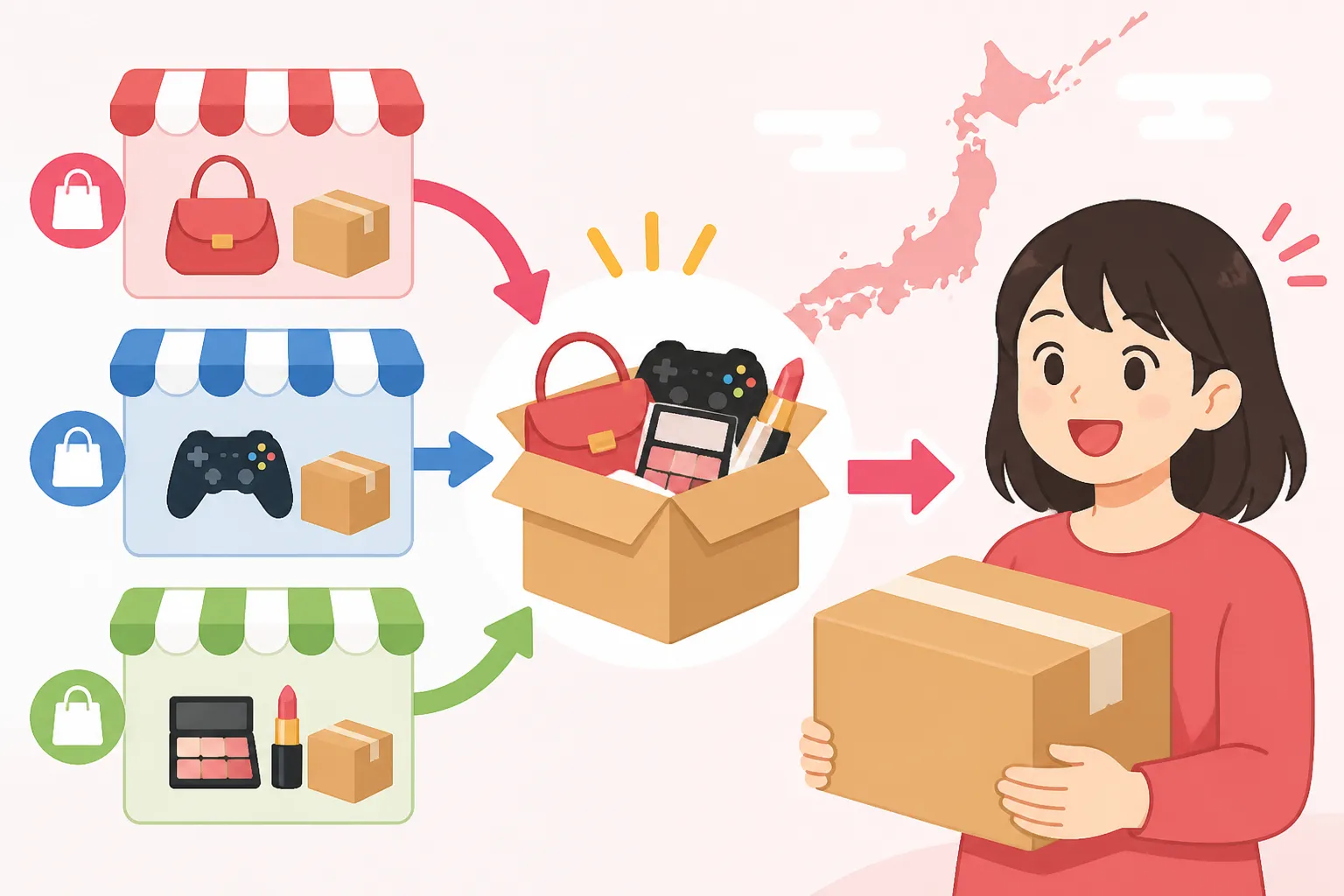
How to Combine Orders from Multiple Japanese Stores
Trying to shop from all those fantastic Japanese online stores, only to hit that dreaded "we don't ship overseas" wall, is a frustration every expat and Japanophile has faced. Even when stores do ship internationally, the cost of sending individual packages can quickly empty your wallet. This guide is going to walk you through the absolute best way to overcome this: combining orders from multiple Japanese stores using a proxy service, saving you a headache and a good chunk of yen.
Disclosure: This post may contain affiliate links. We may earn a commission at no extra cost to you if you make a purchase through these links. Read full disclosure.
The Challenge of Shopping Multiple Japanese Stores
When you first arrive in Japan, or even if you're just visiting and fell in love with a local brand online, it can feel like you've hit a language and logistical brick wall. Many incredible Japanese online shops, from small craft makers on platforms like Creema to niche electronics retailers, simply aren't set up for international customers. And who can blame them? Navigating different international shipping regulations, payment methods, and customer service in English can be a huge undertaking for smaller businesses.
Why Japanese Stores Don't Ship Internationally
The reasons are usually quite practical, though they can feel incredibly frustrating from a customer's perspective. Firstly, there's the language barrier. Many Japanese online shop owners and their customer service teams operate solely in Japanese. They might not have the staff or resources to handle inquiries in multiple languages, process international returns, or navigate the intricacies of customs documentation for every country. Secondly, logistical complexity plays a massive role. Each country has its own import regulations, tax laws, and preferred shipping carriers. For a small business, managing this global web of rules for every single order is simply unfeasible. They often prefer to focus on the domestic market where everything is streamlined. Lastly, payment processing can be an issue. Some Japanese shops might not accept foreign credit cards or popular international payment gateways, further limiting access for overseas shoppers.
The Cost Trap of Individual Shipments
Let's say you do find a few Japanese online stores that offer international shipping. Great, right? Well, sometimes. The real kicker often comes down to the shipping costs. Imagine you want a cute set of stationery from one shop, a limited-edition anime figure from another, and some unique snacks from a third. If each of these items has to be shipped individually from Japan to your home country, you're looking at three separate international shipping charges. These costs, especially for expedited services like EMS or DHL, can quickly add up, often surpassing the cost of the items themselves. It's a classic scenario where you end up paying more in shipping than for your actual treasures, which feels like a waste of hard-earned cash. This is precisely where the magic of package consolidation truly shines, turning multiple expensive shipments into one affordable one.
Enter the Proxy Services: Your Shopping Solution
This is where your trusty proxy shopping service comes into play. Think of them as your personal shopper and logistics manager here in Japan, bridging that gap between you and all those fantastic Japanese online stores. They handle all the heavy lifting, from purchasing your desired items to consolidating them into one neat package for international shipment.
What is a Proxy Shopping Service?
At its core, a proxy shopping service acts as an intermediary. When you want to buy something from a Japanese online store that doesn't ship directly to your country, or if you want to consolidate multiple purchases, you use the proxy service. You tell them what you want to buy (either by providing a link and item details, or sometimes directly through their integrated shopping portals), they make the purchase on your behalf using their Japanese address and payment methods, and then the items are shipped to their warehouse in Japan. Popular services like Buyee and ZenMarket have refined this process to make it incredibly user-friendly for foreigners. They eliminate the language barrier, handle local payments, and provide a Japanese shipping address, essentially making you a local shopper.
Once your items arrive at their warehouse, they're stored securely. This is where the magic really happens. Instead of shipping each item out individually, incurring separate international fees, the proxy service allows you to wait until all your purchases have arrived. Once they're all there, you can request that they combine everything into one single, larger package. This significantly reduces your overall shipping costs, as the fixed base rate for an international shipment is only paid once, and the incremental cost for additional weight is usually much less than starting a new shipment from scratch. It's a brilliant solution that opens up a world of Japanese shopping opportunities that would otherwise be inaccessible or prohibitively expensive. If you're looking for a more general overview, you might want to check out our How to Buy Anything from Japan: The Complete Proxy Shopping Guide.
How Consolidation Works
The consolidation process itself is fairly straightforward once all your items have landed at the proxy's warehouse. Here’s a typical rundown of how it unfolds:
- Item Arrival and Notification: As each item you purchase through the proxy arrives at their Japanese warehouse, you'll receive a notification. Most services, including Buyee and ZenMarket, will photograph the item upon arrival and upload it to your account dashboard, allowing you to visually confirm your purchase. This also serves as a quick quality check, ensuring the right item arrived and isn't obviously damaged.
- Storage Period: Your items are then held in storage at the warehouse. Proxy services typically offer a certain number of free storage days (often 30-60 days) before daily storage fees kick in. This grace period is crucial for allowing enough time for all your purchases from various Japanese stores to arrive. This also means timing your purchases is important, as we'll discuss later.
- Consolidation Request: Once all the items you wish to group together have arrived at the warehouse and are within their free storage period (or you're ready to pay the storage fees), you can log into your account and initiate a "package consolidation" request. You simply select all the individual items you want to combine into one box.
- Repackaging and Measurement: The proxy service team then takes all your selected items, removes their original packaging if necessary (to save space and weight, though sometimes you can request original packaging be kept for fragile items), and carefully repacks them into a single, optimized international shipping box. During this process, they will measure the combined weight and dimensions of the new package.
- Shipping Cost Calculation: After consolidation, the service will provide you with the updated international shipping cost based on the new, larger package's weight, dimensions, and your chosen shipping method (e.g., EMS, Airmail, Surface Mail, DHL). You then pay this final shipping fee, along with any service fees for the consolidation itself (some offer it free, others charge a small fee per consolidation).
- Dispatch: Once paid, your consolidated package is then dispatched from Japan, making its way directly to your doorstep. This streamlined approach not only saves you money on shipping but also reduces the number of parcels you need to track and customs declarations you need to worry about. For more details on various shipping methods, our How Japan Forwarding Services Work: Shipping, Fees, and Customs guide can be very helpful.
Step-by-Step: Combining Your Orders Like a Pro
Now that we understand the 'why' and 'what,' let's dive into the 'how.' Combining your orders isn't difficult, but a bit of planning and understanding of the process will make it seamless and cost-effective.
Choosing the Right Proxy Service
Selecting the right proxy service is fundamental to a smooth and economical shopping experience. Not all services are created equal, and their fee structures, supported stores, and ease of use can vary significantly.
When making your choice, consider these factors:
- Fees: This is often the biggest deciding factor. Proxy services typically charge a service fee per item or per order, and some might also have a consolidation fee. Some, like ZenMarket, pride themselves on a straightforward fee structure with few hidden costs, often charging a flat fee per item regardless of price. Buyee, on the other hand, might offer different plans or charge percentages. Always do a quick calculation based on your anticipated purchase volume and item value to see which service offers the best deal for you. Don't forget to look into additional services like protective packaging or photo requests, and check if these incur extra charges. For a deeper dive into the cost aspect, check out Understanding Japan Proxy Shopping Fees.
- Supported Stores & Platforms: While most major proxy services can buy from almost any Japanese online store if you provide the link, some have direct integrations with popular platforms. For instance, both Buyee and ZenMarket integrate smoothly with giants like Yahoo! Auctions Japan and Mercari Japan, allowing you to bid or purchase directly through their site with automatic translation. If you plan to heavily use these specific marketplaces, an integrated service can save you a lot of manual input. If you're interested in buying from specific platforms, guides like How to Buy from Mercari Japan from Overseas or How to Buy from Yahoo Auctions Japan can offer more targeted advice.
- Ease of Use: A user-friendly interface, clear communication, and efficient customer support are invaluable. Look for services with English-speaking support, especially if you foresee needing assistance with complex orders or specific requests. Review their website for clear instructions on how to place orders, request consolidation, and manage your shipments.
- Storage Duration: As mentioned, items don't all arrive at the warehouse simultaneously. Make sure the service offers a generous free storage period to accommodate all your purchases before you consolidate them. Typically, 30 to 60 days of free storage is standard, but some might offer more or less.
Taking the time to compare a few options, like reading our Best Japan Proxy Shopping Services Compared guide, before committing will pay dividends in terms of convenience and cost savings.
Placing Orders Through Your Proxy
Once you've picked your champion proxy service, it's time to start shopping! The process is quite intuitive:
- Find Your Items: Browse your favorite Japanese online stores just as you normally would. Whether it's a specialty art supply shop, a fashion boutique, or an indie manga creator's web store, find the exact items you want.
- Add to Proxy Cart/Request Form:
- For integrated platforms: If you're using a service like Buyee or ZenMarket that integrates directly with sites like Amazon Japan, Yahoo! Auctions, or Mercari, you can often add items to your proxy's cart right from the product page. The service might automatically fetch details, images, and prices.
- For non-integrated sites: For other Japanese online stores, you'll typically copy the product URL and paste it into a request form on your proxy's website. You'll then manually input details like the item name, color, size, quantity, and price. Be as specific as possible to avoid any misunderstandings. Screenshots can also be incredibly helpful.
- Proxy Purchase Confirmation: After you submit your request, the proxy service's team will review it. They'll confirm the item's availability, double-check pricing, and potentially ask for clarification if anything is unclear. Once confirmed, you'll be prompted to pay for the item itself (plus the proxy's service fee and any domestic shipping within Japan to their warehouse). Most services accept a wide range of international payment methods, including credit cards and PayPal. You can also sometimes use services like Wise to fund your account, as explored in our How to Use Wise to Pay for Japan Proxy Orders guide.
- Item Shipping to Warehouse: After you pay, the proxy service purchases the item from the Japanese store. The store then ships it domestically to the proxy's warehouse. This usually takes a few days, similar to any domestic online order within Japan.
Repeat this process for all the different items you want from various stores. Each item will be logged in your proxy account as it arrives at their warehouse, building up your collection ready for the next crucial step: consolidation.
The Consolidation Request Process
This is the moment where those separate purchases turn into one smart shipment. Once all your items have arrived at your chosen proxy's warehouse, you'll see them listed in your account dashboard.
Here’s how to usually request consolidation:
- Access Your Dashboard: Log into your Buyee, ZenMarket, or other proxy service account. Navigate to the "My Page" or "My Orders" section where your stored items are listed.
- Select Items for Consolidation: You'll typically find an option to select multiple items. Click the checkboxes next to all the items you want to include in a single, combined package. Be mindful of the size and weight – while consolidation saves money, there are still limits to what can be shipped in one box, and excessively large or heavy packages can sometimes incur higher-than-expected costs or be restricted by certain shipping carriers.
- Initiate Consolidation Request: Look for a button or link labeled "Consolidate," "Combine Packages," or something similar. Click it to submit your request.
- Choose Shipping Options: At this stage, or shortly after, you'll typically be asked to select your preferred international shipping method (e.g., EMS, DHL, FedEx, Surface Mail, etc.). Each method has different speeds, costs, and tracking capabilities. Some services, like ZenMarket, might offer options for additional protective packaging or reinforcement for fragile items, which could come with a small extra fee but offers peace of mind.
- Wait for Repackaging and Cost Calculation: The proxy service team will then go to work, physically combining your selected items into one box. This process usually takes 1-3 business days, depending on the service and current workload. Once repacked, they will measure the new, consolidated package's weight and dimensions.
- Pay Final Shipping Fee: You'll then receive a notification with the final international shipping cost for your consolidated package. This fee will be based on the combined weight, dimensions, your chosen shipping method, and your destination country. Pay this fee, and your package will be ready for dispatch.
- Dispatch and Tracking: Once the final payment is confirmed, your beautifully consolidated package will be sent on its way. You'll receive a tracking number so you can keep an eye on its journey to your doorstep. This whole process is designed to be as hands-off for you as possible, ensuring you get all your Japanese treasures without the usual logistical headaches.
Maximizing Your Savings and Efficiency
Using a proxy service for package consolidation is already a smart move, but there are definitely ways to optimize the process even further to save more money and make your life easier.
Strategic Timing for Purchases
Timing is everything when you're consolidating orders. You want all your items to arrive at the proxy warehouse around the same time to avoid incurring unnecessary storage fees.
Here are a few tips:
- Batch Your Buys: Try to make all your purchases within a relatively short window, say, 1-2 weeks. This gives sellers enough time to process and ship their items domestically to the proxy's warehouse, ensuring they arrive before the free storage period for your first item expires.
- Consider Seller Shipping Speed: If you're buying from smaller, independent sellers or custom craft shops, their processing and domestic shipping times might be longer than a big retailer. Factor this into your timing. If one item is known to take longer, order it first, then place orders for faster-shipping items a few days later.
- Track Domestic Shipping: Most proxy services will provide domestic tracking numbers once the item has been shipped by the Japanese seller to their warehouse. Keep an eye on these to gauge when everything is likely to arrive.
- Plan Around Sales Events: Japan has its own sales cycles, like Golden Week sales or end-of-year clearances. If you're planning to buy multiple items during a sale, try to hit checkout on all of them within a day or two to streamline the arrival window at the proxy.
Being mindful of when and how you place your orders can significantly reduce the risk of storage fees, which, while usually small, can add up if you have many items sitting for extended periods.
Understanding Consolidation and Shipping Fees
While consolidation is a money-saver, it's essential to understand the fee structure. Transparency from your proxy service is key here.
- Domestic Shipping to Proxy: Remember that the Japanese seller will ship your item to the proxy's warehouse. If the Japanese seller doesn't offer free domestic shipping, you'll pay this fee for each individual item. It's usually a small amount (a few hundred yen), but it's part of the total cost.
- Proxy Service Fees: As mentioned, most proxy services charge a fee for their purchasing service. Some, like ZenMarket, might charge a flat rate per item, while others like Buyee might have different structures. Check if there's an additional fee specifically for the consolidation service itself. Many services offer basic consolidation for free, but charge for extra protective wrapping or special packing requests.
- International Shipping Costs: This is where consolidation truly saves you money. Instead of paying the base rate for multiple small packages, you pay one base rate for a larger, combined package. The cost is primarily determined by:
- Weight: The total weight of your consolidated items.
- Dimensional Weight: Some carriers (especially for larger, lighter items) calculate shipping costs based on the package's volume rather than its actual weight. Your proxy should be able to optimize packaging to minimize this.
- Shipping Method: Faster methods (EMS, DHL, FedEx) are more expensive than slower ones (Surface Mail). Always compare the rates offered for your consolidated package. Our How to Estimate Shipping Costs from Japan guide can help you compare common carriers and methods.
- Destination: Shipping costs vary by country.
- Customs and Duties: Don't forget that even with consolidated shipping, your package will still be subject to your country's import duties and taxes. The proxy service will typically provide a customs declaration form for you to fill out, and our Customs Declarations for Japan Proxy Orders Explained guide is a must-read to navigate this. Being aware of potential customs charges upfront prevents unwelcome surprises upon delivery.
By understanding each component of the cost, you can make informed decisions and ensure that package consolidation genuinely results in savings. The cumulative savings from combining multiple orders often far outweigh these individual fees.
Dealing with Different Seller Lead Times
It's a common scenario: you order a plushie from a big online retailer that ships within 2 days, a handmade mug from an artisan that takes a week, and a pre-owned book from Mercari that ships when the seller gets around to it. Their "lead times" (the time it takes for them to ship to the proxy warehouse) can vary wildly.
Here's how to manage it:
- Prioritize Longer Lead Times: If you know an item from a particular seller or platform (e.g., Yahoo! Auctions where the seller might be an individual) will take longer to ship, try to place that order first.
- Utilize Free Storage: This is why the proxy's free storage period is so important. It gives you a buffer. Keep an eye on your account's "days remaining in free storage" for each item. If one item is nearing its free storage limit but another crucial item hasn't arrived yet, you might have to make a call: pay a small daily storage fee, or ship the available items and potentially make a second, smaller consolidation. Most proxy services allow you to extend storage for a fee if needed.
- Communicate with Proxy (if needed): If there's a significant delay from a specific Japanese seller, and it's impacting your consolidation plans, you can often reach out to your proxy's customer support. They might be able to nudge the seller or provide more specific information about the delay.
- Flexibility is Key: Sometimes, despite your best planning, an item simply takes longer than expected. Be prepared to be flexible. It might be more economical to ship two smaller consolidated packages rather than waiting for one very delayed item and incurring significant storage fees. The goal is overall cost efficiency.
By actively monitoring your order statuses and understanding the flow of items to the proxy's warehouse, you can navigate these varying lead times without stress or excessive cost.
Common Pitfalls and How to Avoid Them
Even with the best planning, sometimes things can go sideways. Knowing the common issues can help you steer clear of them.
Prohibited and Restricted Items
This is a big one, and it's where many people stumble. Just because you can buy it in Japan doesn't mean you can ship it internationally, or even that your proxy service will handle it.
- Country-Specific Restrictions: Every country has its own list of items that are prohibited or restricted from import. This can include anything from certain food products, alcohol, perfumes (due to flammability), batteries (especially loose lithium-ion ones), plant matter, certain electronics, or even specific types of toys. Before you even buy, quickly check your country's customs website for restrictions. Our Prohibited and Restricted Items When Importing from Japan article has more general information.
- Carrier Restrictions: Beyond national customs, individual shipping carriers (EMS, DHL, FedEx) also have their own lists of prohibited items. What EMS allows, DHL might not, and vice-versa.
- Proxy Service Restrictions: Most proxy services have their own internal list of items they won't handle, often due to the complexities of shipping or high risk. This can include large, bulky items, dangerous goods, or certain collectibles. Always check their terms and conditions.
- What Happens if You Buy One? If you purchase a prohibited item, the proxy service will usually notify you. You might then have to pay for its disposal, or in some rare cases, arrange for it to be shipped domestically within Japan (which can be complicated if you don't have a local contact). You'll typically lose the money you spent on the item itself and might even incur disposal fees.
The best way to avoid this is research, research, research. If you're unsure about an item, use the proxy service's customer support before you place the order.
Storage Limits and Fees
We touched on this briefly, but it's worth reiterating. Proxy warehouses aren't free storage lockers forever.
- Free Storage Period: Typically, proxy services offer a free storage period, usually between 30 and 60 days from the item's arrival date. This is designed to give you time for all your items to arrive and for you to request consolidation.
- Daily Storage Fees: Once that free period expires, daily storage fees usually kick in. These are often small per item per day (e.g., 50-100 yen), but if you have multiple items sitting for weeks, these costs can accumulate and negate your shipping savings.
- Long-Term Storage and Disposal: If items are left in storage for an excessively long period (e.g., 90-180 days, depending on the service) without instruction or payment, the proxy service usually reserves the right to dispose of them. You'll lose your item and might still be on the hook for any accumulated storage fees.
To avoid this:
- Plan your purchases strategically: As discussed earlier, try to buy items in batches that are likely to arrive around the same time.
- Monitor your dashboard: Regularly check your proxy account to see the arrival dates and remaining free storage days for each item.
- Consolidate promptly: Once all your desired items have arrived, don't delay requesting consolidation and paying for shipping.
Communication with Your Proxy Service
While proxy services aim for seamless operations, sometimes you'll need to communicate, and clear communication is vital to a good experience.
- Language: Most reputable proxy services cater to international customers and have English-speaking support. However, be aware that nuanced requests or very specific questions might sometimes require patience.
- Specific Instructions: If you have particular requests for packaging (e.g., "please keep original box for collectible item," "double-box fragile items"), make these requests before consolidation, ideally when you first submit the purchase request. Don't assume they will know your preferences. While some services offer options for extra protective wrapping, as mentioned when discussing How Package Consolidation Saves You Money, make sure you specifically choose it.
- Addressing Issues: If an item arrives damaged at their warehouse, or if there's a discrepancy, notify them immediately. Most services have procedures for these situations, but quick action on your part is usually required.
- Be Clear and Concise: When sending messages, be as clear and concise as possible. Provide order numbers, item names, and specific details to help them understand and resolve your query quickly.
Good communication ensures your expectations are met and helps resolve any potential issues efficiently, making your overall proxy shopping experience much smoother.
| Feature / Consideration | Proxy Service 1 (e.g., ZenMarket) | Proxy Service 2 (e.g., Buyee) |
|---|---|---|
| Service Fee Model | Flat fee per item (e.g., 500 JPY) | Varies: sometimes percentage of item price, package plans |
| Consolidation Fee | Often free for standard consolidation | May have a small fee or be included in protective packing plans |
| Free Storage Period | Generally 60 days | Generally 30 days |
| Interface & Translations | Fully English interface, auto-translate listings | Fully English interface, good integration with auction sites |
| Payment Methods | Credit Card, PayPal, Wise, Bank Transfer | Credit Card, PayPal, Alipay, Stripe |
| Auction/Marketplace Integration | Direct integration with Yahoo! Auctions, Mercari, Rakuma | Strong integration with Yahoo! Auctions, Mercari, Rakuten |
| Additional Services | Protective packaging, photo checks, inspection | Protective packaging, detailed photos, security shipping |
| Customer Support | Responsive English-speaking support | Good English-speaking support |
Disclaimer
Please remember that while I strive to provide accurate and up-to-date information based on my experiences and general knowledge, policies, fees, and regulations (especially concerning customs and international shipping) can change rapidly. Always cross-reference the information provided here with the official websites of the proxy service and your local customs authority before making any financial decisions or purchases. This guide is for informational purposes only and does not constitute professional advice.





