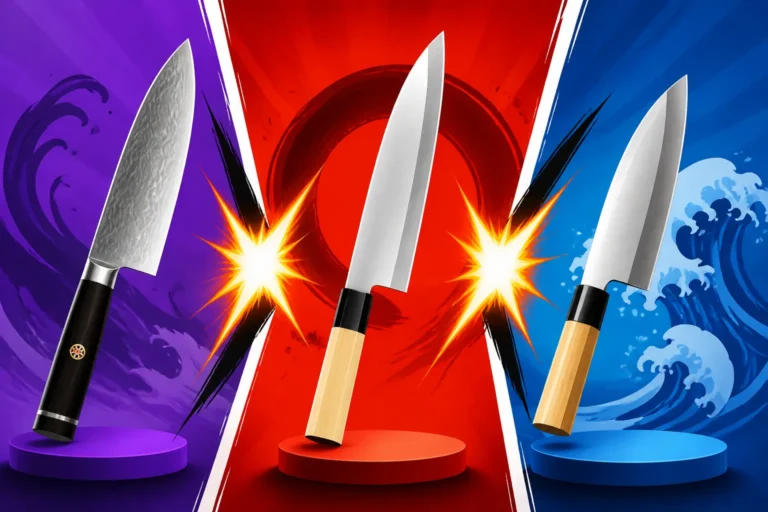
Shun vs Miyabi vs Tojiro: Which Brand Wins?
Japanese knife brands Shun, Miyabi, and Tojiro compared by blade steel, handle design, edge retention, and value for your kitchen.
Japanese knife brands Shun, Miyabi, and Tojiro compared by blade steel, handle design, edge retention, and value for your kitchen.
Japanese slicing knives compare the single-bevel Yanagiba for raw fish and the double-bevel Sujihiki for versatile meats.
The Nakiri and the Usuba knives differ in blade geometry, maintenance, and intended skill level for Japanese vegetable preparation.
A Gyuto and a Western chef’s knife differ in blade profile, steel hardness, edge angle, and maintenance requirements for home cooks.
Santoku and gyuto knives differ in blade profile, length, and cutting technique, helping you choose the best Japanese kitchen tool.
Japanese knife maintenance with camellia oil prevents rust on carbon steel blades while appropriate honing oils lubricate sharpening stones.
Japanese tamagoyaki pans feature distinct rectangular shapes and traditional materials like copper, cast iron, and stainless steel for rolling eggs.
Traditional Japanese graters in copper, ceramic, and steel extract flavor and texture from ginger, garlic, and daikon radish.
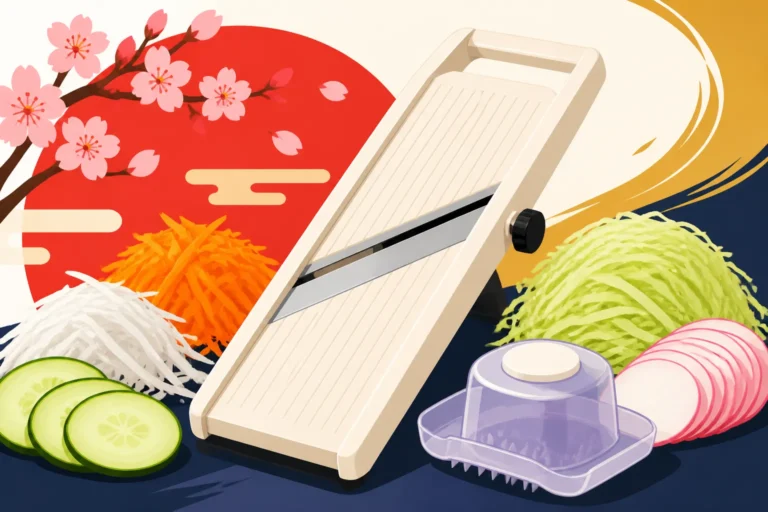
Japanese mandoline slicers and Benriner models provide precise vegetable cutting using high-carbon stainless steel blades and adjustable thickness.
Japanese kitchen scissors feature high carbon stainless steel blades, detachable designs, and integrated bottle openers for small apartment living.