Knife Sharpening Services vs DIY: Which Is Worth It?
Professional knife sharpening services in Japan provide expert repairs and convenience, while DIY whetstone sharpening offers a rewarding, personal skill.
Professional knife sharpening services in Japan provide expert repairs and convenience, while DIY whetstone sharpening offers a rewarding, personal skill.
Honing rods and whetstones differ significantly in purpose, as rods realign rolled edges daily while whetstones grind away steel to restore true sharpness.
A home knife sharpening kit allows you to maintain whetstones, honing rods, and leather strops to keep Japanese blades sharp.
Natural and synthetic whetstones differ in origin, composition, and consistency, helping users choose the right option for Japanese kitchen knives.
Single-bevel knife sharpening requires mastering blade anatomy, choosing the right whetstones, and maintaining correct angles for both sides.
Stropping removes microscopic burrs from a Japanese knife blade, extending the edge lifespan between full sharpenings using leather or balsa mediums.
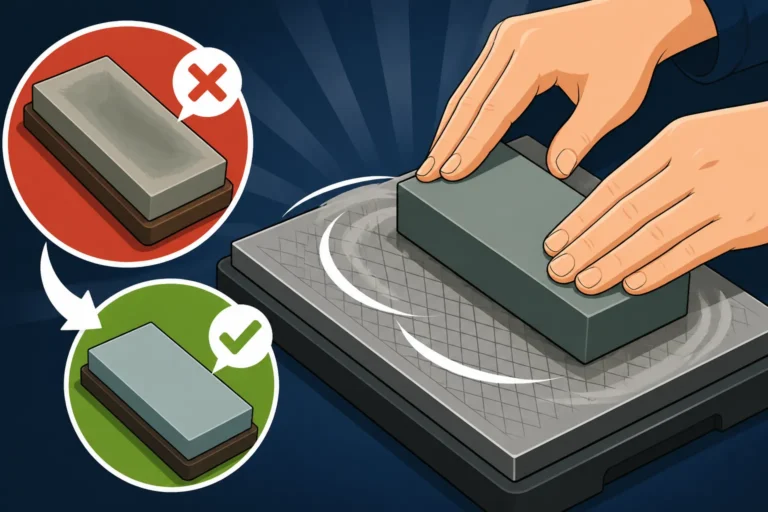
A dished whetstone ruins Japanese knife edges, but flattening tools like diamond plates, sandpaper, and lapping stones restore a flat sharpening surface.
Proper knife storage protects Japanese blades from chipping, prevents accidental cuts, and maintains edge retention during transport or home use.
The complex history, modern forging techniques, core steel types, and performance benefits of Japanese Damascus kitchen knives are explained.
Carbon steel Japanese knives offer unmatched edge retention and unique patina development, requiring careful maintenance for optimal culinary performance.