
Respectful Hiking: Trail Manners and Leave No Trace
Reaching the summit of a Japanese mountain only to be aggressively scolded by an elderly hiker because you sat on a sacred rock or dropped a tiny candy wrapper is a humiliating expat initiation. I once carried a dripping, empty bento box for seven hours because I assumed there would be trailhead trash cans. This guide decodes trail greetings, absolute zero-waste rules, and safety etiquette.
Disclosure: This post may contain affiliate links. We may earn a commission at no extra cost to you if you make a purchase through these links. Read full disclosure.
The Unspoken Social Etiquette of Japanese Trails
The Mandatory Trail Greetings
When you hike in Western countries, giving a polite nod or a brief hello to passing hikers is common but generally optional. In Japan, trail greetings are an absolute, non-negotiable social contract. From the moment you step onto the trailhead of Mount Takao, Mount Fuji, or a remote path in the Japanese Alps, you must prepare yourself for an exhausting vocal marathon. You are expected to say “Konnichiwa” (Good afternoon) or “Ohayo gozaimasu” (Good morning) to every single person you pass.
If you are hiking on a busy autumn weekend when the leaves are turning, you might say hello five hundred times in a single day. For introverted expats, this can feel incredibly draining. However, skipping this ritual makes you look incredibly disrespectful and reinforces negative stereotypes about foreigners. The greeting serves a practical purpose as well; it is a way to acknowledge the presence of others, gauge the physical condition of passing hikers, and maintain a sense of communal safety on the mountain. When the exhaustion sets in, simply offer a polite nod and a murmured “Konnichiwa” to keep the social harmony intact.
Right of Way and Pace Management
Navigating narrow, steep Japanese trails requires strict adherence to the right-of-way rules. The universal law of the mountain in Japan is that ascending hikers always have the right of way. If you are hiking down and encounter someone climbing up, you must immediately step to the side, stop moving, and let them pass. As you step aside, it is polite to say “Osaki ni dozo” (Please go ahead).
Furthermore, pace management is critical when hiking in groups. Japanese hiking culture places a heavy emphasis on not inconveniencing others (meiwaku). If your group is moving slowly and causing a bottleneck on a narrow ridge, you must find a safe clearing, step aside, and wave the faster hikers through. Conversely, if you are stuck behind a slow group, do not aggressively tailgate them or attempt dangerous, off-trail passing maneuvers. You wait patiently until they notice you and offer the right of way.
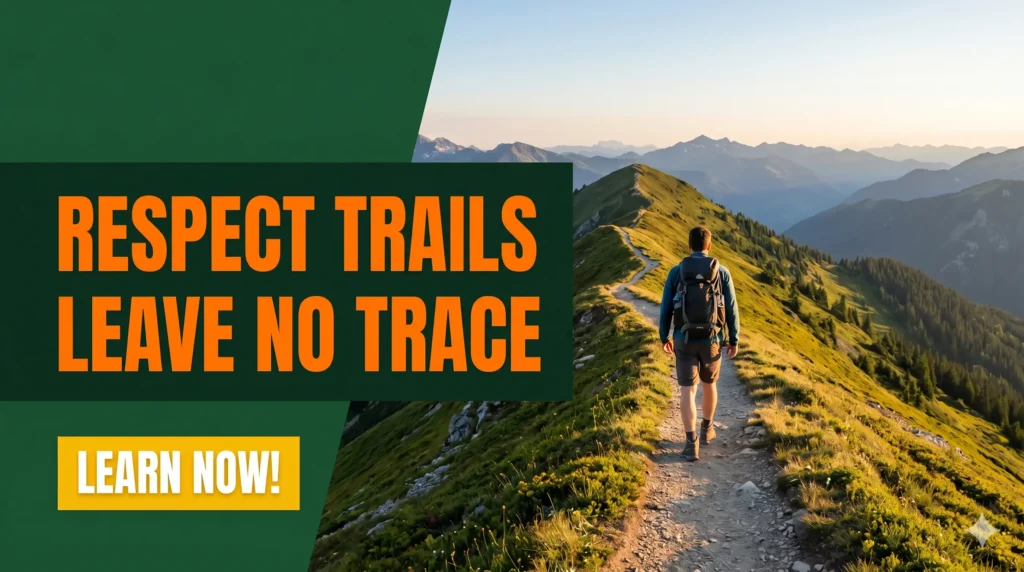
Leave No Trace The Absolute Zero Trash Rule
Carrying Out Your Own Garbage
The most shocking logistical reality for expats hiking in Japan is the absolute, total absence of public trash cans. You will not find garbage bins at the trailheads, at the summit rest areas, or even inside the national park visitor centers. The strict Japanese philosophy is “mochikaeri”—you must carry home everything you brought in.
This means you must pack a dedicated, durable trash bag (like a heavy-duty Ziploc) in your daypack before you leave your hotel. If you eat a convenience store rice ball or a sticky energy gel at the summit, that wrapper stays in your backpack until you return to your apartment or your hotel room in the city. More importantly, this rule applies to organic matter. Tossing an apple core, a banana peel, or a peanut shell into the woods is considered a massive taboo. The local ecosystem is delicate, and introducing foreign organic waste disrupts the soil and alters the foraging habits of local wildlife.
Restroom Etiquette and Mountain Huts
Using the restroom on a Japanese mountain is a highly regulated, paid experience. The pristine condition of the toilets near summits and mountain huts (yamagoya) is maintained by volunteers and funded by the hikers. You will almost always find a small wooden contribution box outside the restroom. The standard requested donation is 100 to 200 yen per use.
You cannot rely on digital wallets or credit cards at 2,000 meters above sea level. While you might rely on Mobile Payment and Banking Apps in Japan (Top 5 Apps) in Tokyo, cash is absolute king on the mountain. You must pack a coin purse filled with 100-yen coins. Additionally, you must bring your own toilet paper and a small plastic bag. On many high-altitude trails, the septic systems cannot break down paper, meaning you are required to pack out your used toilet paper in your own bag. It sounds gross to uninitiated expats, but it is the reality of preserving these pristine environments.
Sacred Spaces and Wildlife Safety
Navigating Shrines and Torii Gates
In Japan, mountains are not just geological formations; they are deeply sacred spaces. The ancient practice of Shugendo (mountain asceticism) views the peaks themselves as deities. Consequently, almost every mountain trail features small stone shrines (hokora), torii gates, and statues of Jizo bodhisattvas draped in red bibs.
You must treat the entire mountain as an extension of a temple. Do not sit on the base of a torii gate to tie your shoes. Do not lean your heavy backpack against a stone shrine while you take a water break. When you pass under a major torii gate on the trail, it is customary to remove your hat and bow slightly before proceeding. Understanding this spiritual context transforms the way you interact with the environment and prevents you from accidentally desecrating a site that locals hold in deep reverence.
Bear Bells and Animal Encounters
While Japan is famously safe from violent crime, the wilderness is a different story. The archipelago is home to two significant bear species: the Asian black bear in Honshu and the massive Ussuri brown bear in Hokkaido. Encountering a bear on a quiet, remote trail is a genuine, terrifying possibility.
To mitigate this risk, almost all Japanese hikers attach a “kuma suzu” (bear bell) to their backpacks. The constant, high-pitched jingling alerts bears to your human presence, preventing you from startling them. When you hike in bear country without a bell, you are not just putting yourself at risk; you are making the locals around you extremely nervous. Buy a bell at a local outdoor shop before your trek. If you encounter wild macaques (monkeys) or wild boars, never make eye contact, never smile (showing teeth is a sign of aggression), and absolutely never feed them. Altering their natural foraging behavior leads to aggressive animals that eventually have to be culled by local authorities.
| Trail Etiquette Category | The Japanese Standard | Expat Mistake to Avoid |
| Greetings | Mandatory “Konnichiwa” to passing hikers | Ignoring people or wearing noise-canceling headphones |
| Trash Disposal | 100% Pack-in, Pack-out (including organic waste) | Throwing fruit peels in the bushes; expecting bins at the summit |
| Right of Way | Ascending hikers have priority | Forcing your way down a narrow path past climbers |
| Mountain Toilets | Pay 100-200 JPY in coins; bring your own TP | Assuming facilities are free; leaving used paper on the floor |
| Wildlife Safety | Use a bear bell to announce your presence | Hiking silently in bear territory; feeding wild macaques |
Planning Logistics and Accommodations
Securing Basecamps Before the Climb
Executing a successful, stress-free hike in Japan requires setting up a strategic operational basecamp. The most famous, pristine trails in regions like Kamikochi or the Kumano Kodo are located deep in the countryside, hours away from the major bullet train hubs. Attempting to wake up in Tokyo, commute three hours to a rural trailhead, complete a six-hour hike, and commute back in a single day will leave you utterly exhausted and miserable.
The veteran expat strategy is to travel to the region the night before and secure local accommodations. Using Agoda is the smartest way to filter for traditional guesthouses (minshuku) or business hotels located directly adjacent to the rural bus terminals that service the trailheads. By booking a room via Agoda, you guarantee a proper night’s sleep and can catch the very first morning bus to the mountain, beating the massive domestic crowds. Evaluating these localized accommodation strategies through Budget Capsules vs Hostels vs Business Hotels: What’s Best for Solo Travelers (Agoda Comparison) will help you lock in a functional staging ground without blowing your outdoor recreation budget.
Furthermore, relying on the fragmented rural transit grid requires serious planning. Missing the final bus down from a remote mountain pass at 4:00 PM means you are sleeping in the woods. Ensure your digital toolkit is prepared with offline routing maps by reviewing Must-Have Apps for Living in Japan: Navigation, Translation & More.
Transport and Emergency Preparation
Weaving together the complex web of limited express trains and rural mountain buses can quickly drain your travel funds. Buying individual tickets for these remote journeys is wildly inefficient. You must utilize regional rail passes. However, navigating the physical ticket offices at major stations to arrange a mountain excursion is a frustrating experience. To bypass the language barrier at the ticket machines, savvy expats use Klook to pre-purchase their regional rail passes digitally. Securing your transit via Klook allows you to pay securely in your home currency and guarantees your passage to the rural hubs.
Using Klook also allows you to book organized guided hikes if you are intimidated by navigating bear country or sacred trails alone. For a deeper understanding of how to save money on these regional train networks, checking Discount Travel in Japan: Rail Passes and Budget Transportation Tips is incredibly helpful. To ensure you don’t get stranded between the train station and the trailhead, reading Navigating Buses in Japan: City and Long-Distance Bus Tips for Expats is mandatory. Furthermore, if you are balancing heavy gear and transit, referencing Airport Transfers in Japan: Klook vs Train vs Taxi (Cost & Convenience Comparison) will help you map out your initial arrival logistics.
The physical reality of hiking Japanese mountains involves steep inclines, slick roots, and rapidly changing alpine weather. Rolling an ankle on a rocky descent or suffering heat exhaustion during the punishing Japanese summer are common tourist emergencies. Navigating a rural Japanese clinic in Nagano because you suffered an orthopedic injury is a terrifying prospect if you do not speak fluent Japanese.
This is precisely why carrying comprehensive travel medical coverage is absolutely non-negotiable. An active SafetyWing policy ensures that if you require an X-ray, urgent clinical care, or even emergency evacuation from a trail, you can seek immediate professional treatment without facing the crippling fear of massive, out-of-pocket medical bills. Having this robust financial safety net allows you to push yourself on the trails with complete peace of mind. To understand exactly what high-risk outdoor environments are covered during your travels, reviewing SafetyWing Travel Insurance for Japan Trips: Is It Enough for Skiing, Hiking, Adventure? is a vital preparation step.
If a physical emergency does unexpectedly occur on a remote mountain path, knowing precisely how the local medical dispatch system operates by studying Navigating Emergency Medical Services in Japan (Dial 119, ER Tips) ensures you can contact English-speaking paramedics rapidly. Also, maintaining a baseline understanding of local food preparation before embarking on a long trek via Food Safety in Japan: Eating Sushi, Street Food, and Raw Eggs Safely will prevent sudden stomach bugs from ruining your hike. To manage broader trip costs associated with gear and lodging, refer to the Cost of Living in Japan 2026 – Expenses Breakdown.
References
Primary sources official
- Japan National Tourism Organization Hiking & Trekking Guide: https://www.japan.travel/en/sports/hiking/guide/
- Ministry of the Environment Warnings and Etiquette for Trekking: https://www.env.go.jp/en/park/yakushima/ywhcc/tozan/manner.html
Other helpful sources
- SANGAKU the Journal of Japanese Alpine Club: https://www.himalayanclub.org/hj/60/3/sangaku-the-journal-of-japanese-alpine-club/
- Japanese Alpine Club Overview: https://en.wikipedia.org/wiki/Japanese_Alpine_Club
Disclaimer
This article is for informational purposes only and is based on general hiking etiquette, wilderness practices, and transit operations in Japan as of 2026. Trail conditions, wildlife activity (including bear sightings), and bus schedules in rural mountainous areas are highly subject to change due to extreme weather events such as typhoons or heavy snowfall. Always verify the current trail status with local visitor centers, submit a mountain climbing registration form before your ascent, and explicitly confirm your travel medical insurance coverage limits regarding outdoor hiking accidents before embarking on any trek.





