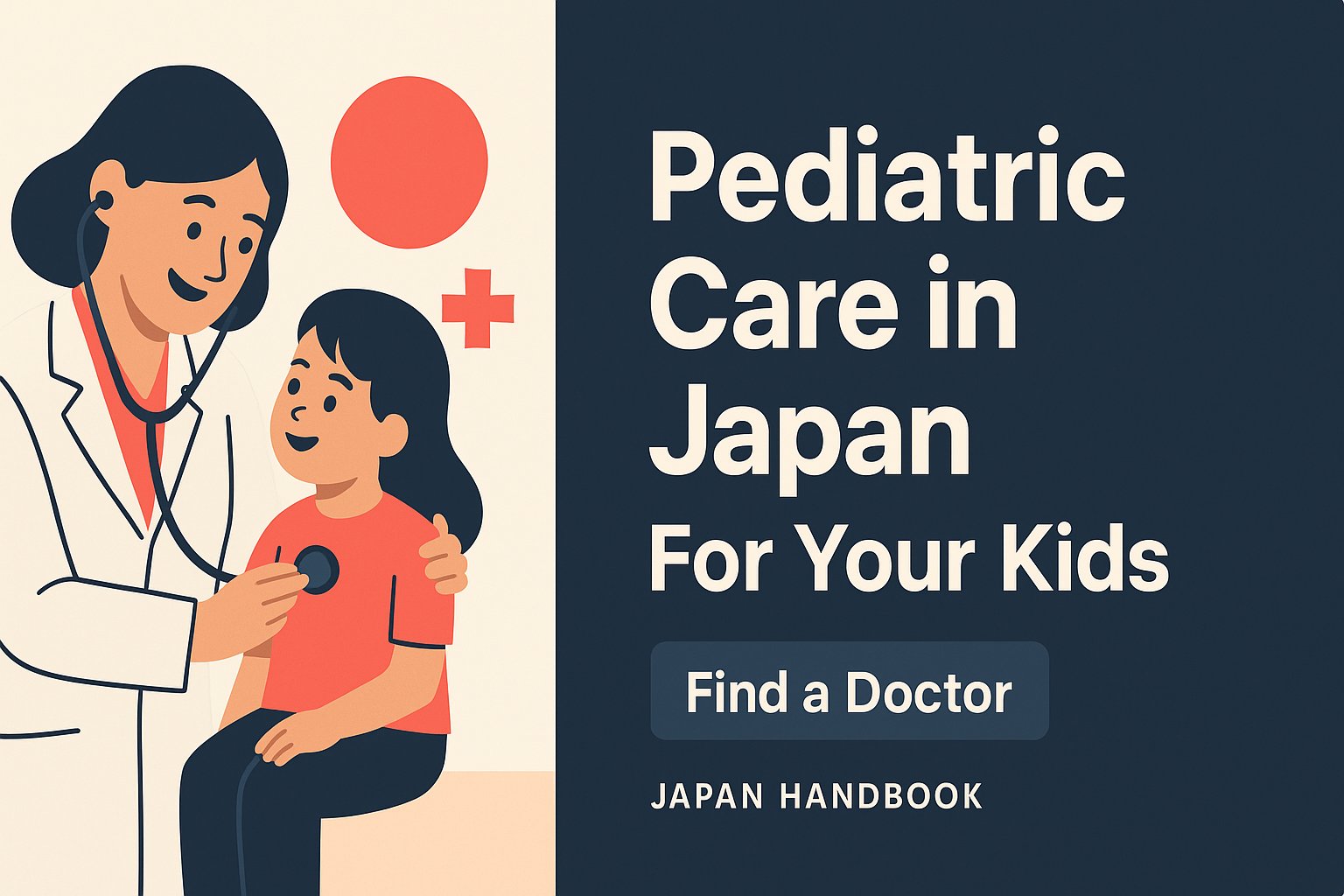
Pediatric Care in Japan: Finding Doctors for Your Kids
New to Japan with children? This guide shows how to find English-friendly pediatricians, understand checkups and vaccines, use hotlines like #8000 and #7119, lower costs with city subsidies, and navigate Japan’s “free access” system with confidence.
Disclosure: This post may contain affiliate links. We may earn a commission at no extra cost to you if you make a purchase through these links. Read full disclosure.
Why pediatric care in Japan feels different
Japan runs on a “free access” model: residents can go directly to specialists (like pediatrics, 小児科 shōnika) without a gatekeeping family doctor. You choose the clinic or hospital yourself and book—simple and fast for common childhood issues.
This freedom works best when you know where to look (government hotlines and hospital finders), what to expect (checkups, vaccines, clinic hours), and how to save (child medical subsidies). You’ll find those essentials below, with official sources to bookmark.
Related: Emergency Medical Services in Japan — Dial 119 · National Health Insurance in Japan — 2025 Guide
How to find an English-speaking pediatrician
Start with official, city-run services and a couple of trusted nonprofits:
- Tokyo Medical Information “Himawari.” Phone and web search for medical institutions with foreign-language support; staff explain how Japan’s system works. (Free; caller pays phone charges.)
- AMDA International Medical Information Center. Multilingual telephone consultation and remote interpretation; they’ll help you identify suitable clinics and explain procedures.
- Japan Medical Association portal (For International Patients). Centralized pointers to multilingual services and AMDA support.
You can also check reputable community guides for English-speaking pediatric clinics (especially in big cities), but verify opening hours and languages before you go because staffing changes.
Related: Communicating with Doctors — Language Tips · Top English-Speaking Hospitals in Tokyo
Understanding clinics, hospitals, and when to use each
In daily life, most families use neighborhood pediatric clinics for fevers, rashes, ear infections, and routine care. For more complex needs or procedures, you may be referred to a general hospital or children’s hospital. The free-access system means you can walk into many facilities, but note that some large hospitals add an extra surcharge if you arrive without a referral—a national change designed to reduce unnecessary crowding. If you need a tertiary center, call first or go through a clinic.
Related: Clinics vs Hospitals in Japan — Choosing the Right Provider
Call these numbers first when you’re unsure
Japan maintains nurse and doctor hotlines that can help you decide the next step (home care, clinic, ER, or ambulance):
| Situation | Number | What you get |
|---|---|---|
| Pediatric advice nights/holidays | #8000 | Child health phone consultation service (MHLW program). A pediatrician/nurse advises on symptoms and whether to visit. Hours vary by prefecture. |
| Emergency symptoms, any age | #7119 (in many prefectures incl. Tokyo, Yokohama, Sapporo) | Speak to nurses; get guidance on ER vs clinic or ambulance. Local dial-in alternatives exist if #7119 is unavailable. |
| Find a clinic open now (Tokyo) | Himawari | Phone/web directory for facilities operating at the time of your call; language support options. |
If your child’s condition seems life-threatening, dial 119 for an ambulance immediately; this connects you to the Fire Department dispatcher nationwide. Use the hotlines above only when you’re unsure.
Related: After-Hours Healthcare — Late-Night Clinics and Pharmacies
Pediatric checkups: what’s free and when to go
Municipalities invite families to routine infant and toddler health checkups. Cities commonly provide a 1–2 month check (individual), 3–4 months (group at the health center), then milestone checks through toddlerhood—all at no charge with your coupons. The 18-month and 3-year checks are legally required, and cities send notices in the mail. Bring your Maternal and Child Health Handbook (Boshi Kenko Techo).
Typical infant and toddler checkups (example pattern)
| Age | Venue | What happens |
|---|---|---|
| 1–2 months | Contracted clinic/hospital | Growth check, feeding and newborn screening review; bring coupons/handbook. |
| 3–4 months | Public health center (group) | Doctor/nurse exam, development screen, caregiver Q&A; free with city invitation. |
| 9–10 months | Clinic or health center | Milestone review (sitting, crawling), vision/hearing prompts; free invitation. |
| 18 months | Health center | Required nationwide developmental check and guidance; referral if concerns. |
| 3 years | Health center | Required nationwide vision/dental/language screening; preschool readiness. |
Related: Pregnancy and Childbirth in Japan — Guide for Foreign Parents
Vaccinations for children in Japan
Japan follows a national pediatric immunization program and the Japan Pediatric Society publishes an English schedule (updated May 19, 2025). You’ll see vaccines such as Hepatitis B, Rotavirus, PCV, DPT-IPV/Hib, MR, Varicella, Japanese Encephalitis, HPV, and more, with standard ages and intervals. Your city mails invitations or coupons for routine shots.
Key points from the current JPS schedule and multilingual guidance:
- Start at 2 months for many vaccines; multiple vaccines can be given on the same day safely.
- Intervals matter, especially for live vaccines (typically ≥4 weeks between different live vaccines). Your pediatrician will sequence these for you.
- If your child is immunocompromised or you’re catching up after a move, your doctor can tailor a plan within the recommended windows.
Related: International Patient Services — Getting English Help at Hospitals
Costs, co-pays, and how to pay less
National insurance basics for kids
Children enrolled in National Health Insurance (NHI) or Employees’ Health Insurance (EHI) receive the same subsidized care as adults, under Japan’s universal system with free access to providers. However, co-payments normally apply for insured services.
City and prefectural child medical subsidies
Local governments across Japan issue a Child Medical Care Certificate (name varies) that covers or reimburses the co-pay at clinics and pharmacies—often until junior high or even age 18, depending on the municipality. In Tokyo’s Minato City, for example, presenting the child’s insurance card + medical care certificate at the clinic generally means no out-of-pocket at the counter. Shinjuku City notes coverage up to the first March 31 after turning 18, with application required. Check your city’s page for age limits and small per-visit fees, if any.
In short: enroll in public insurance, apply once for your city’s child subsidy certificate, and carry both cards to avoid paying co-pays upfront at most clinics in your area.
A number of university, employer, and research institute guides summarize the same principle: public insurance covers the bulk, and municipalities often top up the rest for children if you apply.
Related: Understanding Japanese Medical Bills and Insurance Claims ·
Booking visits, paperwork, and what to bring
- Insurance card (child’s card) and child medical subsidy certificate if your city issues one; this is how you avoid paying the co-pay at the counter in Tokyo.
- Maternal and Child Health Handbook: staff record vaccines, growth, and checkups; keep it with you for many years.
- Cash or a card: some smaller clinics still prefer cash; bring both to be safe (typical advice in university and city guides).
Related: City Hall 101 — Registering Your Address and Using Local Services
What a pediatric visit looks like
- Reception: hand over the child’s insurance card, subsidy certificate, and handbook.
- Vitals + consult: brief exam; prescriptions printed for you to take to a nearby pharmacy.
- Payment: with a subsidy certificate, you may owe nothing at the window (area rules apply). Otherwise, pay the co-pay and keep your receipt.
Pro tip: For seasonal spikes (RSV, influenza) clinics fill quickly. Use your city’s directory (e.g., Himawari in Tokyo) to filter by pediatrics and open now.
Related: Finding English-Friendly Pharmacies in Japan
When it’s urgent: ERs, ambulances, and late nights
If your child has trouble breathing, severe dehydration, head injury, seizures, or is unusually drowsy, don’t hesitate: dial 119. For borderline calls—like persistent fever at night—use #8000 (pediatric line) or #7119 (nurse triage) to decide the safest next step. Tokyo institutions and the Japanese Red Cross list both numbers publicly.
In Tokyo, the Himawari service also lists which clinics and hospitals are open now and can manage pediatric emergencies; use this if you’re considering self-transport and your child is stable.
Related: Emergency Medical Services — Dial 119 in Japan
Table: quick navigation to care
| Need | Best first step | Why it helps |
|---|---|---|
| English-speaking pediatrician near me | Tokyo Himawari (or your city’s directory); AMDA | Live phone help + language filters; they know who’s open now and who speaks English. |
| Fever at 10 p.m., unsure what to do | #8000 (pediatric) or #7119 | Symptom-based triage from nurses/doctors; guidance on home care vs ER/clinic. |
| Avoid paying co-pays at the counter | Apply for child medical subsidy certificate at your ward office | Many Tokyo wards reimburse or waive co-pays for children; bring both cards to the clinic. |
| Vaccine catch-up planning | JPS 2025 schedule + multilingual vaccine chart | Current official timing and intervals in English. |
Common questions foreign parents ask
Is there a “family doctor” for kids?
Not in the same way as some countries. Japan’s free access model lets you book directly with pediatric clinics; for complex issues you may be referred up to a hospital. Some large hospitals charge an extra fee if you come without a referral.
How do I get free or low-cost care for children?
Enroll in NHI/EHI, then apply for your city’s child medical subsidy. In many Tokyo wards, showing the subsidy certificate + insurance card at the clinic covers the child’s co-pay.
What about routine checkups?
Cities invite you to free checkups (1–2 months, 3–4 months, 18 months, 3 years, etc.). The 18-month and 3-year visits are mandatory; watch your mail for dates, venues, and questionnaires.
Where can I see the vaccine schedule in English?
The Japan Pediatric Society publishes an English PDF with ages and intervals; many cities mirror the schedule and send coupons.
If we’re traveling soon, can we adjust vaccines?
Yes—speak to your pediatrician. The JPS schedule allows for safe simultaneous vaccination and catch-up planning.
It’s late and my baby has a fever. Who can I call?
Dial #8000 for pediatric phone advice; in many areas #7119 connects you to nurse triage for emergencies and night-time symptoms. If severe, call 119.
Related: After-Hours Healthcare — 24/7 Pharmacies and Late-Night Clinics
Sample one-day plan for a new family in Tokyo
- Save the hotlines: #8000 (pediatric), #7119 (nurse triage), 119 (ambulance), Himawari number.
- Apply for your Child Medical Care Certificate at your ward office (bring residence card and insurance card).
- Bookmark the JPS 2025 vaccine schedule and your ward’s routine vaccination page.
- Identify two clinics: one near home, one near school or work; confirm languages and hours using Himawari or AMDA.
Table: insurance and subsidy at a glance
| Topic | What to know | Where to confirm |
|---|---|---|
| Public insurance | Residents enroll in NHI/EHI; co-pays apply for insured services. | Ward/city insurance desk; MHLW/Tokyo system overview. |
| Child medical subsidy | Many cities waive or reimburse children’s co-pays with a medical care certificate; age limits vary. | Ward website (e.g., Minato, Shinjuku). |
| Hospital referral fees | Large hospitals may charge extra if you come without a referral. | MHLW presentation on free access and referral surcharges. |
| High-cost protection | If hospitalized for covered care, the High-Cost Medical Expense system caps monthly burden. | MHLW white paper (English). |
Practical language for parents
- Pediatrics: 小児科 (shōnika)
- Fever: 熱 (netsu)
- Rash: 発疹 (hosshin)
- Vomiting/diarrhea: 嘔吐/下痢 (ōto / geri)
Show your Maternal and Child Health Handbook and vaccination page if asked. The handbook has been a legal cornerstone of child health tracking for decades.
Vaccination planning if you’re moving between countries
If you’re relocating to or from Japan:
- Bring official vaccine records; your clinic transcribes them into the handbook.
- Use the JPS schedule to map catch-up doses; simultaneous shots are routine and safe.
- Check your ward’s English vaccine chart for local clinic logistics and coupons. (Example: Osaka’s English schedule with product notes and timing.)
Related: Telemedicine in Japan — Remote Healthcare Options
Bringing it all together
Japan is organized, accessible, and—once you set up insurance and your city’s child medical subsidy certificate—usually very affordable for pediatric care. Use Himawari (or your city’s directory) to find clinics, lean on AMDA for interpretation and referrals, and keep #8000 / #7119 / 119 handy for night-time or urgent decisions. With the Maternal and Child Health Handbook and the Japan Pediatric Society vaccine schedule, you’ll have a clear roadmap from infancy to school age.
Helpful reads
- Pediatric Emergency Guide — When to Call #8000 or #7119
- International Patient Services — Getting English Help at Hospitals
- After-Hours Healthcare — Late-Night Clinics and Pharmacies
- Emergency Medical Services — Dial 119 in Japan
Disclaimer
This article is for general informational purposes only and does not constitute professional advice. Laws, prices and regulations vary by location and change over time. Consult a qualified professional for guidance on your specific situation.