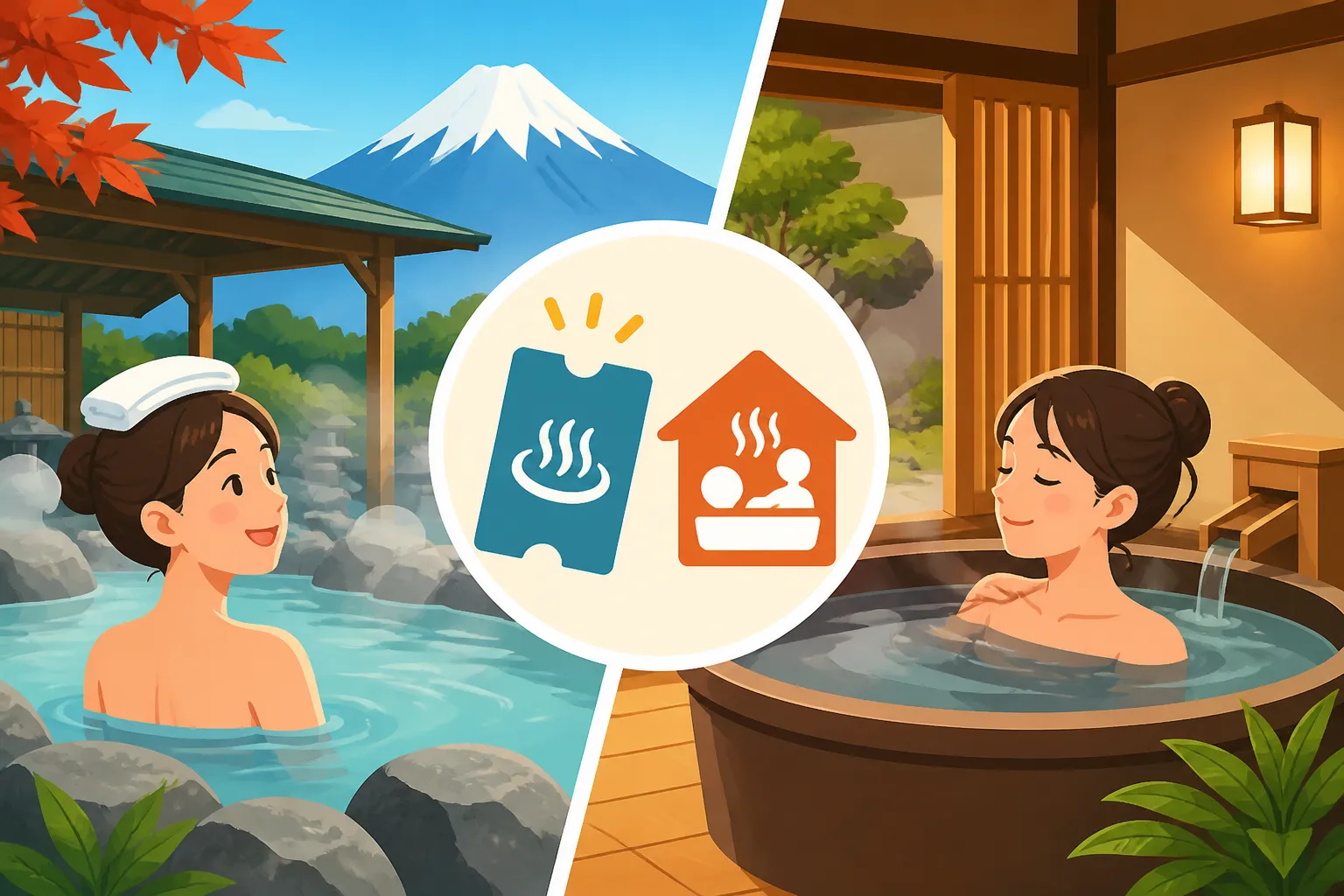
Onsen Day Passes and Private Baths: Booking Without an Overnight Stay
Oh, the Japanese onsen! It's one of those quintessential Japan experiences that everyone wants to tick off their list, but let's be real, booking a full ryokan stay with all the bells and whistles can be a huge commitment, both time-wise and budget-wise. Many of us just want to soak our weary bones in that glorious mineral water for a few hours without committing to an overnight stay or navigating complex Japanese booking systems. This guide is for all of you who yearn for that relaxing dip but are a bit overwhelmed by the logistics; we're going to dive deep into securing onsen day passes and those coveted private baths, especially how easy it can be with platforms like Klook.
Disclosure: This post may contain affiliate links. We may earn a commission at no extra cost to you if you make a purchase through these links. Read full disclosure.
The Magic of Onsen Day Passes: A Taste of Bliss
Day passes, or higaeri onsen (日帰り温泉), are an absolute lifesaver for travelers and expats who want to experience the healing warmth of a Japanese hot spring without the commitment of an overnight stay. Imagine you've spent the morning exploring the ancient temples of Kyoto or hiking around Hakone, and all you crave is a long, hot soak. That's where day passes come in. They offer a fantastic opportunity to unwind, rejuvenate, and truly immerse yourself in one of Japan's most cherished cultural pastimes, often at a fraction of the cost of a full ryokan experience.
Why Choose a Day Pass? Accessibility and Affordability
The primary appeal of an onsen day pass is its sheer accessibility. You don't need to pack an overnight bag, nor do you need to commit to a multi-course kaiseki dinner and breakfast. You simply pay a fee, typically ranging from a few hundred yen to a couple of thousand, and you gain access to the public baths for a set period, usually between two to four hours. This makes it incredibly easy to fit an onsen visit into a busy itinerary, perhaps as a refreshing break during a day trip to a famous hot spring town like Kusatsu or Beppu.
For expats living in Japan, day passes are also a godsend. You might live in a city like Tokyo or Osaka where private onsen facilities are scarce or expensive. A day trip to a nearby onsen town, armed with a day pass, offers that much-needed escape without requiring a full weekend getaway. It's a spontaneous luxury, a way to tap into relaxation whenever the mood strikes. Plus, for those still navigating the nuances of Japanese Cultural Etiquette 101 for Newcomers, a day pass can be a less intimidating introduction to onsen culture compared to the more formal setting of a ryokan.
Navigating the Day Pass Experience: What to Expect
When you opt for a day pass, you're generally accessing the large public baths (大浴場 – daiyokujou). These baths are gender-segregated and follow strict hygiene rules. You'll typically be provided with a small towel and sometimes a larger bath towel, though bringing your own can save a few hundred yen. Remember, you'll need to wash thoroughly before entering the hot spring water, and your small towel is for modesty, not for washing in the main bath. If you have tattoos, which can still be a tricky issue in Japan, public onsens with day passes might pose a challenge. Many still adhere to traditional rules prohibiting visible tattoos, though this is slowly changing in more tourist-friendly areas. For a deeper dive into this, check out our guide on Onsen Rules for Foreigners: Tattoos, Towels, Washing.
The beauty of a day pass also means you get to experience the atmosphere of the onsen town itself. You can wander the streets in your yukata (if provided and allowed), sample local treats, and soak in the unique charm that each onsen region offers. When planning your route, our guide on How to Use Japan’s Train System (Local, Limited Express, Shinkansen) might come in handy for reaching those picturesque hot spring destinations.
Many larger onsen complexes, like those around Hakone or Atami, offer day passes to their extensive facilities, which might include multiple indoor and outdoor baths, saunas, and even relaxation lounges. Finding and booking these can be straightforward if you know where to look. This is where Klook truly shines. They aggregate many of these day pass options, often with pre-booking discounts and clear English instructions. Instead of fumbling through Japanese websites, you can browse, compare, and book your ideal onsen experience with just a few clicks on Klook. It simplifies the entire process, making that spontaneous soak a reality.
The Privacy of Private Onsen Baths: Kashikiri Indulgence
Sometimes, what you really need isn't just a quick dip, but a truly private, uninterrupted moment of tranquility. This is where kashikiri onsen (貸切温泉), or private reserved baths, come into their own. These are baths that you can book exclusively for yourself, your partner, or your family, offering a level of intimacy and relaxation that public baths simply cannot match. They’re often an added luxury at ryokans or even standalone facilities.
Why Opt for a Private Bath? Intimacy and Tattoo-Friendliness
The allure of a private bath is multi-faceted. Firstly, there's the obvious benefit of privacy. If you're shy about public nudity, traveling with family (especially mixed genders), or simply seeking a quiet, personal space to decompress, a kashikiri bath is ideal. You can truly relax without any self-consciousness about others.
Secondly, and this is a big one for many foreign visitors and expats, private baths are almost always tattoo-friendly. Because you're in an enclosed, personal space, the traditional prohibitions against tattoos in public baths don't apply. This opens up the incredible world of Japanese onsen to a segment of the population that might otherwise feel excluded. It’s a wonderful way to experience authentic Japanese hot springs without any worry or hassle, allowing everyone to partake in the therapeutic waters. For those with tattoos, this is a game-changer, removing a significant barrier to enjoying one of Japan's most beloved pastimes.
Booking Your Exclusive Soak: A Little Planning Goes a Long Way
Private baths can range from a simple, elegant stone tub in a small room to a sprawling outdoor rotenburo with stunning views, complete with its own changing area and often a small waiting lounge. They're typically booked by the hour, and prices can vary widely based on the onsen's prestige, location, and the size/amenities of the bath itself. Popular spots in renowned onsen towns like Hakone and Kusatsu, or even lesser-known gems in the countryside, often have them.
The challenge, traditionally, has been booking these. Many Japanese onsen websites are exclusively in Japanese, and direct phone calls can be intimidating if your language skills aren't up to par. This is precisely where platforms like Klook prove invaluable. Klook has made a concerted effort to partner with numerous onsen facilities across Japan, offering their private bath experiences directly to an international audience. This means you can browse photos, read descriptions, check availability, and book these exclusive slots in English, with international payment methods.
For instance, if you're planning a romantic getaway to Hakone, you can search for "Hakone private onsen" on Klook and find options that suit your preferences and budget. They streamline the process of finding and securing these spots, which often sell out quickly, especially on weekends and holidays. Booking through Klook ensures you get a confirmed reservation, taking the stress out of last-minute scrambling or language barriers. So, whether it's a private family experience or a romantic escape, Klook has simplified finding that perfect, secluded onsen bath.
Seamless Booking with Klook: Your Onsen Concierge
Navigating Japan's vast and wonderful onsen landscape can feel like a labyrinth, especially when you're trying to figure out day passes or private baths as a non-Japanese speaker. This is where having a reliable, English-friendly booking platform becomes less of a convenience and more of an absolute necessity. And honestly, Klook really shines here as your virtual onsen concierge.
Overcoming the Language Barrier and Payment Hurdles
The first major hurdle for many foreigners is the language barrier. Traditional onsen websites are predominantly in Japanese, and even if you manage to translate the basics, understanding specific terms, rules, and booking procedures can be a nightmare. Then there's the payment. Some smaller, traditional establishments might not accept international credit cards or have clunky online payment systems.
Klook cuts through all this complexity. Their platform is designed for international users, providing clear, concise information in English. You can search by region (like "Kyoto," "Hakone," or "Osaka"), filter by type of onsen (day pass, private bath), and immediately see prices and availability. Furthermore, Klook handles the payment processing, meaning you can use your preferred international credit card or payment method without a hitch. This alone is a huge relief, transforming what could be a stressful booking experience into a smooth transaction.
Maximizing Your Onsen Exploration with Klook
Beyond just booking, Klook helps you explore the sheer variety of onsen experiences available. Do you want a simple, budget-friendly day pass near a train station? Or are you looking to splurge on a luxurious private rotenburo with mountain views? Klook’s extensive listings often include detailed descriptions, photos, and even reviews from other international travelers, giving you a better sense of what to expect. This transparency is invaluable, especially when you're trying to decide between different onsen options in a region like Hakone Day Trip: Onsen, Ropeway, and Mt. Fuji Views.
For instance, Klook often offers package deals that combine an onsen day pass with other local attractions or transport, which can sometimes be more economical than booking each component separately. This is particularly useful if you're planning a full day of sightseeing that culminates in a relaxing soak. Imagine exploring the tranquil beauty of Kyoto Beyond the Classics: Quiet Temples and Scenic Walks and then easily booking a day pass to a nearby onsen, all through one platform.
When you book through Klook, you usually receive an e-ticket or a voucher that you can present at the onsen reception, making check-in a breeze. This eliminates any potential misunderstandings about your reservation, ensuring a smooth start to your relaxation. While you're there, don't forget to charge your phone so you can easily pull up your booking confirmation, or even better, have a good pocket WiFi from a service like Sakura Mobile to stay connected, which Klook can help with too!
| Feature | Onsen Day Pass (Public) | Private Onsen (Kashikiri) |
|---|---|---|
| Cost | Lower (often a few thousand yen) | Higher (can be several thousand yen per hour) |
| Privacy | None (gender-segregated public baths) | High (exclusive use for your party) |
| Tattoo-Friendly | Varies; often restricted in traditional spots | Generally very accommodating |
| Booking Difficulty | Easier for walk-ins, but popular spots fill. Klook helps. | Higher without English support; Klook simplifies. |
| Duration | Set time, usually 2-4 hours | Hourly booking, typically 1-2 hours |
| Atmosphere | Lively, communal, traditional | Intimate, quiet, serene |
| Ideal For | Budget travelers, quick refresh, first-timers | Couples, families, tattooed individuals, ultimate relaxation |
Klook isn't just about booking; it's about empowering you to seamlessly access the best of Japan's onsen culture, whether you're a seasoned expat or a first-time visitor. From the initial search to the final dip, Klook aims to make your onsen experience as effortless and enjoyable as possible.
Essential Onsen Etiquette for Day-Trippers
Even with the convenience of day passes or private baths, remembering basic onsen etiquette is crucial for a smooth and respectful experience. After all, you're not just soaking in hot water; you're participating in a deeply rooted cultural tradition.
Before You Even Step Foot in the Water
Always remember the golden rule: clean yourself thoroughly before entering the bath. You'll find designated washing stations (洗い場 – araijo) with stools, showerheads, and soap/shampoo. Sit on the stool and wash every inch of your body. Think of it as preparing yourself to purify in the onsen, not getting clean in the onsen. The water itself is for soaking and relaxing, not for bathing.
When you're done washing, make sure to rinse off all soap suds completely. You don't want to bring any soap into the pristine onsen water. Also, gently splash water over your stool and washing area to leave it clean for the next person.
Inside the Bath Area: Towels, Noise, and Respect
Once you're squeaky clean, you can enter the onsen. Remember the small towel? That's your modesty towel, and it absolutely does not go into the bathwater. You can place it on your head, drape it on the edge of the bath, or leave it in the changing room. The main idea is that nothing but your clean body enters the shared water.
Keep noise to a minimum. Onsens are places of relaxation and quiet contemplation. While hushed conversations are generally fine in private baths, in public onsens, it's best to keep chatter low or silent. Avoid splashing or running, which can disturb others.
For those with long hair, tie it up! Again, this is about keeping the communal water as clean as possible for everyone. And when you're done, use your small towel to quickly dry off before heading back to the changing room. This prevents puddles on the floor and keeps the area tidy.
Even in a private bath booked through Klook, these rules largely apply. While you have the space to yourself, maintaining hygiene and respect for the facility is still paramount. It ensures the onsen remains a beautiful and therapeutic experience for everyone, regardless of whether they’re there for a quick day pass dip or a long, luxurious private soak. Taking a moment to review a guide like Ryokan Etiquette: Yukata, Kaiseki, and Quiet Hours can also provide useful context, even if you're not staying overnight.
By understanding and respecting these customs, you're not just enjoying a hot spring; you're embracing a piece of Japanese culture, making your onsen day pass or private bath experience truly unforgettable.
Disclaimer
This article is for general informational purposes only and does not constitute professional advice. Laws, prices and regulations vary by location and change over time. Consult a qualified professional for guidance on your specific situation.





