Living in Hiroshima as an Expat: What to Expect
Hiroshima offers a unique blend of history, nature, and urban convenience at an affordable cost. From navigating the iconic streetcars to enjoying savory Okonomiyaki and cheering for the local baseball team, this guide covers the neighborhoods, work opportunities, and the welcoming community awaiting you in the City of Peace.
Disclosure: This post may contain affiliate links. We may earn a commission at no extra cost to you if you make a purchase through these links. Read full disclosure.
The Atmosphere and Lifestyle
The first thing you will notice upon arrival is the pace. Compared to the frantic rush of Tokyo or the boisterous energy of Osaka, Hiroshima feels calm. The wide boulevards (a result of the city’s reconstruction) give it an open, airy feel that is rare in Japanese urban planning.
The locals are known for being warm and down-to-earth. There is a strong sense of community here. Because the foreign population is smaller than in the capital, you are less likely to be ignored. You might find that people are genuinely curious about you and eager to chat, especially if you visit a local Izakaya.
Understanding the Cost of Living
One of the biggest advantages of choosing Hiroshima over Tokyo is the rent. Your yen goes significantly further here. You can live in a spacious apartment in the city center for the same price as a shoebox in the suburbs of Tokyo.
Rent Expectations
- Single Studio (1K/1R): You can find decent options for 40,000 to 55,000 JPY per month.
- 1 Bedroom Apartment (1LDK): A comfortable couple’s apartment often costs between 60,000 and 80,000 JPY.
- Family Apartment (2LDK/3LDK): Spacious family homes can be found for 90,000 to 130,000 JPY, often with parking included.
Daily Expenses
Groceries and utilities are standard for Japan, but dining out is generally cheaper. You can get a massive plate of Okonomiyaki (the local specialty) for under 1,000 JPY, which will keep you full for hours.
Check out Cost of Living in Japan: Budgeting Tips
Choosing the Right Neighborhood
Hiroshima City is divided into eight wards (Ku). Choosing where to live depends on your work location and your lifestyle preferences.
Naka-ku: The Heart of the City
This is the central ward. It contains the Peace Memorial Park, the Hondori shopping arcade, and the Nagarekawa nightlife district.
- Best for: Singles, young couples, and those who want to be in the middle of the action.
- Vibe: Busy, convenient, and walkable. You rarely need a car here.
Minami-ku: The Gateway
Located to the south and east of the center, this area includes Hiroshima Station and the port.
- Best for: Commuters who need the Shinkansen or JR lines.
- Highlight: It is home to the Mazda Zoom-Zoom Stadium, the beloved home of the Hiroshima Carp baseball team. On game days, the streets turn red with fans.
Nishi-ku: The Suburban Balance
West of the center, this area offers a mix of residential quiet and shopping malls (like Alpark and Lect).
- Best for: Families and those who want a quieter life but still want easy access to the city via the JR line or streetcar.
Saeki-ku and Asaminami-ku: The Bed Towns
Further out from the center, these areas are residential hubs.
- Best for: People who want a detached house (Ikkodate) with a parking spot. Rents drop significantly here, but a car is often necessary for daily life.
Read more about Housing Types in Japan: Mansion vs Apartment
Getting Around: The Streetcar City
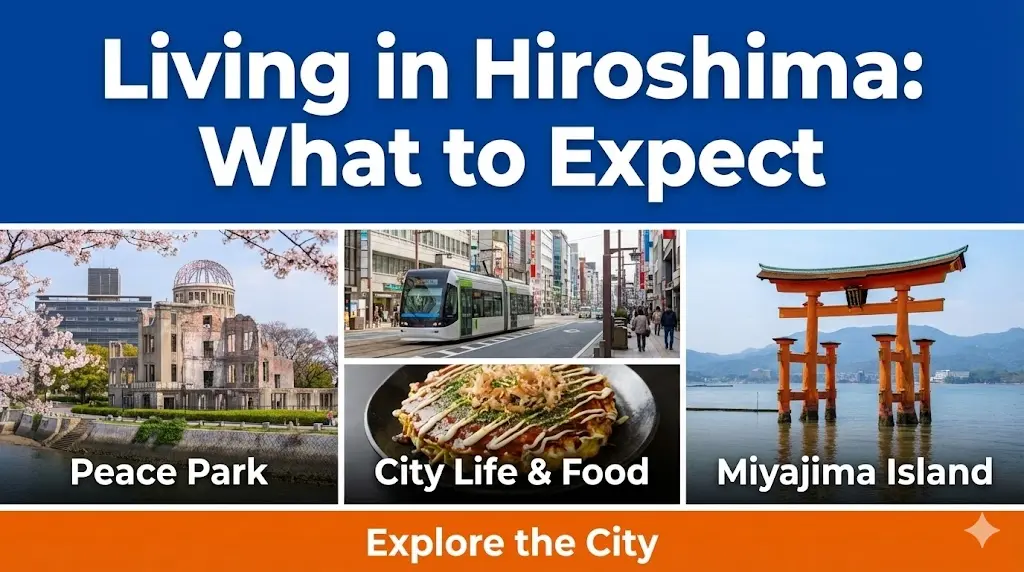
Hiroshima is unique because it relies heavily on streetcars, known locally as Hiroden. Unlike other Japanese cities that tore up their tram tracks in the 1960s to build subways, Hiroshima kept theirs.
The streetcar network is extensive, charming, and very affordable. It creates a nostalgic atmosphere as the trams rumble over the bridges crossing the many rivers.
The “Moving Museum”
You will see sleek, ultra-modern low-floor trams running right next to vintage cars from the 1950s. Hiroshima actually bought old trams from other cities (like Kyoto and Dortmund, Germany) when they shut down their lines, earning it the nickname “The Moving Streetcar Museum.”
Other Transport Options
- Astram Line: A rubber-tired elevated transit system that connects the city center to the northern suburbs (Asaminami-ku).
- Buses: The bus network is dense and reliable (“Hiroshima Bus” and “Hiroden Bus”).
- Cycling: Hiroshima is incredibly flat. A bicycle is arguably the best way to get around Naka-ku and Minami-ku.
Check out Transportation in Japan: Commuter Passes
The Food Culture: Okonomiyaki and Oysters
You cannot live in Hiroshima without having an opinion on Okonomiyaki. This savory pancake dish is the soul of the city.
Hiroshima Style vs. Osaka Style
Do not confuse the two! In Osaka, the ingredients are mixed together before frying. In Hiroshima, the ingredients are layered.
- A thin crepe batter.
- A mountain of cabbage.
- Pork belly slices.
- Noodles (Yakisoba or Udon).
- Egg.
- Everything is flipped, steamed, and smothered in sweet/savory sauce.
There are over 2,000 Okonomiyaki restaurants in the prefecture. Finding your favorite “hole in the wall” spot is a rite of passage for every expat.
Oysters (Kaki)
Hiroshima produces the majority of Japan’s oysters. In winter, you will see “Oyster Huts” popping up along the coast where you can grill fresh oysters by the kilogram for a very reasonable price.
Comparison of Lifestyle: Hiroshima vs. Tokyo
To help you visualize the difference, here is a quick comparison of what daily life looks like.
| Feature | Hiroshima | Tokyo |
| Rent (1LDK) | ~70,000 JPY | ~160,000 JPY |
| Commute | Streetcar / Bike (Short) | Packed Train (Long) |
| Crowds | Moderate | Extreme |
| Nature Access | Immediate (Sea/Mountain) | Requires Travel |
| Vibe | Relaxed, Local, Resilient | Fast, Anonymous, Global |
| Language | Dialect (Hiroshima-ben) | Standard Japanese |
The Job Market for Expats
Hiroshima is an industrial powerhouse, but the job market for foreigners is smaller than in Tokyo.
Mazda and Manufacturing
The automotive giant Mazda has its headquarters and massive factories here. Many expats work in engineering, design, or business roles connected to the automotive industry.
Education
Like everywhere in Japan, English teaching is a primary entry point. There are many private language schools (Eikaiwa) and opportunities for ALTs (Assistant Language Teachers) in public schools.
Tourism and Hospitality
As a major global tourist destination (thanks to the Peace Park and Miyajima), there is a demand for English-speaking staff in hotels, tour agencies, and restaurants.
Connection to History and Peace
Living in Hiroshima means living with history. The Atomic Bomb Dome (Genbaku Dome) stands in the center of the city as a stark reminder of August 6, 1945.
As a resident, the Peace Park becomes part of your daily scenery—a place you might jog through or have a picnic in. The city takes its role as a “City of Peace” seriously. Every August 6th, the city stops for a memorial ceremony. It is a somber but beautiful day that emphasizes hope and the abolition of nuclear weapons.
Rather than being a depressing place, most expats find that this history gives the city a unique depth and a forward-looking, positive energy. The message is not just about what happened, but about how the city rebuilt itself from ashes to the green metropolis it is today.
Weekend Getaways and Nature
One of the best perks of Hiroshima life is how easily you can escape the city.
Miyajima Island
Just a short train and ferry ride away is Miyajima, home to the famous floating Torii gate of Itsukushima Shrine. While tourists flock there, as a resident, you can go in the late afternoon when the crowds leave, enjoying a peaceful hike up Mount Misen with the wild deer.
The Shimanami Kaido
This is a world-famous cycling route that crosses a series of bridges connecting the main island of Honshu to Shikoku. It starts in Onomichi, which is about an hour from Hiroshima City. It is an absolute paradise for cyclists.
Skiing and Snowboarding
Drive an hour or two north into the Chugoku Mountains, and you will find ski resorts. While they aren’t as massive as Hokkaido’s, they are perfect for a weekend day trip in winter.
The Language Barrier and Dialect
While you can survive with English in the touristy center, knowing Japanese makes life much easier here. You will also quickly encounter Hiroshima-ben (Hiroshima Dialect).
It sounds rougher and more masculine than standard Tokyo Japanese.
- Standard: Da kara (Therefore/So) -> Hiroshima: Jakee
- Standard: Taihen (Difficult/Tough) -> Hiroshima: Erai
Locals love it when foreigners try to use a little Hiroshima-ben. Throwing a “Jakee” into your sentence is a guaranteed way to make friends at a bar.
Sports Culture: The Red Army
You cannot ignore the Hiroshima Toyo Carp. The local baseball team is not just a team; it is the heart of the city. Unlike teams in Tokyo that are owned by massive media or railway conglomerates, the Carp have a history of being community-funded.
Walk around the city, and you will see everything—from buses to manhole covers to bank tellers’ uniforms—branded in Carp Red. Even if you don’t like baseball, going to a game at Mazda Zoom-Zoom Stadium is an essential social experience. The atmosphere is electric, friendly, and uniquely Hiroshima.
There is also the Sanfrecce Hiroshima soccer team, which has a loyal following and a new stadium being integrated into the city center park area, further boosting the sports culture.
Expat Community and Nightlife
While the expat community is smaller than in Osaka, it is tight-knit. Places like “The Shack” or “Molly’s Malone’s” serve as hubs where foreign residents gather.
Because the community is smaller, it is less cliquey. You will find English teachers mixing with engineers and business owners. There are also active Facebook groups for “Hiroshima Expats” where you can buy used furniture, ask for doctor recommendations, or find hiking buddies.
Pros and Cons Summary
The Good:
- Affordable cost of living.
- Beautiful rivers and wide streets.
- Incredible food (Okonomiyaki!).
- Friendly, unpretentious people.
- Great location for travel to Kyushu, Shikoku, and Osaka.
The Challenging:
- Summer heat and humidity are intense.
- Fewer direct international flights compared to KIX or Narita (though local airport connects to Asia).
- Job market is limited outside of specific industries.
- Not as many English-speaking services (doctors/banks) as in Tokyo.
Conclusion
Living in Hiroshima is an experience that stays with you. It is a city that offers a high quality of life without the high price tag. It is a place where you can ride a streetcar to work, watch the sunset over the Inland Sea, and feel the deep, enduring spirit of peace that defines the community.
If you are looking for a Japanese city that feels livable, welcoming, and authentic, Hiroshima might just be the perfect place to start your next chapter.
Disclaimer
This article is for general informational purposes only and does not constitute professional advice. Laws, prices and regulations vary by location and change over time. Consult a qualified professional for guidance on your specific situation.





