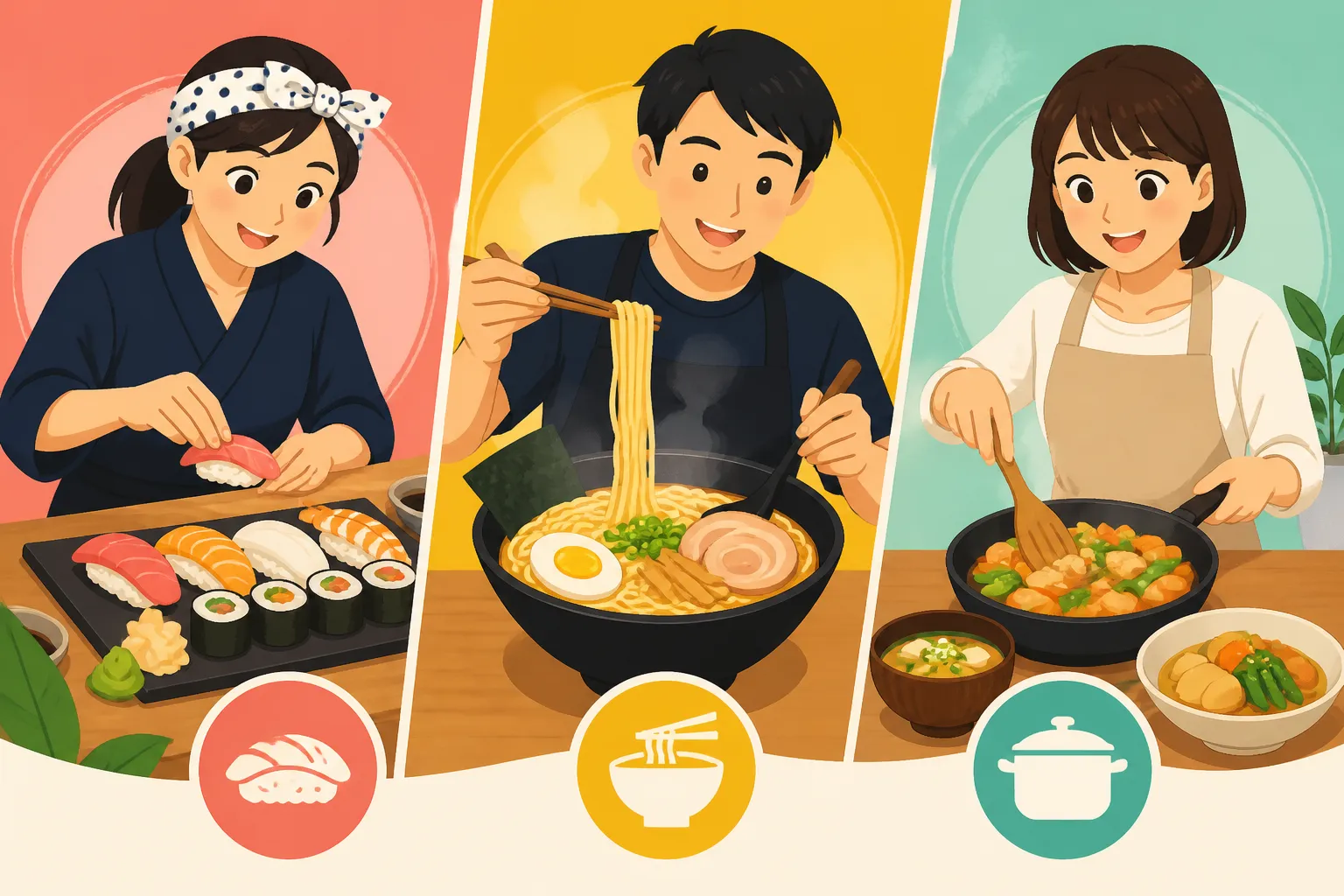
Japanese Cooking Classes: Sushi, Ramen, and Home Cooking Experiences Compared
You’ve eaten your fair share of incredible sushi, slurped countless bowls of steaming ramen, and perhaps even sampled some delicate kaiseki in Japan. But there’s a moment for many of us expats and long-term visitors when simply eating isn't enough; we want to learn the magic behind the dishes, to bring a piece of that culinary artistry back home. Navigating the world of Japanese cooking classes can feel daunting, from finding English-friendly instructors to understanding what kind of experience truly suits you. This guide will walk you through everything you need to know, and you’ll soon discover that Klook is often your best friend for navigating these wonderful opportunities.
Disclosure: This post may contain affiliate links. We may earn a commission at no extra cost to you if you make a purchase through these links. Read full disclosure.
Why Take a Japanese Cooking Class? More Than Just a Meal
Let's be real, you can spend years in Japan and still only scratch the surface of its incredible food culture. Dining out is fantastic, but it's a passive experience. When you roll up your sleeves and get hands-on in a Japanese kitchen, it unlocks a whole new level of appreciation. It's not just about replicating a recipe; it's about understanding the soul of the food.
Deep Dive into Culture and Ingredients
Think about it: have you ever stood in a Japanese supermarket aisle, utterly bewildered by the sheer variety of soy sauces, miso pastes, or even just different cuts of konbu seaweed? A cooking class is your golden ticket to deciphering these mysteries. An experienced local instructor won't just tell you what to do, but why. You'll learn about the foundational elements like dashi – that incredible umami broth that underpins so much of Japanese cuisine – and how to make it properly, not just from a powder.
You'll get insights into the importance of seasonality, the shun (旬) of ingredients, which dictates what's served when, and why. It’s a direct window into the philosophy of washoku, the traditional Japanese cuisine that focuses on harmony, balance, and presentation. You’ll understand why that tiny, perfectly cut piece of ginger is there, or the subtle dance between sweet, salty, sour, and umami. It's a truly immersive experience that helps you connect with Japan on a deeper, more delicious level. Plus, imagine being able to confidently pick out the right ingredients at your local super or depachika (department store food hall) after a class!
Hands-On Learning and Expert Guidance
Following an online recipe for tonkatsu or tamagoyaki can be frustrating, especially when your results don't quite match the beautifully plated photos. The subtle nuances of Japanese cooking, like how to properly slice fish for sushi, achieving that perfect fluffy texture for rice, or the rhythmic folding of gyoza, are often best learned by doing, with immediate feedback from a master.
In a cooking class, you have an expert right there to correct your grip on the knife, guide your technique, or explain the ideal consistency of a batter. This kind of personalized instruction is invaluable. It transforms those tricky steps from intimidating challenges into achievable skills. Many of us expats struggle with the language barrier in everyday life, so having an English-speaking instructor who can clearly explain complex culinary terms and techniques makes all the difference. You walk away not just with a full stomach and a recipe card, but with actual skills and confidence that you can apply in your own kitchen, no matter where you are in the world.
Popular Types of Japanese Cooking Classes Available
Japan offers a dazzling array of cooking classes, catering to every palate and skill level. Whether you dream of perfecting the delicate art of sushi or mastering hearty comfort foods, there's a class for you.
Sushi Making: The Iconic Experience
Ah, sushi. It's often the first thing people think of when they imagine Japanese cuisine. Taking a sushi-making class goes far beyond simply rolling rice and fish; it’s an education in precision, patience, and respect for ingredients. Typically, you'll learn the fundamentals of preparing the perfect sushi rice—that delicate balance of vinegar, sugar, and salt that makes all the difference. Then comes the art of cutting and preparing various types of fish, often with guidance on essential knife skills (this is where having a good quality, sharp knife, like those discussed in The Complete Guide to Japanese Kitchen Knives: Types, Steel, and Buying, truly makes a difference, though you’ll use the class’s tools).
Most classes cover both nigiri (the classic hand-pressed sushi) and maki (rolled sushi), with some venturing into temaki (hand rolls) for a more casual, interactive experience. You'll learn the techniques for forming neat, consistent pieces, ensuring the fish adheres perfectly to the rice without being too tightly packed. It's a surprisingly meditative process, and the satisfaction of eating sushi you've crafted yourself is unparalleled. You might even discover a newfound respect for sushi chefs and their years of dedication.
Ramen and Gyoza: Comfort Food Mastery
If sushi feels a bit too refined, perhaps you're more drawn to the soul-warming depths of ramen and the savory satisfaction of gyoza. These are true comfort foods, but don't let their casual appeal fool you – there's a serious amount of skill involved in making them from scratch. A ramen class will often demystify the complex broth, which can take hours to prepare. While you might not be simmering bones for eight hours in a two-hour class, you'll learn about the different types of broths (tonkotsu, shio, shoyu, miso), the various toppings, and how to combine flavors for a balanced bowl. You might even get a chance to make noodles from scratch, understanding the texture and bite that makes ramen so addictive.
Gyoza, the delectable pan-fried dumplings, are another class favorite. The focus here is on crafting the perfect filling – a savory mixture of minced pork, cabbage, chives, and seasonings – and then, crucially, the art of folding the wrappers. There are many folding techniques, from simple half-moons to intricate pleats, and an instructor will guide you to achieve that appealing, crispy bottom and tender top. These classes are often lively and highly interactive, perfect for friends or families who enjoy a bit of friendly competition in the kitchen.
Traditional Home Cooking (Washoku): Everyday Flavors
Beyond the famous dishes, much of Japan's culinary charm lies in its washoku, the traditional home-style cooking that nourishes families daily. These classes offer a wonderful opportunity to learn practical, wholesome recipes you can easily integrate into your own routine. You might prepare dishes like tempura (lightly battered and fried seafood and vegetables), savory miso soup, fluffy tamagoyaki (rolled omelet), or a comforting donburi (rice bowl) with various toppings.
The emphasis in these classes is often on balancing flavors, utilizing seasonal ingredients, and understanding fundamental Japanese cooking techniques like simmering (nimono), stir-frying (itamemono), and stewing (tsukudani). You’ll likely learn the secrets to a good dashi stock and how to create simple, elegant side dishes that complement the main course. These experiences are less about grand culinary theatrics and more about mastering the subtle art of Japanese home cooking, providing a deeper understanding of everyday life in Japan. They're a fantastic way to stock your mental recipe box with genuinely useful, delicious meals.
Specialty Classes: Okonomiyaki, Soba, Wagashi
For those looking for something a little different, Japan also offers a range of specialty cooking classes focusing on regional delicacies or specific culinary arts. For example, you could dive into the world of okonomiyaki, Japan's savory pancake. You'll learn the differences between the Osaka style (where ingredients are mixed into the batter) and the Hiroshima style (layered ingredients), and get hands-on with flipping and decorating these delicious creations. It's often a fun, casual class that culminates in a satisfying meal.
Another unique experience is making soba noodles from scratch. This is a surprisingly meditative and physically demanding process, from kneading the buckwheat dough to thinly slicing the noodles with specialized knives. It offers a glimpse into a traditional craft and the deep respect for ingredients. If you have a sweet tooth, a wagashi (traditional Japanese sweets) making class might be perfect. These delicate, often seasonal confections are miniature works of art, reflecting nature and the seasons. You'll learn how to mold and shape colorful pastes into intricate designs, creating edible masterpieces. These specialty classes offer a memorable experience and a chance to explore a less common facet of Japanese cuisine.
Choosing the Right Cooking Class: What to Consider
With so many tantalizing options, how do you pick the perfect Japanese cooking class? It's not just about the food; it's about the entire experience. Thinking through a few key factors will help you find a class that fits your interests, schedule, and needs.
Location and Accessibility (Tokyo, Kyoto, Osaka, etc.)
First things first: where are you based, or where will you be traveling? Major cities like Tokyo, Kyoto, and Osaka naturally have the widest selection of classes. In Tokyo, you might find classes near iconic locations like Tsukiji Outer Market, allowing you to pair your cooking experience with a market visit for ingredients. In Kyoto, classes often lean into traditional washoku or wagashi, reflecting the city’s deep cultural heritage, perhaps in districts like Gion or near Nishiki Market. Osaka, being the "kitchen of Japan," is famous for its street food, so classes for takoyaki or okonomiyaki are abundant.
Consider how easy it is to get to the class location. Many tourist-friendly classes are conveniently located near major train stations, making them accessible even if you're relying on public transport, which you can easily navigate with tips from Top 10 Tips for Using Tokyo Subways & Trains (Transport Guide). If you’re living outside a major city, you might need to look for local community centers or smaller, independent schools that might require a bit more Japanese language skill to book. However, for most visitors and expats, focusing on established schools in well-known areas is a safe bet.
Class Size and Language Support
The size of the class can significantly impact your experience. Do you prefer an intimate setting where you can ask plenty of questions and get personalized attention, or a larger, more social atmosphere? Small group classes (typically 2-6 people) offer a more hands-on and tailored experience, allowing for deeper interaction with the instructor. Larger workshops might be more budget-friendly but could mean less individual guidance.
For many foreign residents and tourists, language support is paramount. Unless you’re fluent in Japanese, an English-speaking instructor is essential. Many cooking schools cater specifically to international guests and explicitly state that their classes are conducted in English. Some might offer translation services, but direct instruction is usually preferable. Always check the class description for details on language. Just like navigating the healthcare system can be challenging without language support, as covered in Communicating with Doctors: Language Tips for Non-Japanese Speakers, the same applies to complex cooking instructions! Make sure you can comfortably understand and communicate.
Dietary Needs and Restrictions
Dietary restrictions can be a real headache when traveling or living in Japan, where many dishes contain fish broth (dashi) or soy products. If you're vegetarian, vegan, gluten-free, or have specific allergies, it's absolutely crucial to choose a class that can accommodate you. Don't assume; always check the class description or contact the organizer beforehand.
Many reputable schools are becoming more accustomed to international dietary needs and offer specific vegetarian or vegan menu options. However, traditional Japanese cooking heavily relies on ingredients like bonito flakes and kombu for dashi, so finding truly traditional classes that are 100% vegan might be challenging. Some classes might be able to make minor adjustments, while others might focus on dishes that are naturally more flexible. You might find classes centered around noodle dishes (without meat broth) or specific vegetable preparations. Platforms that aggregate many cooking experiences often have filters for dietary preferences, making your search much easier. For more general advice on navigating food restrictions, check out Food Allergies in Japan: Reading Labels and Asking About Ingredients.
Price Point and Inclusions
Cooking classes in Japan can vary quite a bit in price, depending on the type of cuisine, ingredients used (e.g., premium wagyu beef vs. standard chicken), class duration, and the school's reputation. Generally, a typical class might include all ingredients, use of kitchen tools, an English-speaking instructor, a recipe booklet to take home, and, of course, the opportunity to eat the delicious meal you've prepared! Some premium experiences might also include a market tour, sake tasting, or special gifts.
Always check what’s included in the price. Are drinks (tea, soft drinks, sake) part of the package, or an extra cost? Is there an option for a pick-up/drop-off service if you're in a less accessible area? While we can't discuss specific numbers, know that there's a range to fit different budgets. Some providers might offer discount bundles if you book multiple classes or experiences, so keep an eye out for those deals. The most important thing is transparency about costs so you know exactly what you're getting for your investment.
Why Klook is Your Best Bet for Booking Cooking Classes in Japan
Alright, let's get down to brass tacks. You've weighed your options, fantasized about the perfect sushi roll or the most savory ramen, and now you're ready to book. And trust me, after spending years fumbling with booking systems or trying to decipher Japanese-only class descriptions, I've found that one platform consistently rises above the rest for ease and reliability: Klook. This is where trusted platforms like Klook really shine, simplifying the whole process.
Extensive Selection and Easy Booking
One of the biggest headaches for foreigners in Japan is navigating booking systems that are often entirely in Japanese, sometimes with clunky translation options that leave you guessing. This is where Klook truly saves the day. They have an incredible, curated selection of cooking classes across Japan, from the bustling streets of Tokyo to the ancient charm of Kyoto and the foodie paradise of Osaka. You don't have to hop from one independent school website to another, struggling with multiple interfaces.
Klook centralizes these options, presenting them in clear, concise English with professional photos and detailed itineraries. You can browse an incredible variety of classes, from traditional sushi making in Tsukiji to okonomiyaki flipping in Osaka, all with detailed descriptions, photos, and availability clearly listed on Klook. The booking process itself is smooth and straightforward, allowing you to select dates, times, and participant numbers with just a few clicks. It takes the stress out of planning and lets you focus on the fun part: learning to cook!
Verified Reviews and Reliable Providers
When you're committing your precious travel time and money to an experience, especially in a foreign country, you want to be sure it's legitimate and high-quality. The peer review system on Klook is invaluable. You can read honest feedback from previous participants, giving you a realistic idea of what to expect from the instructor, the facilities, and the overall class experience. This transparency is a massive advantage, helping you avoid any potential duds and ensuring you choose a class with a proven track record of satisfying customers.
Klook also partners with reputable local cooking schools and individual chefs who are often specifically geared towards accommodating international guests. This means you can generally expect English-speaking instructors, well-maintained kitchens, and a professional level of service. You’re not just booking a random class; you’re booking a vetted experience through a platform that prioritizes customer satisfaction. This added layer of trust and reliability is particularly comforting when you're in a new environment, and with a platform like Klook, finding a class that caters to your dietary needs and clearly communicates this upfront is much easier.
Competitive Pricing and Flexibility
Beyond the convenience, Klook often offers competitive pricing, sometimes even better deals than booking directly through smaller individual schools. They frequently have promotions, bundled packages, or exclusive discounts that can make your culinary adventure even more affordable. While we can't list specific prices here, comparing options on Klook often reveals excellent value for money.
Furthermore, Klook understands that travel plans can change. Many of their listings come with flexible cancellation policies, allowing you to adjust your booking without a huge financial penalty (always double-check the specific cancellation terms for each class, of course!). This flexibility provides peace of mind, especially if you're planning your trip months in advance. Having the option to easily modify or cancel your booking directly through Klook's platform, often with minimal fuss, is a huge advantage over dealing with individual, potentially less flexible, local businesses. Booking through Klook gives you peace of mind that your investment is secure and your plans can adapt.
Tips for Making the Most of Your Japanese Cooking Class
You've booked your class, packed your bags (or just your enthusiasm if you're already here!), and you're ready to get cooking. To ensure you have the best possible experience, here are a few seasoned expat tips.
Come Prepared and Ask Questions
Even though it’s a hands-on experience, a little mental preparation goes a long way. Wear comfortable clothes and shoes, as you’ll likely be standing for a good portion of the class. If you're someone who likes to jot things down, bring a small notebook and a pen for extra tips or tricks the instructor might share that aren't in the provided recipe card.
Most importantly, don't be shy! This is your opportunity to truly learn. If you don't understand a step, or if you're curious about an ingredient, ask. Japanese instructors generally appreciate curiosity and engagement. Ask about the history of the dish, regional variations, or tips for sourcing ingredients back home. The more questions you ask, the richer your learning experience will be. Remember, it's not just about replicating the recipe, but understanding the philosophy behind it.
Embrace the Cultural Experience
A Japanese cooking class is more than just a culinary lesson; it's a cultural exchange. You'll not only learn cooking techniques but also often gain insights into Japanese home life, kitchen etiquette, and the values embedded in their food culture. Observe how the instructor moves in the kitchen, their precision, their dedication to fresh ingredients, and the beautiful presentation. This connection to the broader Japanese culture, akin to understanding Japanese Cultural Etiquette 101 for Newcomers, will greatly enhance your enjoyment.
Many classes end with you sitting down to enjoy the meal you've prepared with your fellow classmates and the instructor. This is a fantastic opportunity to socialize, share stories, and connect with people from different backgrounds. Don't rush; savor the food and the moment. It's a chance to practice simple Japanese phrases like itadakimasu before eating and gochisousama deshita after, showing your appreciation for the meal.
Recreate the Magic at Home
The true test of a good cooking class isn't just how much fun you had, but whether you can bring those skills and flavors into your own kitchen. Take those recipe cards home, perhaps buy some key Japanese ingredients like special soy sauce, mirin, or sake (if you’re into spirits, check out The Complete Guide to Japanese Whisky: History, Distilleries, and How to Buy for another kind of delicious Japanese craft). Then, try to recreate the dishes for friends and family.
Don’t be discouraged if your first attempt isn’t perfect; cooking, like any skill, requires practice. The joy is in the process and the delicious memories you're building. Sharing your newfound culinary skills is a wonderful way to keep your Japan experience alive and introduce others to the wonders of Japanese cuisine. Plus, it's a fantastic conversation starter at dinner parties!
Comparing Popular Japanese Cooking Class Types
To help you decide, here's a quick comparison of some popular cooking class types. Remember, these are general guidelines, and specific classes may vary.
| Class Type | Typical Dishes | Key Skills Learned | Complexity | Ideal For |
|---|---|---|---|---|
| Sushi Making | Nigiri, Maki, Temaki, Miso Soup | Rice preparation, fish handling, rolling/shaping | Medium-High | Sushi lovers, those seeking precision, hands-on artistry |
| Ramen & Gyoza | Ramen broth, noodles (sometimes), various toppings, Gyoza | Broth basics, noodle texture, dumpling filling/folding | Medium | Comfort food fans, groups, those wanting a hearty, satisfying meal |
| Washoku (Home Cooking) | Tempura, Tamagoyaki, Miso Soup, Donburi, Side dishes | Dashi making, balancing flavors, basic Japanese techniques | Medium | Health-conscious, families, those wanting practical everyday recipes |
| Wagashi (Sweets) | Nerikiri, Daifuku, Mochi | Ingredient mixing, intricate shaping, aesthetic design | Medium-High | Sweet tooths, art lovers, those interested in delicate craftsmanship |
| Okonomiyaki/Takoyaki | Osaka/Hiroshima Okonomiyaki, Takoyaki | Batter mixing, ingredient layering, flipping technique | Low-Medium | Casual fun, groups, street food enthusiasts, families with kids |
| Soba Making | Handmade Soba Noodles | Kneading dough, rolling, precision cutting | High | Enthusiasts of traditional crafts, patient individuals |
So, whether you're a seasoned chef or a complete beginner, diving into a Japanese cooking class is an unforgettable way to experience the culture. With platforms like Klook making it so easy to find and book the perfect experience, there's really no excuse not to give it a try. Go ahead and explore the wonderful world of Japanese cooking classes – with Klook as your trusted guide, you’re in for a real treat.
Disclaimer
This article is for general informational purposes only and does not constitute professional advice. Laws, prices and regulations vary by location and change over time. Consult a qualified professional for guidance on your specific situation.