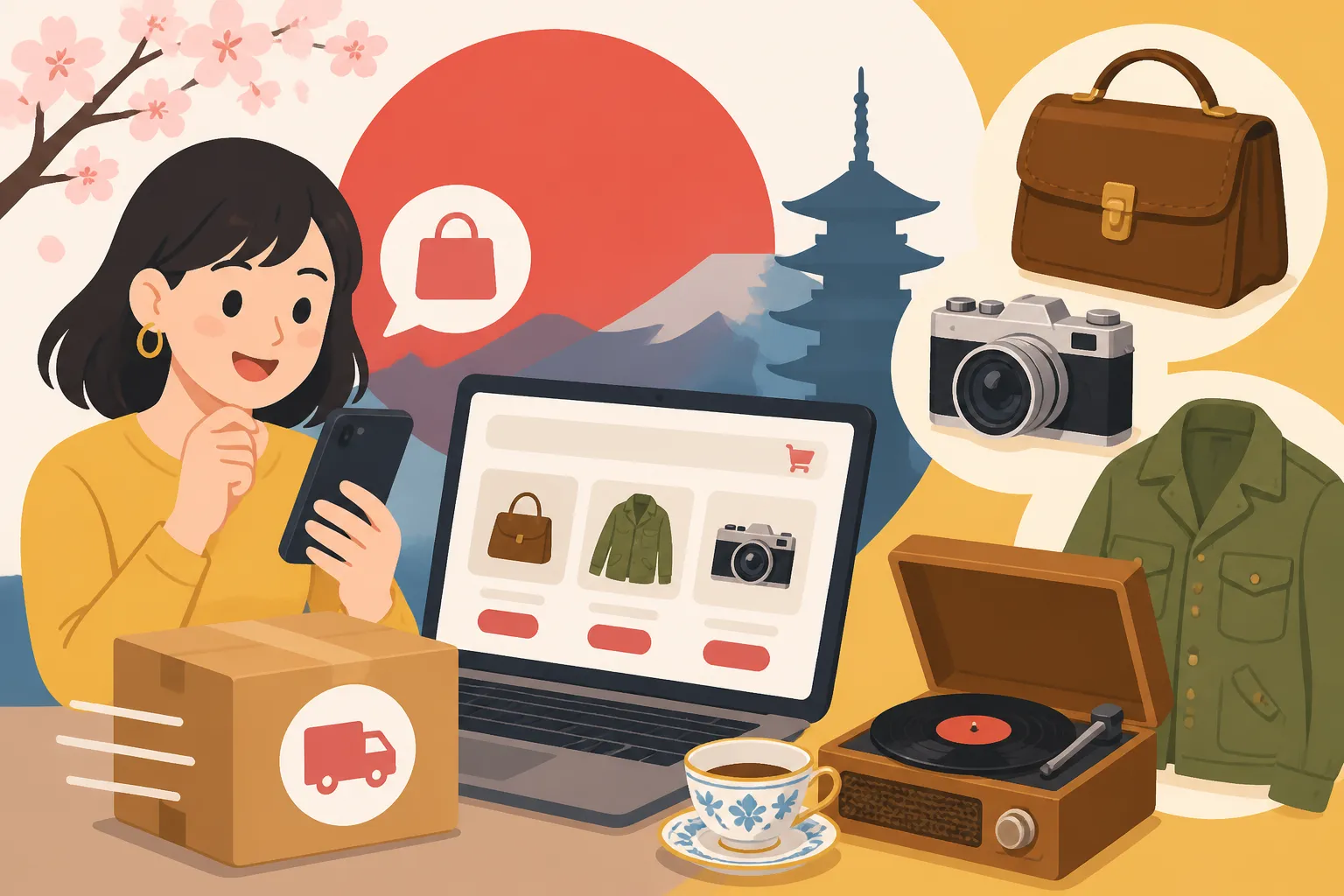
How to Buy Vintage and Secondhand Items from Japan
Oh, the thrill of finding that perfect, one-of-a-kind vintage treasure! When you’re living in or just visiting Japan, you quickly realize this country is an absolute goldmine for unique secondhand items, from fashion to ceramics to retro electronics. But if you're like most of us, you've probably stumbled upon a Japanese online marketplace, found something truly amazing, only to hit a wall when it comes to shipping it overseas. Don't worry, my friend, you're not alone in that frustration. This comprehensive guide is here to walk you through the magical world of buying vintage and secondhand items from Japan, no matter where you are in the world, by leveraging the power of proxy shopping services.
Disclosure: This post may contain affiliate links. We may earn a commission at no extra cost to you if you make a purchase through these links. Read full disclosure.
Why Japanese Secondhand is a Treasure Trove for Foreign Buyers
Let's be real, Japan has a reputation, and it's well-deserved: things here are often made with incredible attention to detail and maintained with almost religious fervor. This cultural trait makes the secondhand market a truly special place to find high-quality goods that defy their "used" label.
The Culture of Quality and Preservation
It’s not just a stereotype; Japanese craftsmanship is world-renowned, and this extends to how people treat their possessions. When you buy something secondhand from Japan, whether it's a vintage denim jacket from the 80s or a beautifully preserved ceramic tea set, you'll often find it in astonishingly good condition. Unlike some other countries where "used" might mean "on its last legs," here it often means "pre-loved and meticulously cared for."
I’ve personally bought everything from obscure video game consoles to designer handbags on Japanese secondhand sites, and the condition nearly always exceeds expectations. People here take pride in their belongings, and that means even items decades old can look almost new. For example, a vintage Seiko watch might come with its original box and papers, perfectly ticking, even if it's from the 1970s. The culture values keeping things in pristine order, often for future resale or simply out of respect for the item itself. This is a huge win for foreign buyers, as it dramatically reduces the risk associated with purchasing used goods sight unseen.
Unearthing Unique Finds Not Available Overseas
One of the biggest draws for expats and collectors alike is the sheer exclusivity of many Japanese secondhand items. You won't find these quirky, cool, or highly specific items in your home country, or if you do, they’ll be marked up astronomically. Think about Japan-exclusive anime figures from limited runs, retro video games that were never released internationally, or rare fashion pieces from niche Japanese designers.
Beyond the obvious, there are hidden gems like vintage kimono and yukata in incredible fabrics and patterns, antique pottery that tells a story, or even specific models of vintage electronics that were only sold in the Japanese market. The variety is staggering. I once found a gorgeous, hand-painted maneki-neko (lucky cat) from a small, local artist on Mercari Japan that would have been impossible to track down anywhere else. These are the kinds of unique finds that truly make the effort of navigating the secondhand market worthwhile, allowing you to bring a piece of authentic Japanese culture and history into your life, not just mass-produced souvenirs.
Sustainability and Value for Money
In an era where conscious consumption is increasingly important, diving into Japan's secondhand market is also a fantastic way to embrace sustainability. By giving pre-loved items a new home, you're reducing waste and supporting a circular economy. It feels good to know that your new-to-you item isn't contributing to landfill.
But let's be honest, beyond the feel-good factor, there's a strong financial incentive too. With the right strategy, buying secondhand in Japan can offer incredible value for money. Prices for new goods in Japan can sometimes feel a bit steep, especially in a fluctuating currency market. However, the secondhand market often presents opportunities to snag high-quality items at a fraction of their original cost. For example, a gently used designer coat might sell for 70% less than its retail price. When you factor in the yen's current weakness against other currencies, you might find that after all the fees and shipping, your vintage Japanese denim still comes out cheaper than a new, mass-produced item back home. It's a smart way to get more bang for your buck while still acquiring desirable, often superior, goods.
Navigating the Japanese Secondhand Marketplace from Abroad
Okay, so you're convinced that Japanese secondhand is where it's at. But how do you actually access these treasures when most sellers don't speak English, accept international payments, or ship outside Japan? This is where understanding the landscape and the solution becomes crucial.
Popular Online Platforms for Vintage and Used Goods
Japan boasts a vibrant online secondhand market, much like other countries, but with its own distinct flavor and platforms. Each platform caters to slightly different needs and types of goods, so knowing where to look is half the battle.
- Mercari Japan (メルカリ): This is by far the biggest and most popular peer-to-peer marketplace. Think of it like Japan's eBay or Poshmark. You can find almost anything here – fashion, electronics, cosmetics, anime goods, homeware, you name it. Listings move incredibly fast, so if you see something you like, you usually need to act quickly. It’s primarily a "buy it now" format, making it great for impulse purchases. We have a dedicated guide on How to Buy from Mercari Japan from Overseas that goes into much more detail.
- Yahoo Auctions Japan (ヤフオク!): This is Japan's equivalent of eBay auctions. It's fantastic for rare collectibles, vintage items, and often a treasure trove for niche hobbyists. Prices can fluctuate wildly depending on bidding wars, but you can sometimes snag incredible deals. Be prepared for a faster pace than many Western auction sites, and always have your bidding strategy ready. Learn the ropes with our guide on How to Buy from Yahoo Auctions Japan.
- Rakuma (ラクマ, formerly Fril): Another popular flea market app, similar to Mercari but sometimes with slightly different user bases and pricing. You might find different items here or less competition for similar goods. It's worth checking both platforms if you're looking for something specific.
- Book-Off Online (ブックオフオンライン): Specializes in used books, manga, CDs, DVDs, and video games. If you're looking to build your Japanese media library on a budget, this is your spot.
- Suruga-ya (駿河屋): A fantastic online retailer for secondhand anime, manga, video games, figures, and other collectibles. They have a huge inventory and items are typically well-categorized with condition ratings. Perfect for avid collectors.
These platforms are where the magic happens, but remember, they are almost exclusively in Japanese and cater to a domestic audience.
The "Foreigner Barrier" and Why Proxy Services are Essential
So you’ve found that perfect vintage haori jacket on Mercari or a rare Famicom game on Yahoo Auctions. You go to checkout, and then BAM! You're hit with a wall of Japanese payment options, no international shipping, and probably some text you can't quite decipher. This is the infamous "foreigner barrier" that makes direct purchasing almost impossible for those of us overseas.
Japanese sellers, particularly individuals on Mercari or Yahoo Auctions, are often hesitant to deal with international buyers. They prefer simple domestic transactions, not wanting the hassle of customs forms, complex shipping logistics, or currency conversions. Many simply don't have the capability to ship internationally anyway. This is precisely why proxy services exist and why they are absolutely indispensable. They act as your personal shopper and shipping agent in Japan. They have Japanese bank accounts, understand the local language and etiquette, and crucially, provide a physical Japanese address where sellers can ship the items. Without a proxy service, your dreams of a vintage Japanese vinyl collection or that limited-edition action figure are likely to remain just dreams.
Understanding Item Conditions and Descriptions
One of the trickiest parts of buying secondhand from Japan, especially without direct interaction, is accurately understanding the item's condition. While Japanese sellers are generally honest and thorough, language barriers can create confusion, and nuances are often lost in translation apps.
You'll encounter various terms for condition, and it's essential to learn a few key ones:
- 新品 (Shinpin): Brand new, unopened.
- 未使用 (Mishiyō): Unused, but might be opened or without original tags.
- 美品 (Bihin): Beautiful condition, excellent, very few noticeable flaws. This is often a sweet spot for vintage items.
- 目立った傷や汚れなし (Medatta kizu ya yogore nashi): No noticeable scratches or dirt. Good condition for its age.
- やや傷や汚れあり (Yaya kizu ya yogore ari): Minor scratches or dirt present. Expect some wear.
- 傷や汚れあり (Kizu ya yogore ari): Scratches and dirt present. Clearly used, may have visible flaws.
- 全体的に状態が悪い (Zentaiteki ni jōtai ga warui): Overall poor condition. Proceed with caution.
- ジャンク品 (Junk-hin): Junk item. Usually broken, for parts, or non-functional.
Always scrutinize the photos provided by the seller. Zoom in. Look for close-ups of any potential damage. While proxy services like Buyee and ZenMarket offer options for additional photo checks once an item reaches their warehouse, this usually incurs an extra fee, so doing your homework upfront is key. Remember that many Japanese homes are small and lighting might not be ideal for photos, so a slightly dark photo doesn't always mean a bad item, but it should prompt extra caution. Don't be afraid to use Google Translate or DeepL on the descriptions, and if anything sounds too vague, factor that into your bidding or buying decision.
Your Gateway to Japan: How Proxy Services Work
Now that you know why you need them and where to find your treasures, let's talk about the how. Proxy services are truly the unsung heroes for international buyers eager to tap into Japan's vibrant secondhand market.
The Proxy Service Ecosystem: Step-by-Step
Think of a proxy service as your personal shopper and international shipping department, all rolled into one. Here’s a simplified breakdown of the process that allows you to buy that limited-edition vintage denim jacket or those rare ceramic plates from Japan:
- Find Your Treasure: You browse Japanese online marketplaces like Mercari, Yahoo Auctions, Rakuma, or even specialized stores like Suruga-ya. You find an item you absolutely must have.
- Order Through the Proxy: You copy the item's URL and paste it into the proxy service’s website (e.g., Buyee, ZenMarket). You specify any details like size, color, or bid amount if it's an auction. The proxy service translates the listing for you and provides an estimated cost.
- Proxy Makes the Purchase: Once you approve and pay for the item (plus the proxy's initial service fee and domestic shipping to their warehouse), the proxy service buys it on your behalf using their Japanese payment methods and shipping address. For Yahoo Auctions, they will place your bid and manage the auction.
- Item Arrives at Warehouse: The seller ships the item domestically to the proxy service’s Japanese warehouse. This is where the magic really begins.
- Consolidation and Storage: If you're buying multiple items, they can be stored at the warehouse for a certain period (often free for a set number of days). This allows you to combine several purchases into one larger, more cost-effective international shipment. Check out our guide on How Package Consolidation Saves You Money for more on this.
- International Shipping: Once all your items arrive and you're ready to ship, you choose your preferred international shipping method (EMS, DHL, FedEx, Surface Mail, etc.) and pay the final international shipping fees. The proxy packs everything securely and sends it off.
- Delivery to Your Door: Your carefully selected Japanese treasures arrive at your home, usually within days or weeks, depending on the shipping method chosen.
It sounds like a lot of steps, but services like Buyee and ZenMarket have streamlined this to be surprisingly user-friendly, taking all the stress and language barriers out of the equation for you.
Key Features and Services to Look For
Not all proxy services are created equal, so it's worth understanding what features can make your secondhand shopping experience smoother and more secure. When choosing, consider:
- Platform Integration: Do they directly integrate with the Japanese sites you want to shop from (like Mercari, Yahoo Auctions, Rakuten)? Many services, like Buyee and ZenMarket, have direct interfaces for these popular sites, making it feel almost like you're shopping directly.
- Consolidation Services: As mentioned, this is a huge money-saver. Almost all reputable proxies offer it, allowing you to combine multiple packages into one. This significantly reduces international shipping costs compared to sending each small item separately.
- Protective Packaging Options: Especially for delicate vintage ceramics or rare collectibles, extra padding, bubble wrap, or even custom boxing can be invaluable. Some services offer this as a paid add-on.
- Photo Inspection Services: For a small fee, some proxies will take additional photos of your item once it arrives at their warehouse, giving you peace of mind about its condition before it leaves Japan. This is particularly useful for items with vague descriptions or limited seller photos.
- Customer Support: Having English-speaking customer service is critical. When an issue arises or you have a specific question about an item, clear communication with your proxy can make all the difference. Both Buyee and ZenMarket offer robust multilingual support.
- Payment Methods: Ensure they accept payment methods convenient for you, such as credit cards, PayPal, or even international money transfer services like Wise.
Choosing a service that aligns with your specific shopping needs will prevent headaches down the line. We have a detailed breakdown in our Best Japan Proxy Shopping Services Compared guide.
Deciphering the Costs: Fees, Shipping, and Customs
This is often where new users get tripped up. The sticker price of that vintage Pokemon card might look great, but you need to factor in the full "landed cost." Understanding Understanding Japan Proxy Shopping Fees is crucial for budgeting.
Here’s a general breakdown of the costs involved:
- Item Price: The actual cost of the item on the Japanese marketplace.
- Domestic Shipping Fee: The cost for the seller to ship the item from their location to the proxy service's warehouse in Japan. This can vary from free to several hundred yen.
- Proxy Service Fee: The fee charged by the proxy for their services (purchasing, communication, handling). This varies by service. Some, like ZenMarket, charge a flat fee per item, while others like Buyee might have different fee structures or offer promotions.
- Payment Fees: Some services might charge a small processing fee for international payments or currency conversion.
- Optional Services: Fees for consolidation, extra photos, protective packaging, etc.
- International Shipping Fee: This is often the largest cost. It depends on the weight, dimensions, shipping method chosen (EMS, DHL, FedEx, Surface), and destination country. You can often estimate this using their online calculators, but knowing How to Estimate Shipping Costs from Japan helps manage expectations.
- Customs Duties and Taxes: Depending on your country's import laws and the value of your item, you may be charged import duties, VAT, or other taxes upon arrival. This is paid to your country's customs agency, not the proxy. Always be aware of Customs Declarations for Japan Proxy Orders Explained and remember you might have to pay these upon delivery. It's also wise to check for Prohibited and Restricted Items When Importing from Japan before you buy to avoid any nasty surprises.
Here's a simplified comparison of common fees for two popular services:
| Service | Service Fee (per item) | Consolidation Fee | Photo Service | Storage Period (Free) | Remarks |
|---|---|---|---|---|---|
| Buyee | Varies (often ¥300-¥1000) | Varies (often ¥500-¥1000) | Yes (paid add-on) | 30 days | Integrates directly with many sites |
| ZenMarket | ¥500 | Free | Yes (paid add-on) | 45 days | Flat fee makes budgeting easier |
Note: Fees can change, and special promotions are common. Always check the current fee structure on the service's official website.
Consider using services like Wise to handle the currency conversion for your payments. It can often provide better exchange rates than your bank or PayPal, saving you a bit more on your overall purchase. This small trick can significantly lower your costs, especially for larger orders, and you can learn more about it in our guide on How to Use Wise to Pay for Japan Proxy Orders.
Best Practices for a Smooth Secondhand Shopping Experience
Buying from Japan's secondhand market can be incredibly rewarding, but a little strategic planning goes a long way. Think of these tips as my hard-won wisdom from years of navigating these waters!
Researching and Bidding Smartly
The Japanese secondhand market is vast and competitive, especially for popular items. Going in with a game plan will save you money and prevent disappointment.
First, set a clear budget for both the item itself and the total landed cost (including all fees and shipping). It's easy to get carried away when you see something amazing. Use the proxy service's shipping calculator as early as possible to get a rough idea of the international shipping fees.
For platforms like Mercari, where items sell quickly, speed is key. If you see something you love, don't dither. However, for Yahoo Auctions, strategy is more important. Avoid bidding too early as it can drive up the price. Many experienced buyers use "sniping" tools (often integrated into proxy services like Buyee and ZenMarket's auction platforms) which place your maximum bid in the final seconds of an auction. This prevents other bidders from reacting and driving the price higher unnecessarily. Always know your maximum comfortable bid and stick to it. Watch multiple listings for similar items to get a feel for the market price. Sometimes patience pays off, and another similar item will pop up at a better price.
Utilize filters and search terms diligently. Many proxy sites allow you to save searches and get notifications. Use specific Japanese terms for brands or item types (e.g., "ビンテージ リーバイス" for vintage Levi's, "レトロゲーム" for retro games) if you can, as this will yield more accurate results than relying solely on English translations.
Communication and Seller Interaction (or lack thereof)
When you're dealing with a proxy service, your direct line to the seller is almost always through them. This is a blessing and a curse. On one hand, you don't have to worry about language barriers or cultural misunderstandings. On the other hand, it means you often can't get immediate answers to pressing questions.
Most of the time, sellers on platforms like Mercari are not open to extensive communication, especially if the item is already listed with good photos and a description. They expect a quick, no-fuss transaction. For Yahoo Auctions, more questions might be entertained, but expect delays as your proxy acts as an intermediary.
If you have a very specific question or request, like "Can the seller confirm if this vintage camera's flash works?" or "Is there any discoloration on the back of the figure's head?", communicate this clearly to your proxy. They will then relay it to the seller. However, be prepared for sellers to sometimes ignore these requests or give vague answers, especially if they are private individuals rather than professional stores. Don't take it personally; it's just how the system works. Trust your proxy service to do their best, but also manage your own expectations regarding in-depth seller interaction.
Maximizing Value and Minimizing Risk
You're already doing great by using a proxy service, but there are additional steps you can take to make your purchases even more economical and secure.
First, always opt for package consolidation when buying multiple items. As mentioned, this is a massive cost-saver on international shipping. Instead of paying for several small packages, you pay for one larger, often more economically priced shipment. This flexibility is one of the biggest advantages of services like ZenMarket and Buyee.
For valuable or fragile items, seriously consider adding shipping insurance. While Japanese postal services are generally excellent, accidents can happen during international transit. A small insurance fee is a minimal cost compared to losing a rare collectible or a delicate piece of pottery. Our guide on Shipping Insurance for Japan Proxy Orders can help you understand the options.
Before you even hit "buy," take a moment to review the list of Prohibited and Restricted Items When Importing from Japan. Nothing is more frustrating than having your item confiscated by customs because it's a restricted substance or material. Common culprits include certain cosmetics, alcohol, or even items with specific types of batteries that aren't allowed in air cargo without special handling. A quick check can save you a lot of heartache and money.
Finally, think about how you're paying. While credit cards are convenient, using an international money transfer service like Wise can often give you a better exchange rate, especially when the yen is weak. Every little bit saved adds up, particularly for larger orders or frequent purchases. You can explore this further in our guide about How to Use Wise to Pay for Japan Proxy Orders.
Common Secondhand Categories and What to Look For
Japan’s secondhand market offers an almost endless array of goods. Let's dive into some of the most popular categories for international buyers and what you should keep an eye out for.
Vintage Fashion and Accessories
Japanese fashion, from high-end designers to unique street styles, has a global appeal. The secondhand market is brimming with fantastic finds, often at incredible prices.
Look for iconic Japanese denim brands like Evisu, Kapital, or Momotaro, which often fetch premium prices new but can be found in excellent condition used. Vintage streetwear from brands like BAPE or Comme des Garçons is also highly sought after. Beyond specific brands, explore unique Japanese silhouettes and fabrics. Vintage sukajan (souvenir jackets) are always popular, as are traditional kimono and yukata that can be repurposed or worn traditionally.
What to look for:
- Sizing: Japanese sizing can run small compared to Western sizes. Always check measurements carefully against your own. Don't just rely on "M" or "L".
- Fabric Condition: Look closely for stains, fading (unless it’s desired, like with vintage denim), tears, or stretched fabric, especially around collars and cuffs.
- Authenticity: For high-value designer items, be mindful of fakes. Reputable proxy services generally buy from established platforms, but do your due diligence on the seller if possible.
- Wash Care: Japanese vintage clothes might have unique care instructions. Be prepared for dry cleaning or hand washing for delicate items.
Remember that a slightly wrinkled item in a photo doesn't necessarily mean poor condition; it might just be how it was stored. Focus on fabric integrity and major flaws.
Retro Video Games and Collectibles
If you’re a gamer or collector, Japan is an absolute paradise. The retro gaming scene is huge, and many Japan-exclusive titles or console variations were never released overseas.
Platforms like the Famicom (NES), Super Famicom (SNES), Game Boy, and Nintendo 64 are goldmines. You can find everything from classic RPGs to obscure arcade ports. Beyond games, look for rare anime figures, gashapon (capsule toy) sets, model kits, and character goods. Websites like Suruga-ya and Mandarake specialize in these items, often providing detailed condition reports. For more insights into this, check out our guide on How to Buy Japanese Figures and Anime Merch via Proxy.
What to look for:
- Condition of Box and Manuals (CIB – Complete In Box): For collectors, a "complete in box" item with its original manual and packaging is far more valuable. Check for tears, creases, or sun fading on boxes.
- Game Cartridge/Disc Condition: For cartridges, look at the labels for tears or discoloration. For discs, check for scratches.
- Region Locking: Be aware that some Japanese consoles and games are region-locked and may not work on non-Japanese systems without modification.
- Electronics Functionality: For consoles, verify if the seller states it's "動作確認済み" (dousa kakunin-zumi – operation confirmed) which means it's been tested and works. If it's junk-hin, assume it's broken.
Unique Homeware and Antiques
Adding a touch of authentic Japanese aesthetic to your home is easier than you think with secondhand finds. From exquisite pottery to traditional kokeshi dolls, the options are plentiful.
Explore delicate yakimono (pottery) from famous regions like Arita, Mino, or Seto. You can find stunning tea sets, sake cups, or decorative plates. Vintage lacquerware (漆器 – shikki) pieces like trays, bowls, or small boxes can be beautiful and functional. Small antique furniture pieces, decorative scrolls (kakejiku), or even old kimono fabric repurposed as wall hangings are also popular.
What to look for:
- Cracks and Chips: Especially for ceramics and lacquerware, check carefully for any hairline cracks or chips that might not be immediately obvious. Small flaws are often part of the charm of vintage, but significant damage can affect usability and value.
- Patina vs. Damage: For metals or wood, distinguish between natural patina (which can add character) and actual damage or heavy wear.
- Delicate Items: For fragile items, ensure you select protective packaging options from your proxy service.
- Authenticity: For very old or high-value antiques, verifying authenticity can be tricky. Stick to reputable sellers or ask for detailed photos if possible.
Books, Manga, and Media
For bibliophiles and media enthusiasts, Japan's secondhand market for books, manga, CDs, and DVDs is a treasure trove. You can find rare editions, complete manga sets, or classic Japanese films and music that might be hard to get otherwise.
Book-Off Online is a prime destination for manga and books, often offering bundles at incredibly low prices. For older, rarer titles or specific editions, Yahoo Auctions and Mercari can yield unique finds.
What to look for:
- Condition of Paper: Japanese books can yellow or become brittle over time, especially older prints. Look for descriptions mentioning sun damage (日焼け – hiyake) or water damage (水濡れ – mizunure).
- Missing Pages/Inserts: For manga and magazines, check if all pages are present, and if any special inserts or promotional materials are included, if that's important to you.
- Region Coding: Be aware that Japanese DVDs and Blu-rays are typically Region 2 (DVD) or Region A (Blu-ray), which might not play on your non-Japanese player without specific region-free hardware.
- CD/Vinyl Condition: For music, check for scratches on CDs or significant wear/scuffs on vinyl records.
Buying secondhand in Japan through proxy services opens up a world of possibilities. It connects you to a unique market filled with high-quality, distinctive items that reflect Japan's rich culture and craftsmanship. With a little research, a good proxy service, and careful attention to detail, you'll be unearthing Japanese treasures like a seasoned pro in no time!
Disclaimer
Please remember that while we strive to provide accurate and up-to-date information, rules and regulations regarding international shipping, customs, and platform policies can change. Always verify the latest information directly with your chosen proxy service and your local customs authority before making significant purchases. This guide is for informational purposes only and does not constitute professional advice.





