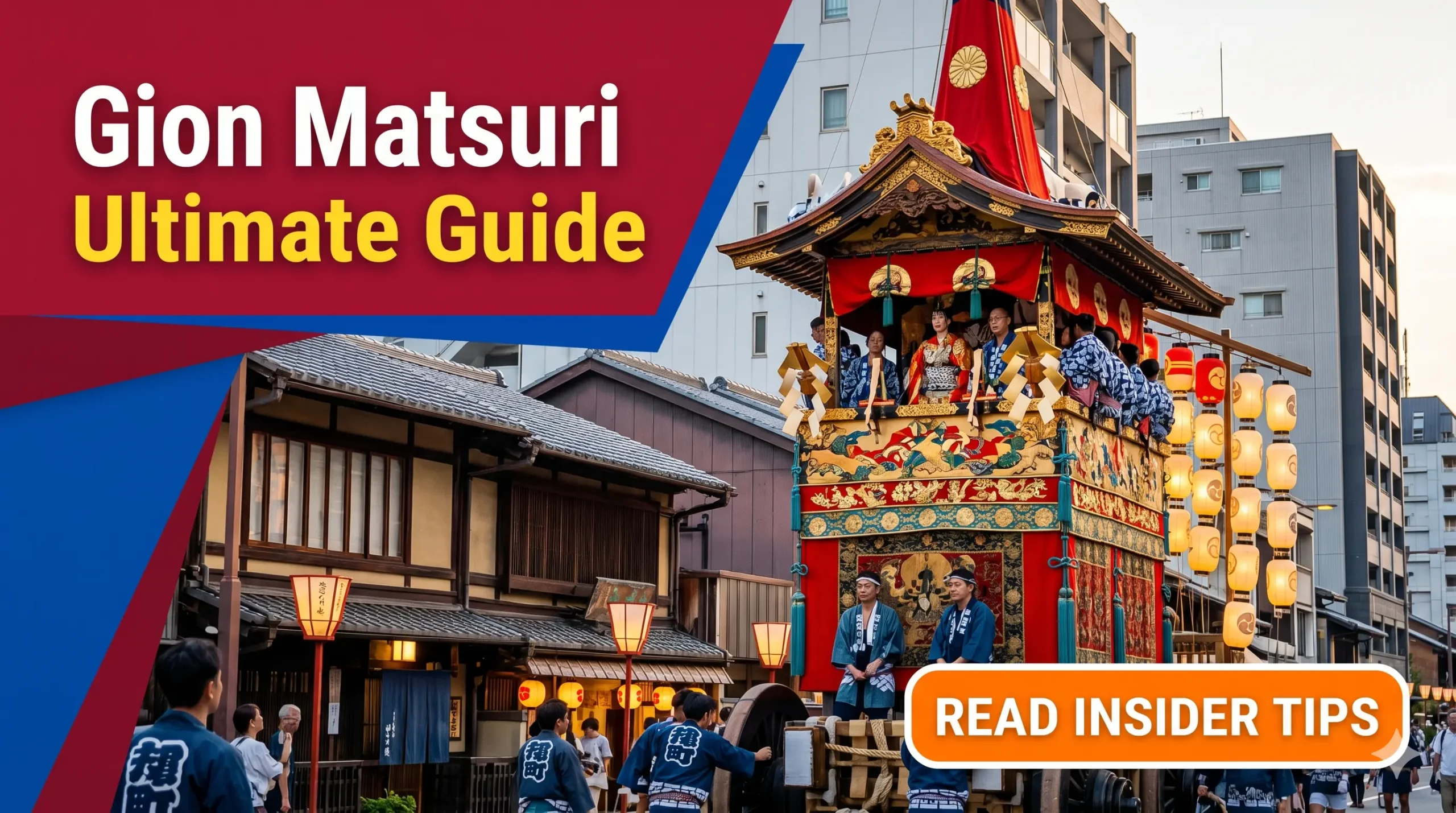
Gion Matsuri Guide: Floats, Routes, and Etiquette
You have booked a July trip to Kyoto, someone mentions that you will be there for the Gion Matsuri, and suddenly you are reading about yamaboko, yoiyama, Saki Matsuri and Ato Matsuri with no idea what any of it means or where to stand. This guide explains the floats, the two processions and their routes, how to enjoy the evenings before them, and the etiquette that keeps you on the right side of the locals.
Disclosure: This post may contain affiliate links. We may earn a commission at no extra cost to you if you make a purchase through these links. Read full disclosure.
What the Gion Matsuri Actually Is
The Gion Matsuri is Kyoto’s great summer festival, held throughout July and centred on Yasaka Shrine in the Gion district. It began more than a thousand years ago as a ritual to ward off plague and disaster, and it has been carried on, with interruptions, by the neighbourhoods of central Kyoto ever since. Today it is one of the most famous festivals in Japan, and it fills the city with residents and visitors alike.
What surprises first-time visitors is that the Gion Matsuri is not a single event on a single day. It is a month of rituals, many of them small and solemn, with two enormous public highlights: the float processions and the evenings leading up to them.
The Yamaboko Floats
The stars of the festival are the yamaboko, the great wooden floats that each neighbourhood association builds, decorates and pulls through the streets. According to the Kyoto City official tourism site, there are 34 yamaboko floats in total.
Each float belongs to a particular neighbourhood in central Kyoto. Every summer, the residents assemble it from scratch, without nails, by lashing the wooden frame together with rope using techniques passed down through generations. The floats are then dressed in tapestries, some of them centuries old and some imported long ago from as far away as Europe and Persia, which is why the festival is sometimes called a moving museum.
The largest of the floats are the hoko. They are extraordinary objects:
- The largest hoko weigh about 12 tonnes.
- They stand about 25 metres tall to the tip of the spire.
- They are pulled by 40 to 50 people hauling on thick ropes.
- Musicians sit on board playing the distinctive Gion-bayashi music of flutes, bells and drums.
The yama are generally smaller floats, many carried or pulled more simply and topped with figures from legend and history. Rather than trying to count which type is which, it is easier to think of the festival’s floats as a single family of 34 yamaboko, each with its own story, decorations and neighbourhood pride.
Two Processions: Saki Matsuri and Ato Matsuri
The floats do not all go out together. They are split between two processions a week apart:
| Procession | Date | Number of floats | Departure in 2026 |
|---|---|---|---|
| Saki Matsuri (first festival) | 17 July | 23 floats | 9:00 from Shijo-Karasuma |
| Ato Matsuri (later festival) | 24 July | 11 floats | 9:30 from Karasuma-Oike, on the reverse route |
Together, the 23 floats of the Saki Matsuri and the 11 floats of the Ato Matsuri make up the full 34. The Saki Matsuri is the larger and more famous procession, but the Ato Matsuri has its own character: smaller crowds, a more relaxed atmosphere and a different set of floats.
Floats With Special Roles
A few floats have special roles that are worth knowing before you go.
- Naginata-hoko always leads the Saki Matsuri. It is also the only float that carries a live chigo, a child chosen to serve as a sacred page. One of the most anticipated moments of the procession comes when the chigo cuts a sacred rope with a sword, marking the start of the procession.
- Ofune-hoko, a float shaped like a ship, was revived in 2014 after a long absence and now closes the Ato Matsuri. This is a useful reminder that not every hoko is in the Saki Matsuri; the Ato Matsuri has a hoko of its own bringing up the rear.
If you only have time for one procession, the Saki Matsuri gives you the classic image of Naginata-hoko leading the way. If you can stay a week longer, the Ato Matsuri with Ofune-hoko at the end is a lovely, calmer counterpoint.
Routes, Timing and Where to Watch
Knowing the route and the timing is the difference between a magical morning and three hours staring at the back of someone’s umbrella.
The Saki Matsuri Route
In 2026 the Saki Matsuri set off at 9:00 from Shijo-Karasuma, at the heart of Kyoto’s business district. From there, the procession heads east along Shijo-dori, turns north up Kawaramachi-dori, and then west along Oike-dori, before the floats return to their own neighbourhoods.
The most dramatic moments happen at the corners. Because the hoko have fixed wheels that cannot steer, the teams turn them at intersections by laying split bamboo on the road, wetting it, and hauling the float round in a series of heaving pulls. This manoeuvre, called tsuji-mawashi, draws huge crowds at each corner. Expect it at the intersections where the route changes direction.
The Ato Matsuri Route
The Ato Matsuri runs on the reverse route. In 2026 it set off at 9:30 from Karasuma-Oike, travelling east along Oike-dori, south down Kawaramachi-dori and west along Shijo-dori. Because there are 11 floats rather than 23, the procession takes less time, and it is easier to find space along the route.
Choosing Where to Stand
Each stretch of the route offers a different experience.
| Viewing area | What you see | Crowds | Best for |
|---|---|---|---|
| Near the start point | Departure rituals; on Saki Matsuri day, the chigo on Naginata-hoko | Very heavy | Committed early risers |
| At the corners | Tsuji-mawashi turns of the big hoko | Very heavy | Photographers and action lovers |
| Along Oike-dori | A wide avenue where paid viewing seats are usually set up | Organised | Families and anyone who wants a guaranteed seat |
| Side streets near the route | Glimpses of floats with fewer people | Moderate | Spontaneous visitors |
A few practical tips:
- Arrive early. For corner spots on Saki Matsuri day, people start gathering well before the 9:00 departure.
- Bring water, a hat and a small towel. Kyoto in July is hot and humid, and you will be standing in the sun.
- Use the toilet before you claim a spot. Convenience stores and stations along the route have long queues.
- Do not expect to cross the route easily during the procession. Plan which side of the street you need to be on.
- Check the official schedule and any announcements close to the date, as timings and arrangements can change from year to year.
Paid Seats and Guided Experiences: Where Klook Helps
If the idea of jostling for a kerbside spot in the heat does not appeal, there are better ways to experience the processions. Paid viewing seats are usually set up along part of the route, and tour operators run guided experiences that explain what you are seeing as it happens.
This is where Klook is genuinely useful. Klook lists Kyoto activities and experiences, and during the festival season you can often find options related to the Gion Matsuri, such as guided walks through the yoiyama streets, kimono or yukata rental, and tours that combine festival viewing with other Kyoto highlights. Availability changes from year to year and sells out quickly, so check Klook early and read each listing’s details to see exactly what is included and how prices are set.
Yoiyama: The Magical Evenings Before
For many people, including many Kyoto residents, the real heart of the Gion Matsuri is not the procession at all but yoiyama, the three evenings before each procession.
What Happens on Yoiyama Evenings
On the yoiyama evenings, the fully assembled floats stand in their neighbourhoods, lit by paper lanterns, with musicians playing the Gion-bayashi on board. Streets around Shijo-dori and Karasuma-dori are closed to traffic and fill with people strolling in yukata, food stalls, and the soft glow of lanterns against the old townhouses.
It is a completely different experience from the processions. Instead of watching floats roll past, you wander among them. Some neighbourhoods allow visitors to climb aboard certain floats for a small offering, and many open the ground floors of their old machiya townhouses to display treasures, screens and tapestries. The atmosphere is joyful, crowded and unforgettable.
Because yoiyama takes place on the three evenings before each procession, there are two sets: the evenings before the Saki Matsuri and the evenings before the Ato Matsuri. The ones before the Saki Matsuri are much busier. If crowds bother you, aim for the Ato Matsuri yoiyama, which are noticeably calmer.
How to Enjoy Yoiyama Without Losing Your Mind
- Go early in the evening, before the biggest crowds arrive, or later at night as they thin out.
- Follow the one-way pedestrian flow that police set up on the busiest streets. Stopping suddenly causes dangerous crushes.
- Keep your belongings secure in a bag worn in front of you.
- Carry cash in small amounts for food stalls and charms, though more stalls accept cashless payment than in the past.
- Agree on a meeting point with your group in case you are separated, since mobile networks can be slow in dense crowds.
- Wear comfortable footwear. Geta sandals look lovely with yukata but are hard work after a few hours.
A guided yoiyama walk, often available through Klook, can help you find the floats you are most interested in and explain the history of each neighbourhood as you go. For first-timers, that context turns a crowded stroll into something much more meaningful.
Dressing for the Festival
Wearing a yukata to yoiyama is very much part of the fun, and nobody will think it strange for a foreign visitor to do so. You can rent a yukata in Kyoto, often with help getting dressed and hair styling included. Klook is a convenient place to compare yukata and kimono rental shops, read reviews, and book a time slot before you arrive. Kimono Experience Guide: Rentals, Seasons, and Manners explains the basics of wearing and caring for a rental, and Summer Matsuri Guide: What to Wear, Eat, Expect covers festival dressing more generally.
Beyond the Big Days: The Rest of the Festival Month
Because the processions and yoiyama get all the attention, many visitors do not realise how much else happens during the Gion Matsuri. If your trip does not line up with the main dates, or you want to understand the festival more deeply, these quieter moments are well worth seeking out.
Watching the Floats Being Built
In the days before each procession, the neighbourhood teams assemble their floats in the street. This is called yamaboko-tate, and it is fascinating to watch. Craftsmen lash the huge timber frames together with rope, without nails, in patterns that have been handed down for generations, and the finished knots are both structural and beautiful. The tall spires of the hoko are raised by hand, with teams on ropes easing them upright.
You can stand at a respectful distance and watch. Do not step into the work area, do not touch materials, and keep children close, because heavy timbers are being moved. Mornings are a good time to see the work in progress before the heat builds.
Once the floats are built, many neighbourhoods hold a test pull, when the completed hoko is rolled a short distance along the street for the first time. Locals sometimes invite passers-by to join in on the ropes. If you are invited, it is an unforgettable experience; follow the instructions of the team leaders and let go when they tell you to.
Gion-bayashi Practice Evenings
Through early July, you may hear the Gion-bayashi music drifting out of neighbourhood halls in the evenings as musicians rehearse. It is a gentle, hypnotic sound of flutes, small gongs and drums that many Kyoto residents associate with the start of summer. You do not need tickets; simply walk through the central neighbourhoods south of Shijo-dori on a warm evening and listen.
Chimaki Charms
During yoiyama, each float’s neighbourhood sells chimaki, bundles of bamboo leaves that serve as protective charms. Despite the name, which elsewhere refers to a rice dumpling, the Gion Matsuri chimaki are not food. People hang them above the entrance to their homes for protection against illness and misfortune for the coming year, and each float’s chimaki carries its own blessing. Many visitors collect one from a float whose story speaks to them. Buying a chimaki is also a small way to support the neighbourhoods that keep the festival going.
The Portable Shrines
The Gion Matsuri is, at its root, a festival of Yasaka Shrine. On the evenings of the procession days, the shrine’s portable shrines (mikoshi) are carried through the streets by teams of bearers, with chanting and a great deal of energy. The floats are said to purify the streets ahead of the deity’s journey. If you want to see the religious heart of the festival, the area around Yasaka Shrine on those evenings is the place to be, though it is crowded and lively.
| Festival element | What to look for | Visitor tips |
|---|---|---|
| Yamaboko-tate | Floats assembled with rope lashing in the street | Watch from a distance and stay out of the work area |
| Test pulls | Newly built hoko rolled a short distance | Join only if invited and follow the team leaders |
| Gion-bayashi practice | Music from neighbourhood halls in the evenings | Walk quietly through the neighbourhoods and listen |
| Chimaki | Protective charms sold at the floats during yoiyama | Remember they are charms, not food |
| Mikoshi | Portable shrines carried on procession evenings | Expect energetic crowds near Yasaka Shrine |
Practical Survival Tips for Festival Days
The Gion Matsuri is wonderful, but it is also hot, crowded and physically demanding. A few practical preparations make all the difference, especially if you are travelling with children or older relatives.
Beating the Kyoto Summer Heat
Kyoto sits in a basin surrounded by mountains, and in July the air can feel heavy and still. Standing for hours on a pavement in the morning sun or walking among thousands of people in the evening is tiring even for fit visitors.
- Drink water regularly, before you feel thirsty, and consider sports drinks to replace salts.
- Wear a hat, light breathable clothing and sunscreen for the processions.
- Carry a small towel to wipe away sweat; many locals drape one around the neck.
- Use a folding fan or a handheld electric fan.
- Take breaks in air-conditioned cafés, department stores or stations.
- Know the signs of heatstroke, such as dizziness, headache, nausea and confusion, and seek help quickly.
Rain Plans
July in Kyoto can bring heavy showers. The processions usually go ahead in rain, with floats covered in protective plastic, although very severe weather can lead to changes. Pack a compact umbrella or, better, a light rain poncho, since umbrellas are awkward in crowds and can block other people’s views. Check the official announcements on the morning of the procession.
Travelling With Children
Children usually love the floats, the music and the food stalls, but the crowds can be overwhelming. Watch the processions from a less congested spot, take regular breaks, and write your phone number on a card in your child’s pocket in case you are separated. For yoiyama, early evening is calmer and better for younger children. A buggy is very difficult to manoeuvre in the densest crowds, so a baby carrier is often more practical.
Accessibility
The festival streets are crowded and some are narrow, which makes navigation challenging for wheelchair users and people with limited mobility. Reserved seating along the procession route is often the most comfortable option. Ask your hotel or tour operator about accessible arrangements well in advance, as places are limited.
Gion Matsuri Etiquette
The Gion Matsuri is not a show staged for tourists. It is a religious festival maintained by local communities who put enormous effort into it every year. A little respect goes a long way, and the locals notice.
Respect the Floats and the People Who Build Them
- Do not touch the floats, ropes or decorations unless you are explicitly invited to.
- Some floats do not allow women to board, in keeping with tradition. Follow the rules posted at each float without argument, even if they differ from your own views.
- Never step over or pull on the ropes used to haul the floats.
- If you are invited to board a float during yoiyama, follow instructions carefully, take off your shoes where asked, and move quickly so others can have their turn.
Photography Manners
The Gion Matsuri is very photogenic, and photographing it is welcome, but be considerate.
- Do not use flash on tapestries and treasures displayed in townhouses; many are fragile and very old.
- Do not use selfie sticks or tripods in dense crowds.
- Do not climb on walls, railings or other structures for a better angle.
- Ask before photographing individuals, especially children in festival dress.
- Never block the route or step into the road to get a shot during the procession.
Respectful Photography: What Not to Shoot and Why has more on photography etiquette in Japan.
Crowds, Rubbish and the Heat
- Take your rubbish with you if you cannot find a bin. Bins are limited, and the city relies on visitors being considerate.
- Do not eat while walking in the densest parts of the crowd; step aside to eat.
- Look out for heatstroke in yourself and others, drink water constantly, and rest in the shade or in an air-conditioned shop when you need to.
- Follow police and staff instructions. Pedestrian flow is managed for safety.
If you visit shrines during your stay, including Yasaka Shrine itself, see Shrine and Temple Manners: Bowing, Purification, Photos.
Planning Your Trip: Hotels, Tickets and Getting Around
The Gion Matsuri is one of Kyoto’s busiest times, and planning ahead makes everything easier.
Where to Stay
Hotels near central Kyoto fill up quickly for the festival weeks, especially around the yoiyama evenings and Saki Matsuri. Book as early as you can. Agoda lists a wide range of hotels, ryokan and guesthouses across Kyoto, which makes it easy to compare locations and cancellation policies while you are still finalising plans. Staying within walking distance of Shijo-Karasuma lets you slip back to your room to cool off in the afternoon heat and return for the evening. If you are deciding between accommodation styles, see Hotels vs Ryokan vs Minshuku: Choosing the Right Stay.
If Kyoto is fully booked, staying in Osaka is a practical alternative, with frequent trains to central Kyoto. Just remember that trains will be very crowded after the evening events.
Getting There and Around
Central Kyoto’s streets around the route are closed to traffic during processions and yoiyama, so walking and trains are the way to go. The Karasuma subway line and Hankyu line stations near Shijo and Karasuma serve the festival area. Expect long queues at ticket machines and gates, and consider an IC card so you can tap through quickly.
For travel between cities, Shinkansen Tickets: Booking, Seat Types, and Luggage Rules explains how to book, and Klook also sells some rail passes and transport tickets that can simplify travel planning. Check each pass’s conditions carefully against your itinerary.
Premium and Private Experiences
For travellers who want a deeper or more comfortable experience, private guides and premium tours are available. Tour operators may offer private guiding through the yoiyama streets, reserved viewing, or curated cultural experiences such as a tea ceremony or a geiko performance timed around the festival. These experiences are limited in number and book up early, so contact operators well in advance.
A Sample Festival Plan
Here is how I would structure a three-day visit around the Saki Matsuri:
- Day one, evening: first yoiyama walk, ideally with a guided tour booked through Klook to learn the layout and the stories behind the floats.
- Day two, morning: explore Kyoto’s quieter temples. See Kyoto Beyond the Classics: Quiet Temples and Scenic Walks.
- Day two, evening: yoiyama again, this time in a rented yukata, visiting the floats you most want to see and the displays in the townhouses.
- Day three, morning: Saki Matsuri on 17 July. Be in position well before the 9:00 departure from Shijo-Karasuma, or settle into a reserved seat along the route.
- Day three, afternoon: rest somewhere cool, then explore Gion in the early evening. See Gion and Geiko Culture: What Visitors Should Know.
Planning a full month in Japan? Kyoto Seasonal Itineraries: Spring, Summer, Autumn, Winter helps you build more of the summer around Kyoto.
The Gion Matsuri is one of those experiences that stays with you: the creak of a 12-tonne hoko turning a corner, the chime of the Gion-bayashi floating over lantern-lit streets, the pride on the faces of the neighbourhood teams. Book your stay early, reserve your experiences through Klook before they sell out, learn the etiquette, and you will see Kyoto at its most magnificent.
Disclaimer
This article is for general informational purposes only and does not constitute professional advice. Laws, prices and regulations vary by location and change over time. Consult a qualified professional for guidance on your specific situation.





