Japanese Mandoline Slicers (Benriner) Guide
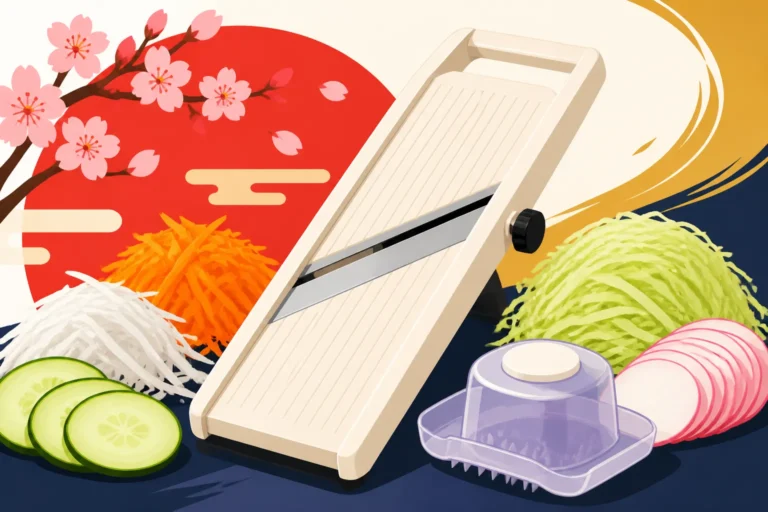
Japanese mandoline slicers and Benriner models provide precise vegetable cutting using high-carbon stainless steel blades and adjustable thickness.
Choose your perfect blade.
Knife types and steel explained, top brands and regions, where to buy authentic blades, cutting boards and cookware, and how to keep them razor-sharp.
Japanese mandoline slicers and Benriner models provide precise vegetable cutting using high-carbon stainless steel blades and adjustable thickness.
Japanese kitchen scissors feature high carbon stainless steel blades, detachable designs, and integrated bottle openers for small apartment living.
Professional knife sharpening services in Japan provide expert repairs and convenience, while DIY whetstone sharpening offers a rewarding, personal skill.
Honing rods and whetstones differ significantly in purpose, as rods realign rolled edges daily while whetstones grind away steel to restore true sharpness.
A home knife sharpening kit allows you to maintain whetstones, honing rods, and leather strops to keep Japanese blades sharp.
Natural and synthetic whetstones differ in origin, composition, and consistency, helping users choose the right option for Japanese kitchen knives.
Single-bevel knife sharpening requires mastering blade anatomy, choosing the right whetstones, and maintaining correct angles for both sides.
Stropping removes microscopic burrs from a Japanese knife blade, extending the edge lifespan between full sharpenings using leather or balsa mediums.
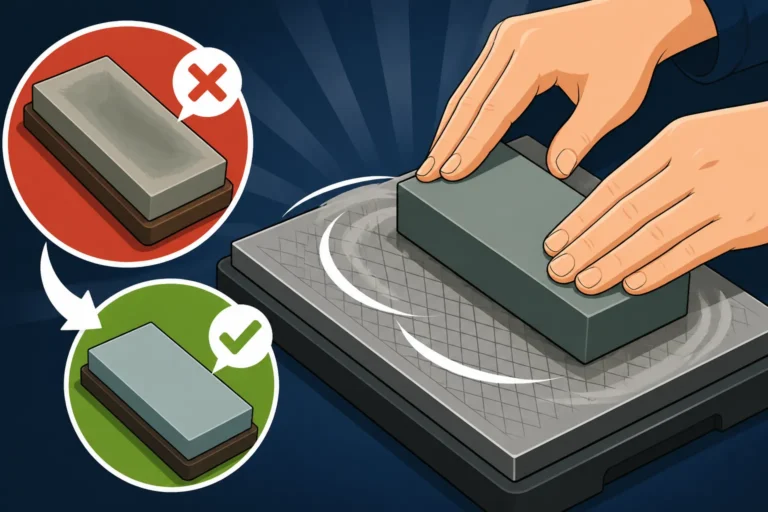
A dished whetstone ruins Japanese knife edges, but flattening tools like diamond plates, sandpaper, and lapping stones restore a flat sharpening surface.
Proper knife storage protects Japanese blades from chipping, prevents accidental cuts, and maintains edge retention during transport or home use.