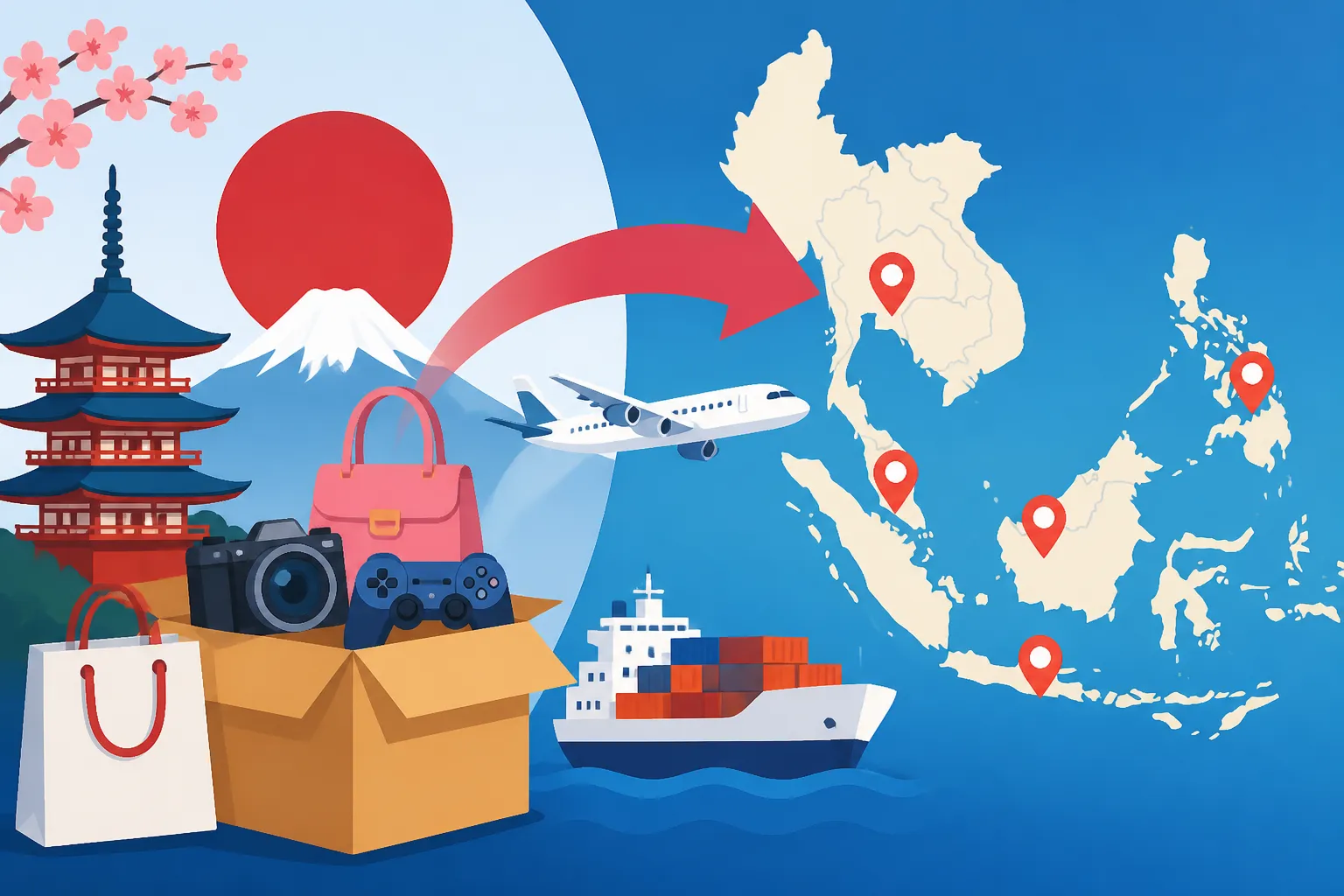
Buying from Japan to Singapore and Southeast Asia
Ah, the siren call of Japanese goods! Whether it's that unique limited-edition figure, a specific piece of J-beauty skincare that hasn't made it to your shores, or a vintage find from a quirky Japanese second-hand store, trying to get these treasures to Southeast Asia can feel like an administrative odyssey. Many shops here simply don't offer international shipping, leaving you staring longingly at items. This guide is going to walk you through exactly how to bridge that gap, focusing on the best ways to get your Japanese haul delivered smoothly to Singapore, Malaysia, Indonesia, the Philippines, Thailand, and beyond.
Disclosure: This post may contain affiliate links. We may earn a commission at no extra cost to you if you make a purchase through these links. Read full disclosure.
The Unique Challenges of Shopping from Japan for Southeast Asia
Let's be real, trying to buy directly from many Japanese online stores when you're sitting in Singapore or Jakarta can be incredibly frustrating. It's not like shopping on Amazon.com and having it magically appear at your doorstep a few days later. Japan's e-commerce landscape, while incredibly advanced domestically, often operates with a different mindset when it comes to international customers.
Language Barriers and Payment Hurdles
One of the biggest roadblocks you'll hit almost immediately is the language. Many fantastic Japanese online stores, especially smaller, niche ones, are entirely in Japanese. This isn't just about reading product descriptions; it's navigating checkout processes, understanding shipping options (or lack thereof), and dealing with customer service. Unless you're fluent, it's a non-starter.
Then there are the payment methods. While international credit cards are widely accepted by larger retailers, smaller shops might only accept domestic Japanese cards or specific local payment systems. Imagine finally finding that perfect item, getting through the translation, only to have your card rejected at checkout. It's enough to make you throw your hands up in exasperation! These companies are often just not set up for the complexities of international transactions, exchange rates, and fraud prevention for overseas customers.
Shipping Restrictions and Logistics Headaches
Even if a store does offer international shipping, the options can be limited, expensive, or simply not available to your specific Southeast Asian country. You might find they only ship via EMS (Express Mail Service) which, while reliable, can be pricey, or they might exclude certain regions entirely. Furthermore, the range of items they're willing to ship internationally can be restricted, often due to customs regulations they'd rather not deal with.
Consider the intricate dance of international logistics: varying shipping costs, customs declarations, duties, and taxes in each Southeast Asian country. A Japanese merchant, understandably, might not want to become an expert on Singapore's GST rates, Malaysia's import duties, or Thailand's customs clearance procedures for specific goods. This is where the magic of proxy shopping services truly shines, acting as your indispensable middleman.
Your Japanese Shopping Lifeline: Proxy Services
This is where proxy shopping services become your best friend. Think of them as your personal shopper and shipping agent right here in Japan. They provide you with a local Japanese address, handle the purchasing from local stores (even the ones that don't speak English or accept foreign cards), and then consolidate everything to ship it to you in Southeast Asia. It truly removes almost all the headaches mentioned above.
How Proxy Services Work Their Magic
The process is generally quite straightforward, once you get the hang of it. You browse Japanese online stores like Yahoo Auctions Japan, Mercari Japan, or even smaller brand sites that catch your eye. When you find something you want, you simply paste the item URL into your chosen proxy service's platform. They'll then purchase the item on your behalf, using their local Japanese payment methods and address.
Once your item arrives at their warehouse, it's stored for a period. This is fantastic because it allows you to buy multiple items from different stores over time. When you're ready, you can instruct the proxy service to consolidate all your purchases into one package, saving you a ton on international shipping costs compared to individual shipments. They handle the customs declaration paperwork, and then ship it out to your address in Southeast Asia. It's an absolute game-changer for anyone serious about Japanese shopping. If you want a deeper dive, check out our guide on How Japan Forwarding Services Work: Shipping, Fees, and Customs.
Top Proxy Services for Shoppers in Southeast Asia
There are several excellent proxy services out there, but two of the most popular and reliable for users in Southeast Asia are Buyee and ZenMarket. Both have robust platforms, English support, and experience shipping to countries like Singapore, Malaysia, Indonesia, and the Philippines.
Buyee: As one of the largest proxy services, Buyee offers a very integrated experience, especially for platforms like Yahoo Auctions and Mercari. You can often browse these sites directly through their interface, making the shopping experience feel more seamless. They have various service plans and optional insurance for your items. Their fees can sometimes be a bit higher per item due to various charges, but their system is very user-friendly.
ZenMarket: ZenMarket is another highly-regarded option that's particularly popular for its transparent fee structure. They typically charge a flat service fee per item (e.g., 300 JPY), and then you pay for international shipping. They are excellent for consolidating packages and often offer competitive shipping rates. Their interface might feel a little less integrated than Buyee for direct browsing, but their customer service and efficient processing are top-notch.
When you're trying to figure out which one is right for your specific needs, our article Best Japan Proxy Shopping Services Compared offers a detailed breakdown. Both services are widely used by expats and savvy shoppers across Southeast Asia, and they have established logistics channels that make the process relatively smooth.
Unpacking the Shipment to Southeast Asia: Customs, Duties, and Delivery
This is often the most anxiety-inducing part of the process, but armed with the right knowledge, you can navigate it with confidence. Each country in Southeast Asia has its own rules, and understanding them beforehand can save you from unexpected costs or delays.
General Shipping Methods and What to Expect
Proxy services typically offer a range of international shipping methods. Your choice will usually boil down to a trade-off between speed and cost.
- EMS (Express Mail Service): This is Japan Post's fastest and most reliable service. It offers tracking and insurance and usually gets to Southeast Asian countries within 3-7 business days, depending on the destination. It's excellent for urgent or valuable items, but also the most expensive.
- DHL / FedEx: These private couriers are often even faster than EMS, sometimes delivering within 2-5 days. They are known for their excellent tracking and customer service. Like EMS, they are premium options. They also tend to be more proactive in collecting duties and taxes upfront or upon delivery.
- Airmail (Registered/Small Packet): A more economical option for smaller, lighter packages. It's slower than EMS (1-3 weeks) but offers tracking.
- SAL (Surface Air Lift): This is a hybrid service that travels by surface within countries and by air between them. It's significantly cheaper than EMS but much slower (2-6 weeks, sometimes longer). Japan Post has, at times, temporarily suspended SAL to various countries, so availability can fluctuate. Always check current conditions.
- Surface Mail (Sea Mail): The cheapest option, but incredibly slow (2-3 months, sometimes more). Only suitable if you're not in a rush at all. Often, proxy services will only recommend this for very large, non-urgent shipments.
Remember, the proxy service will provide estimated shipping costs and times for each method. You can often choose your preferred carrier and speed during the checkout process on their platform. If you're looking for more general information on how this all works, check out Japan Shipping Methods Explained: EMS, DHL, FedEx, and Surface.
Customs, Duties, and Taxes for Key Southeast Asian Markets
This is where the "local" knowledge truly comes in handy. Each country has different thresholds for import duties and taxes (like GST or VAT). What might pass duty-free into Singapore could incur significant charges in the Philippines.
Here's a general (and always subject to change!) overview for popular destinations:
| Country | Import Duty/Tax Threshold (Approx.) | Common Taxes Applied | Notes for Expats/Tourists |
|---|---|---|---|
| Singapore | SGD 400 (CIF value) | 9% GST (effective 2024) | Generally efficient customs. Items above SGD 400 will incur GST. Be aware of restrictions on certain electronics, food items. |
| Malaysia | RM 500 (CIF value) | 6% SST (Sales and Service Tax) | Items below RM 500 are typically tax-exempt. Clear regulations for personal vs. commercial use. Food, supplements, and cosmetics may require specific permits. |
| Philippines | PHP 10,000 (FOB value) | 12% VAT + applicable duties | Relatively high threshold. Customs process can sometimes be slow; be prepared for potential follow-ups from local post/courier. Certain food, medicine, and electronic items may be restricted or require permits. |
| Thailand | THB 1,500 (CIF value) | 7% VAT + applicable duties | Lower threshold. Be prepared for VAT and duties on most items over the threshold. Customs can be strict on declared values and require clear item descriptions. |
| Indonesia | USD 3 (FOB value for small items) | 11% VAT + import duty (0-40% typically) + income tax | Very low threshold for most items. Expect duties and VAT on most purchases. Be extra careful with declared values and item descriptions to avoid complications. Electronic goods, certain cosmetics have strict import rules. |
| Vietnam | VND 1,000,000 (CIF value) | 10% VAT + import duty | Relatively low threshold. Customs may sometimes re-evaluate declared values. Certain electronics, used goods, and food items can face high duties or restrictions. |
Disclaimer: These are general guidelines and can change. Always check with your local customs authority or the courier directly for the most up-to-date and specific information for your particular item. CIF = Cost, Insurance, Freight. FOB = Free On Board.
The proxy service will typically ask you to declare the value of your items for customs purposes. It's crucial to declare the actual value. Under-declaring to save on duties might seem tempting, but it can lead to serious problems like fines, seizure of your goods, or even delays if customs suspects fraud. Moreover, if your package gets lost or damaged, the insurance payout will only be based on the declared value. For detailed guidance, our article Buying from Japan: Customs, Duties, and Import Taxes Explained is a must-read.
Some proxy services, like Buyee, offer a "tax-free shopping" option from certain partner stores. This usually means they deduct the 10% Japanese consumption tax at the point of purchase, which can offer some savings. However, this is separate from the import duties and taxes that your country will charge.
Navigating the Last Mile: Local Delivery
Once your package clears customs in your destination country, it will be handed over to the local postal service (if shipped via EMS/Airmail) or the local branch of your chosen courier (DHL/FedEx). You'll be able to track it using the tracking number provided by the proxy service.
Be prepared for a call or notification from the local postal service or courier if duties and taxes are owed. They will guide you on how to pay these fees, which can sometimes be done online, at a post office, or directly to the delivery person. Delays often happen at this stage if contact information is unclear or if payment isn't made promptly.
Smart Shopping Strategies for Southeast Asian Buyers
Beyond just choosing a good proxy, there are several savvy ways to maximize your Japanese shopping experience and keep costs down.
Consolidate, Consolidate, Consolidate!
This is probably the single most important tip for saving money. Instead of shipping each small item individually, which incurs base shipping and handling fees every time, consolidate multiple purchases into one larger package. Both Buyee and ZenMarket excel at this. Most proxy services offer a free storage period (e.g., 30-60 days) during which your items can accumulate at their warehouse. Utilize this window to buy everything you need before shipping it all together. Our guide on How Package Consolidation Saves You Money dives deeper into this.
Keep an Eye on Exchange Rates and Promotions
The Japanese Yen (JPY) fluctuates against currencies like the Singapore Dollar, Malaysian Ringgit, Philippine Peso, Thai Baht, and Indonesian Rupiah. Keep an eye on the exchange rate; buying when the Yen is weaker can save you a significant amount, especially on larger purchases. Proxy services also frequently run promotions, offering discounts on service fees or international shipping. Subscribe to their newsletters or check their websites regularly.
Be Mindful of Prohibited and Restricted Items
Before you get too excited about a purchase, quickly check if it's actually shippable to your country. Common restricted items include aerosols, certain types of batteries (especially lithium-ion for air cargo), large quantities of food, certain supplements, cosmetics with specific ingredients, and replica items. Each courier and country has its own list of prohibited goods. Your proxy service will also usually have a list of items they cannot ship. Ignoring this can lead to your item being confiscated at customs with no refund. You can find general information on Prohibited and Restricted Items When Importing from Japan, but always cross-reference with your local country's customs regulations.
Research Sellers on Japanese Marketplaces
If you're buying from platforms like Mercari or Yahoo Auctions, take a moment to look at the seller's ratings and reviews. Just like eBay or other marketplaces, a seller with consistently high ratings and positive feedback is more reliable. While your proxy acts as a buffer, a smooth transaction with the original seller always makes the entire process easier. You can learn more about these platforms with articles like How to Buy from Mercari Japan from Overseas and How to Buy from Yahoo Auctions Japan.
Final Thoughts: Happy Shopping!
Navigating the world of Japanese proxy shopping to get your hands on those coveted items in Southeast Asia really isn't as daunting as it first appears. It just requires a bit of upfront understanding and choosing the right partners. With services like Buyee and ZenMarket by your side, the treasures of Japan are well within your reach. Happy shopping, and enjoy your unique finds!
Disclaimer
Please note that this article is intended for informational purposes only. While we strive to provide accurate and up-to-date information, customs regulations, tax laws, and shipping policies are subject to change without notice. Always verify specific details with relevant government agencies, shipping carriers, or proxy services before making any purchases or shipping arrangements. We are not responsible for any financial losses or issues arising from the use of this information.





