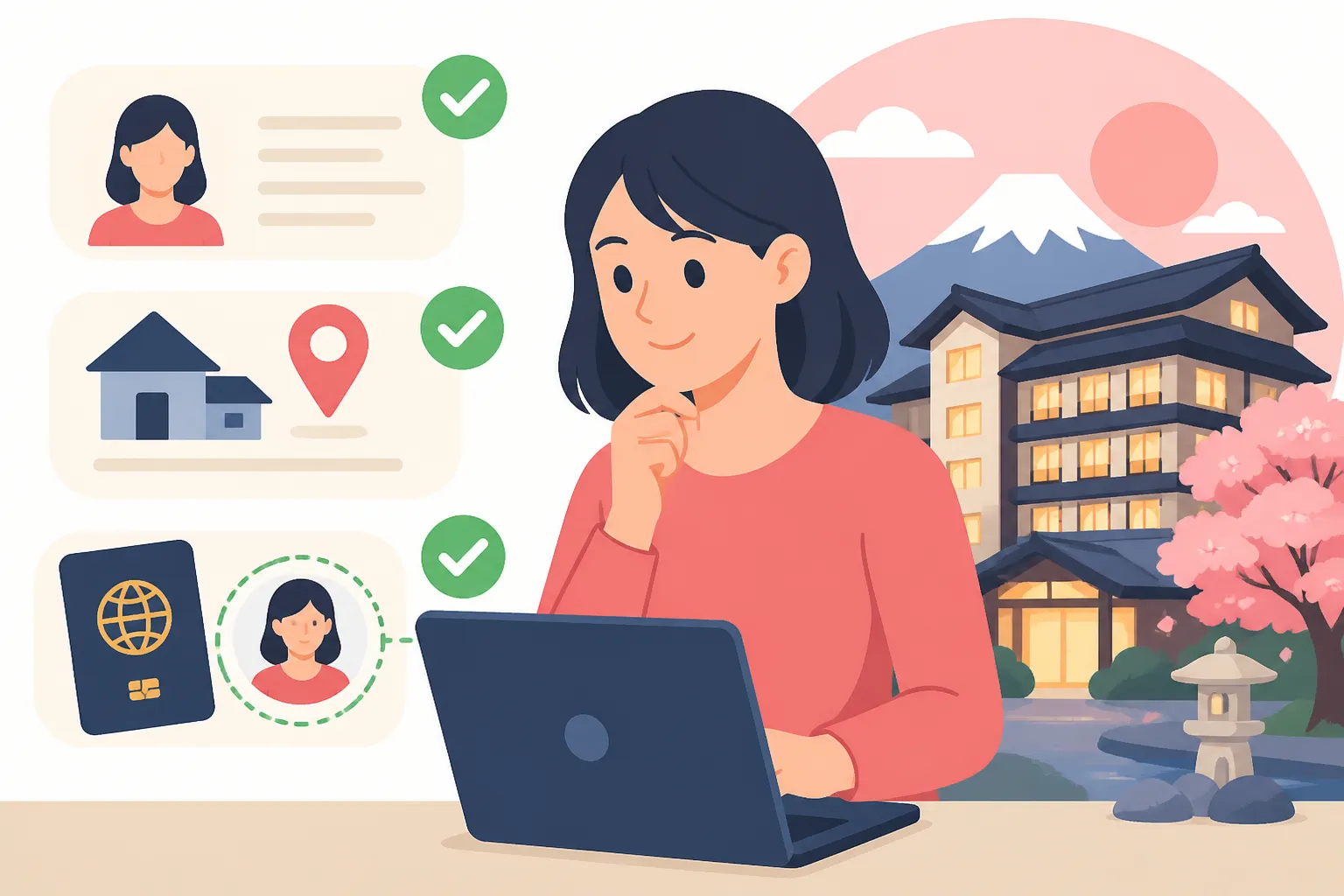
Booking Japanese Hotels From Overseas: Name Fields, Addresses, and Passport Matching
Ah, the joys of booking accommodation in Japan from overseas! Many an expat and tourist has found themselves staring at those booking forms, a cold sweat breaking out as they try to figure out if their name should be "Smith John" or "John Smith," and whether their address needs to be written in a specific way that makes zero sense to a non-Japanese speaker. It’s a common frustration, believe me, but don’t despair. This guide is here to walk you through the quirks of name fields, addresses, and passport matching, and show you how using a reliable platform like Agoda can really smooth out those wrinkles.
Disclosure: This post may contain affiliate links. We may earn a commission at no extra cost to you if you make a purchase through these links. Read full disclosure.
The Unique Hurdles of Booking Japanese Hotels as a Foreigner
Let's be real: Japan has a way of doing things that's wonderfully unique, but sometimes that uniqueness translates into administrative puzzles for us foreigners. Booking a hotel here is no exception, especially when you're trying to do it from your home country. It often feels like you're trying to fit a square peg into a round hole, and it's not just your imagination – there are genuine cultural and legal reasons behind these seemingly peculiar demands.
Why Japanese Booking Systems Seem… Different
The core of the issue often lies in how Japanese systems are designed. They’re built primarily for a domestic audience, which means expecting names in a specific order (family name first, given name second), often with fields for Kanji (Chinese characters), Hiragana, and Katakana (phonetic scripts). For us, coming from countries where "First Name" and "Last Name" are the standard, this immediately creates a mental block. You might see fields labelled "Sei" (姓) and "Mei" (名), and suddenly you're wondering if "John" is a "Sei" or a "Mei." It's confusing, and it's absolutely okay to feel a bit lost. These systems don't always translate seamlessly to the Western convention of "Given Name, Family Name," especially when middle names are thrown into the mix. This isn't a deliberate attempt to make things difficult, but rather a reflection of different established norms.
The Dreaded Name Mismatch: Passport vs. Booking
This is perhaps the biggest source of anxiety. Japanese law, specifically for non-Japanese residents, requires hotels to record your full name, nationality, and passport number upon check-in. More critically, the name on your hotel booking must match the name on your passport. Any discrepancy, even a minor one like a missing middle name or a slightly different spelling, can lead to serious headaches. Imagine arriving after a long flight, jet-lagged and ready to crash, only to be told there's an issue with your reservation because your booking says "John Smith" but your passport clearly states "John David Smith." It can range from a polite request for clarification to a full-blown refusal of service until the issue is resolved, which, at 11 PM, is the last thing you want.
Mastering Name Fields: The Golden Rule for Japanese Bookings (and Why Agoda Helps)
Given the potential for hiccups, mastering the name fields on your hotel booking is non-negotiable. It’s the first line of defense against a stressful check-in experience. Forget what you think you know about "first name" and "last name" when you're booking for Japan – the passport is your sacred text.
Entering Your Name Exactly as on Your Passport
Here’s the golden rule, etched in stone: Always enter your name exactly as it appears on the machine-readable zone of your passport. This means if your passport shows "SMITH, JOHN DAVID," then your family name is "SMITH" and your given name is "JOHN DAVID." Do not abbreviate. Do not omit your middle name if it's listed as part of your given name on the passport. If your passport only shows "SMITH, JOHN," then just use "JOHN" for your given name.
Let's break this down with a hypothetical:
- Passport Name: DOE, JANE ELIZABETH
- Family Name Field: DOE
- Given Name Field: JANE ELIZABETH
Even if the booking site has a separate "Middle Name" field, if your passport lists your middle name as part of your given name, put it in the given name field. Some booking sites struggle with multiple words in a "given name" field, but this is less common now. The key is to mirror your passport as closely as possible.
This is where platforms like Agoda shine. Many international booking sites, including Agoda, have streamlined their booking forms to better accommodate international naming conventions. They often present clear "First Name" and "Last Name" fields that are more intuitive for Western users, reducing the chance of misinterpretation. They understand that most travelers don't have Kanji in their names!
Understanding Given Name (Mei) and Family Name (Sei/Myoji)
As mentioned, traditional Japanese booking forms might ask for "Sei" (姓 – family name) and "Mei" (名 – given name). This order is reversed from what many of us are used to. If you encounter these specific Japanese terms, simply remember:
- Sei (姓): This is your Family Name (your surname, what you'd typically call your "last name").
- Mei (名): This is your Given Name (your first name, and any middle names if your passport lists them as part of your given name).
So, for "JOHN DAVID SMITH," you'd put "SMITH" in the Sei field and "JOHN DAVID" in the Mei field. Don't worry if it feels awkward putting your family name first; you're simply conforming to the system's design. After booking, always double-check your confirmation email. If you spot a potential error, contact the booking platform or hotel immediately to correct it.
Navigating Address Fields: Your Home Address, Not the Hotel's
Another point of confusion for many first-time visitors or new expats is the address field. Why do they need your home address from overseas? Are they going to send you junk mail to your actual house back home? Rest assured, it's not a marketing ploy.
Why They Ask for Your Home Address
This requirement stems from Japanese immigration and hotel registration laws. Hotels are mandated to record the nationality and passport information of all foreign guests, and this includes your overseas residential address. It's a standard practice for tracking international visitors and is part of the system for maintaining public order and, if ever necessary, assisting in emergencies or investigations. Think of it as part of the official record-keeping process that allows you to be an international visitor in Japan. It helps authorities understand where their foreign guests typically reside when not in Japan.
Entering Your Overseas Residential Address Clearly
When you're asked for your address, this means your permanent residential address outside of Japan. Do not enter the hotel's address; that's a common mistake that will only confuse matters.
Here are some tips for entering your overseas address:
- Use Latin Characters: Stick to the English alphabet. Do not attempt to transliterate your address into Japanese characters.
- Be Clear and Concise: Use standard abbreviations for street, avenue, apartment, etc., if applicable in your home country.
- Break it Down Logically: If the form has separate fields for street number, street name, city, state/province, and postal code, use them. If it's a single long "address line" field, input it in the standard format for your home country.
- Avoid Special Characters: Unless specifically prompted, try to avoid non-alphanumeric characters like hyphens or commas if possible, as sometimes these can cause encoding issues in foreign systems.
Again, Agoda usually excels here. Their platforms are built to handle a vast array of international addresses and often feature clearly labeled fields that map directly to common address formats worldwide. This means less guesswork on your part and a higher chance of your address being recorded correctly. Many expats find Setting Up Utilities in Japan: Electricity, Gas, Water & Internet provides a useful reference point for understanding local address nuances.
Passport Information and Check-in: What to Expect
You've painstakingly entered your name and address, double-checked everything, and finally, your trip to Japan is here! Now comes the moment of truth: hotel check-in. Don’t be surprised by the procedures; they’re standard and rooted in legal requirements.
The Mandatory Passport Scan and Copy
Upon arrival at your hotel, every non-Japanese guest, including children, will be asked to present their passport. The front desk staff will then typically scan your passport or make a photocopy. This isn't just for verification; it's a legal obligation for all licensed accommodations in Japan. They need to keep a record of your full name, nationality, passport number, and the country of your residence. This information is separate from what they gather for Japanese citizens, who typically only provide their local address. So, while it might feel a little invasive if you're not used to it, rest assured it's a routine and mandatory part of staying in Japan as a foreigner.
Smooth Check-in Strategies
To make your check-in as smooth as possible, follow these simple tips:
- Have your passport readily available: Don't have it buried deep in your luggage. Keep it in your carry-on or a easily accessible travel wallet.
- Bring your booking confirmation: A physical printout or easy access to the digital version on your phone is always a good idea. While the hotel will have your reservation, having your confirmation number and details handy can speed things up, especially if there are any minor queries.
- Politely clarify any minor discrepancies: If, despite your best efforts, you found that the booking platform didn't perfectly capture your multi-word given name (e.g., "John David" became just "John"), simply explain the situation to the front desk staff when you present your passport. Most hotels are very understanding if the core name elements match and the discrepancy is clearly a system limitation, not an intentional error. They are usually more concerned with the family name and the primary given name matching. For more general travel tips, consider checking out Japanese Cultural Etiquette 101 for Newcomers.
Why Using Agoda Can Simplify Your Japan Hotel Bookings
Now, you might be thinking, "This sounds like a lot of work just to book a room!" And yes, it can be. That's why choosing the right booking platform can make a world of difference. For Japan, Agoda has consistently proven itself to be a fantastic option, especially for international travelers.
User-Friendly Interface for International Travelers
One of Agoda's standout features is its user-friendliness for those of us navigating cross-cultural booking challenges. Their website and app are designed with a global audience in mind. This means:
- Clear Name Fields: You'll typically find straightforward "First Name" and "Last Name" fields that align with most Western passports. This minimizes the "Sei vs. Mei" confusion entirely.
- International Address Formatting: Agoda's address fields are generally flexible and allow you to enter your overseas residential address in a format that makes sense for your home country, reducing the stress of trying to fit it into a rigid Japanese postal system format.
- Multi-Language Support: The entire platform is available in numerous languages, which means you can book and manage your reservations without feeling lost in translation. This might seem basic, but it's a huge relief when dealing with important details like names and addresses.
Managing Bookings and Making Changes
Life happens, and sometimes you need to amend your booking. This is another area where Agoda shines. Their platform makes it relatively easy to:
- Review Details: Before finalizing, you have multiple opportunities to review all your entered information.
- Modify Reservations: If you realize you made a typo in your name or need to update your address before arrival, Agoda's self-service options or customer support channels make it feasible to request changes. Being able to correct an error preemptively can save you immense stress upon check-in. This ease of management is invaluable, as changing details directly with a Japanese hotel, especially if you don't speak Japanese, can be a daunting task.
Agoda's Customer Support for Booking Issues
Let's face it, even with the best intentions and the most user-friendly platforms, sometimes things go awry. If you run into a truly perplexing issue during booking, or if you arrive at your hotel and there's a problem with your reservation despite your careful planning, Agoda's customer support can be a lifesaver. They often have dedicated teams that are experienced in mediating with hotels and resolving issues for international travelers. This extra layer of support can provide significant peace of mind, knowing you're not entirely on your own if a problem arises. For general travel preparation, reading Moving to Japan Checklist 2026 – Everything You Need to Do can also be beneficial, ensuring all bases are covered.
Key Booking Fields & Best Practices Summary
To recap, here's a handy table summarizing the crucial information for your next Japanese hotel booking:
| Field Type | What to Enter | Why It Matters | Agoda Benefit |
|---|---|---|---|
| Family Name | EXACTLY as on your passport's machine-readable zone. | Legal requirement for hotel registration; prevents check-in refusal. | Clear "Last Name" field aligns with international standards. |
| Given Name | EXACTLY as on your passport's machine-readable zone (including middle names if part of given name). | Legal requirement; ensures identity matches official documents. | Clear "First Name" field, handles multi-word given names well. |
| Overseas Address | Your full residential address in your home country. | Legal requirement for non-Japanese guests; not for marketing. | Flexible international address fields, minimizes confusion. |
| Passport Number | Not always requested at booking, but required at check-in. | Mandatory identification for foreign guests. | Some listings allow pre-entry; always be prepared at check-in. |
| Contact Email | An email you check regularly. | For booking confirmations, updates, and communication. | Reliable delivery of e-confirmations and direct support access. |
Booking accommodation in a foreign country can be intimidating, especially one with unique administrative practices like Japan. But by understanding these specific requirements and leveraging platforms designed to simplify the process for international travelers, you can make your experience much smoother. Focusing on accurate name entry that mirrors your passport, providing your true overseas residential address, and having your passport ready are your best bets for a stress-free start to your Japanese adventure. And when in doubt, a reputable booking site like Agoda is often your best friend for navigating these particular hurdles. Happy travels!
Disclaimer
This article is for general informational purposes only and does not constitute professional advice. Laws, prices and regulations vary by location and change over time. Consult a qualified professional for guidance on your specific situation.