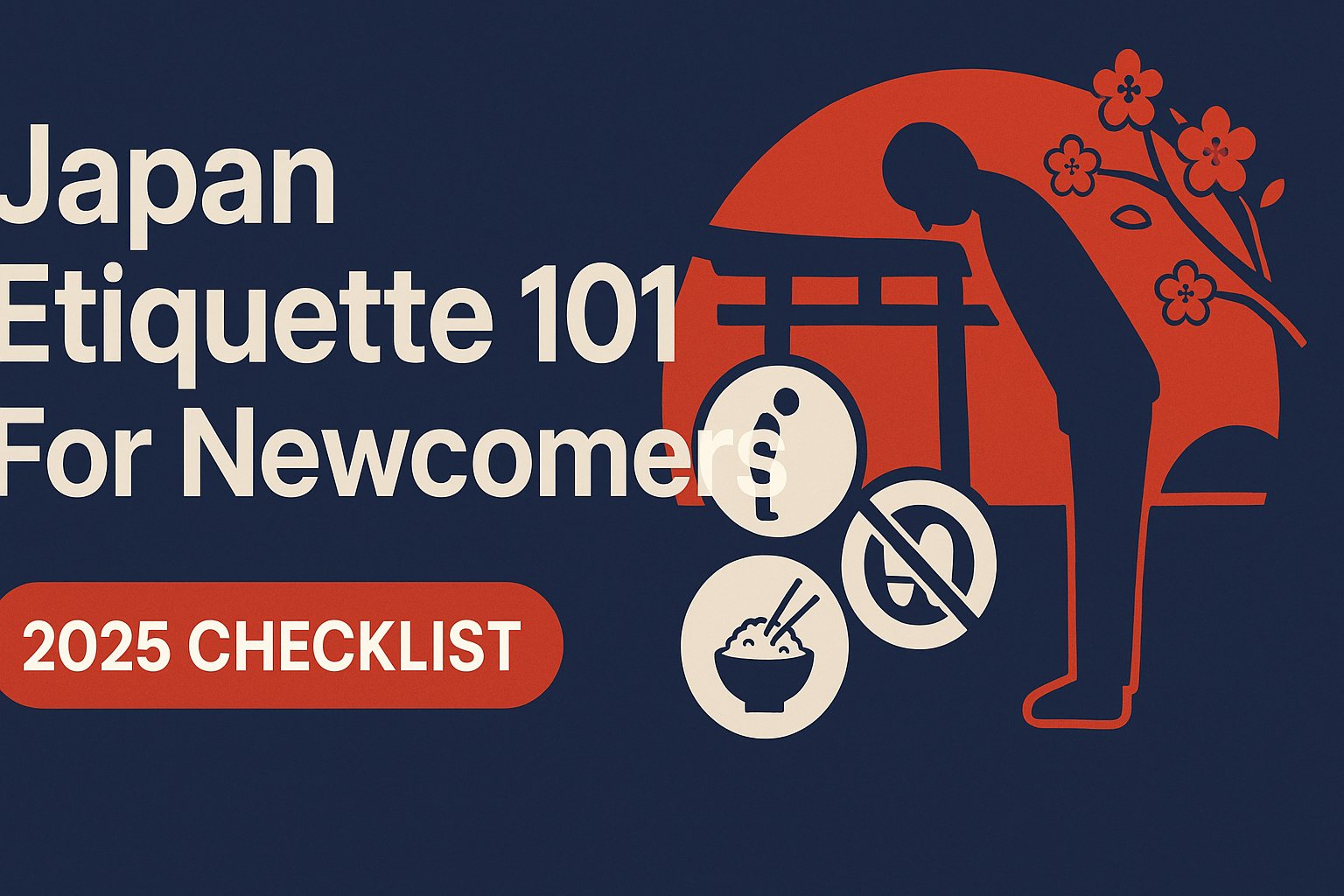
Japanese Cultural Etiquette 101 for Newcomers
A practical guide to Japan’s everyday manners—from greetings and shoes to trains, shrines, dining, onsen, business cards, and tipping. Learn the “why,” the exact steps, and quick phrases so you can relax, connect, and enjoy life in Japan.
Disclosure: This post may contain affiliate links. We may earn a commission at no extra cost to you if you make a purchase through these links. Read full disclosure.
Why etiquette matters in Japan
Japan’s politeness is not just a stereotype—it’s a daily system that keeps crowded cities running smoothly and shared spaces pleasant. Think of etiquette as traffic rules for social life: if you follow the signs, everything feels easier. National tourism guidance highlights core ideas like consideration for others, cleanliness, and quiet courtesy, especially in public places and shared facilities. These aren’t about perfection; they’re about harmony.
Related reads on Japan Handbook: Housing deposits explained for newcomers, Setting up utilities in Japan
Greetings and bowing basics
How to greet
A polite “Hello” with a small bow goes a long way. Bows vary by depth (casual ≈ 15°, polite ≈ 30°, respectful ≈ 45°). In everyday life, a gentle nod is fine; in formal settings, aim for the polite bow. Face the person, keep your back straight, and bow from the hips—not the neck. In business, a slightly deeper bow shows respect to senior counterparts. Guides to professional conduct emphasize how bowing signals humility and sincerity, especially at first meetings.
Quick phrases:
- Good morning: Ohayō gozaimasu
- Thank you: Arigatō gozaimasu
- Excuse me / I’m sorry: Sumimasen
Shoes off and the genkan
The golden rule indoors
At homes, traditional inns, some clinics, and certain restaurants with tatami rooms, remove shoes at the genkan (entry). Step out of your shoes facing the door, place them neatly, and slip into the provided slippers. This inside/outside boundary preserves cleanliness and shows respect for the household. Cultural explainers describe the genkan as a clear line between the “outside world” and the clean interior—part practical, part symbolic.
Look for cues: Raised floors, a shoe rack, slipper shelves, or “Please remove shoes” signs. When in doubt, watch what others do.
Related reads: Renting an apartment in Tokyo, Moving day checklist in Japan
Public transport manners that locals follow
Quiet, orderly, and efficient
On trains and subways, the etiquette is simple: queue at platform markings, let passengers exit first, step inside quickly, and stay quiet (no phone calls). Priority seats are for those who need them, and backpacks should be held in front during busy times. Major operators publish clear guidance on giving up seats, queuing, and keeping sound low. Women-only cars operate on certain lines during morning rush hours—look for pink signage and check the operator’s rules and times.
Japan’s long-running “manner poster” culture—famous campaigns across the Tokyo Metro—has made these small courtesies part of the city’s identity (e.g., “Please do it at home” posters about makeup on trains).
Women-only cars: They typically run on select lines during the morning crush; permitted riders also include preschoolers, disabled male passengers, and caregivers—always verify the posted rules on your line.
Related read: Top 10 tips for using Tokyo subways and trains
Visiting shrines and temples respectfully
Shinto shrine etiquette in steps
At a shrine, bow once at the torii gate, purify your hands and mouth at the water basin, then approach the offering hall. The common sequence is: throw a coin, bow deeply twice, clap twice, say a quiet prayer, and bow once more. This four-step pattern is the standard way to pay respects. Official shrine guidance explains the flow clearly.
Temple visits
At Buddhist temples, you usually do not clap; behave quietly, dress modestly, and observe any photography rules. If in doubt, mirror other visitors and signage.
Related reads: Weekend getaways from Tokyo, Understanding Japanese addresses for navigation
Dining etiquette and chopstick rules
Before you eat
You’ll often receive a small wet towel (oshibori)—use it to clean your hands before eating, not to wipe your face or the table. This service reflects hospitality and cleanliness at the table. Tourism and consumer guidance explain this custom as part of preparing respectfully for the meal.
Say Itadakimasu before eating and Gochisōsama deshita after—these phrases show gratitude for the meal and the work behind it. National tourism guides summarize key mealtime manners, from slurping noodles to how chopsticks are handled.
Chopstick do’s and don’ts
- Do rest chopsticks on the holder; don’t stick them upright in rice (it resembles funeral rites).
- Don’t pass food chopstick-to-chopstick (also funeral imagery).
- Avoid pointing with chopsticks or hovering over shared dishes.
- Use the communal end (or serving utensils) for shared plates when provided.
For a deep dive, etiquette explainers outline the common errors to avoid and how to place chopsticks between bites.
Paying and tipping
Japan largely does not have a tipping culture; service is included in prices. You typically pay at the register or receive a tray for cash. While a few businesses catering to tourists have experimented with tip jars, official tourism guidance remains that tipping is not customary; discretionary “kokorozuke” envelopes appear only in specific contexts.
Related reads: Cost of living in Japan 2025, Money basics: opening a bank account in Japan
Onsen and sento etiquette made simple
Bathing culture is one of Japan’s joys—but it follows clear steps:
- Wash first: Shower and soap thoroughly before entering the communal tub.
- No swimwear: You bathe nude; towels stay out of the water.
- Hair up: Keep hair from touching the water.
- Quiet relaxation: No diving, splashing, or phone use.
- Rinse off before leaving and dry off in the bathing area so dressing rooms stay dry.
National and regional tourism resources explain these rules and why they matter to everyone’s comfort.
Everyday communication cues to reduce friction
Read the room
Japan often uses indirect language. A soft “That may be difficult” can mean “no.” Pauses, hesitations, and context matter. Listen for nuance and watch body language—silence can be polite thinking time, not disapproval.
Personal space and voice
Keep your speaking volume low in public spaces (trains, clinics, shared offices). National etiquette materials emphasize considerate use of phones and keeping sound to a minimum on public transport.
Business etiquette 101 for expats
First impressions and meishi exchange
Business cards (meishi) are central. Present and receive cards with both hands, with the text oriented toward the other person; read the card briefly and treat it with care—don’t shove it into a pocket. Place cards neatly on the table to remember names and roles. Updated guides for international professionals stress that this ritual communicates respect for the individual and their company.
Meeting flow: Arrive early, let the host cue seating, and expect structured agendas with space for consensus. Communication aims to maintain harmony while moving decisions forward. Contemporary explainers for visitors and foreign teams cover meeting order, seating, and how hierarchy shapes the exchange.
Bowing in business: Pair your greeting with a balanced bow; leaders may bow less deeply than juniors. Training resources outline how bow depth signals status and respect.
Related reads: How to get a Japanese SIM card and number
Manners on the move: quick rules that prevent awkward moments
- Escalators: In Tokyo, stand left, pass right; in Kansai, it’s usually the reverse—follow local signage.
- Line up at bus doors and train gates; don’t cut in.
- Carry trash until you find a bin; many stations have limited bins.
- Avoid strong scents in tight spaces.
- Cash trays: Place and receive money on the tray at counters when provided.
- Quiet evenings: Residential streets expect low noise late at night.
Most of these mirror national tourism advice about courtesy, cleanliness, and consideration in shared spaces.
Table 1: Fast do’s and don’ts for newcomers
| Situation | Do | Avoid | Why it matters |
|---|---|---|---|
| Entering homes/ryokan | Remove shoes at the genkan; use slippers if offered | Wearing outdoor shoes on tatami | Respects the clean indoor boundary and host’s space. |
| Trains/subways | Queue, let people off first, keep phone silent | Blocking doors, phone calls | Keeps flow safe and courteous for everyone. |
| Women-only cars | Check signage and hours; board accordingly | Entering without checking eligibility | Morning safety/comfort measure; varies by line. |
| Shrines | Purify, bow twice, clap twice, pray, bow once | Clapping at temples, loud behavior | Shows respect at sacred sites. |
| Dining | Use oshibori for hands, say itadakimasu/gochisōsama | Sticking chopsticks upright in rice | Cleanliness and gratitude; avoids funeral imagery. |
| Onsen | Wash thoroughly before soaking; no swimsuits | Towel in water, splashing, phones | Hygiene and relaxation for all bathers. |
| Business | Exchange meishi with both hands; be punctual | Pocketing cards carelessly | Signals respect and professionalism. |
| Paying | Use the cash tray; no tip expected | Forcing tips | Tipping isn’t standard; use polite payment routines. |
Temple and shrine phrases you’ll actually use
| English | Japanese | When to say it |
|---|---|---|
| Excuse me / Sorry | すみません (Sumimasen) | Passing through crowds, getting attention, small apologies |
| Thank you very much | ありがとうございます (Arigatō gozaimasu) | After receiving help or service |
| Thank you for the meal | ごちそうさまでした (Gochisōsama deshita) | After finishing a meal |
| Please | お願いします (Onegai shimasu) | When requesting assistance |
Related read: Japanese SIM card guide for smooth setup
Deeper look: Why trains feel so calm despite the crowds
Japan’s railway etiquette didn’t appear overnight. Since the 1970s, transport operators have used witty, memorable “manner posters” to teach norms—from giving up seats to keeping bags compact. These cultural nudges continue to this day, and they work: small habits (lining up at specific door marks, stepping aside for alighting passengers) add up to safe, efficient platforms. Articles on these campaigns explain their longevity, influence, and changing themes through the decades.
Related read: Surviving rush hour train etiquette in Japan
A calm first visit to an onsen
If you’re nervous, pick a facility that posts English guidance or is used to international visitors. Confirm whether tattoos are permitted (policies vary), bring modesty towels, and store valuables in lockers. Official travel guides cover step-by-step bathing and common questions for first-timers.
Related read: Health insurance and clinics for residents
Tipping in 2025: what’s changed and what hasn’t
Most restaurants, taxis, and hotels still don’t expect tips. Service fees may appear on higher-end bills; otherwise, simply pay the total. Some tourist-heavy venues have tested donation boxes or POS tip prompts, which has caused confusion. When in doubt, follow the national tourism stance: tipping is not customary; if you wish to show appreciation, a small, neatly presented gift can be more appropriate than cash.
Business cards and meetings: micro-habits to remember
- Cards ready: Keep your meishi in a slim case; offer and accept with both hands.
- Read the card: A brief look shows respect; place it on the table in front of you.
- Seating: Follow the host’s lead; the most senior seats are farthest from the door.
- Punctuality: Aim to be early; meetings are structured and run to time.
- Follow-ups: Send concise, polite emails with clear next steps.
These points reflect mainstream professional etiquette training and practical guides for foreign teams in Japan.
Related reads: How to rent your first apartment in Japan
FAQ for newcomers
Is it okay to slurp noodles?
Yes—slurping ramen and some noodle dishes is normal and even shows you’re enjoying the food. National dining etiquette summaries mention this as part of casual meal culture.
Can I talk on the phone on trains?
Keep phones on silent and avoid calls inside train cars; step to platform areas if necessary. Transport operators ask riders to keep sound low and offer seats to those in need.
Do all shrines and temples allow photos?
Not always. Look for signs. In sacred halls, photography may be restricted—when allowed, be discreet and avoid flash. The shrine etiquette sequence itself is universal, but house rules vary.
What if I make a mistake?
A sincere sumimasen and a small bow fix most missteps. People understand you’re learning.
Seven-day etiquette starter plan
Day 1: Practice bowing and phrases at home; set your phone to silent by default.
Day 2: Ride the subway at off-peak hours; queue, board, and stow your bag like a local.
Day 3: Visit a shrine; follow the bow-clap-bow sequence and try a goshuin stamp if available.
Day 4: Eat out; use the oshibori properly, mind chopsticks, and try paying at the register with the cash tray.
Day 5: Soak in a sento or onsen; shower first, relax quietly, and dry off before the locker area.
Day 6: Join a casual business meetup; bring meishi, exchange with both hands, and send a short follow-up note.
Day 7: Try a small gift for a neighbor or colleague—simple, thoughtfully wrapped, and given with both hands.
Final thoughts
Japanese etiquette is a set of gentle habits, not rigid tests. When you understand the “why”—respect, cleanliness, harmony—the “how” becomes easy. Start with shoes at the genkan, quiet trains, shrine steps, simple dining manners, and onsen basics, and you’ll feel at home faster than you think. The longer you live here, the more these become second nature—and the more you’ll appreciate how well they make city life work.
Read More: Setting up utilities in Japan: electricity, gas, water, internet, Cost of living in Japan 2025 – expenses breakdown, Renting an apartment in Tokyo: a starter guide, Top 10 tips for using Tokyo subways and trains, Trash and recycling in Japan: how to sort it right
Disclaimer
This article is for general informational purposes only and does not constitute professional advice. Laws, prices and regulations vary by location and change over time. Consult a qualified professional for guidance on your specific situation.