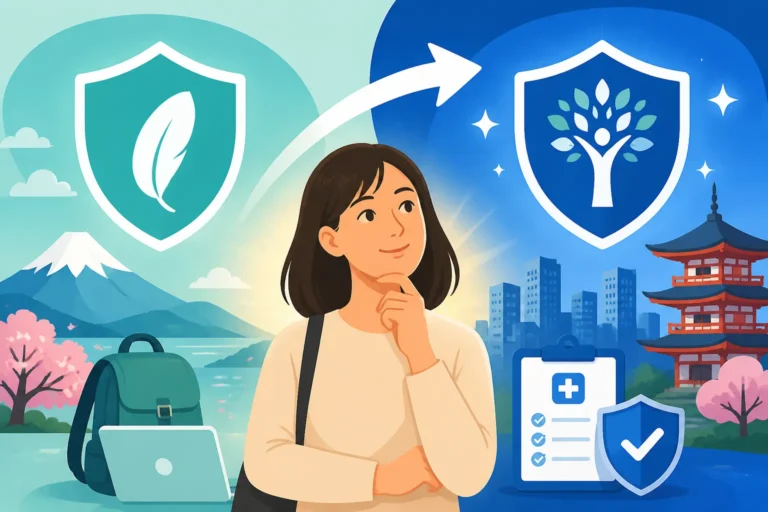
Two Numbers, One Phone: Keeping Your Home Country Line Active While in Japan
Moving to Japan is an incredible adventure, but let's be real, it throws a whole heap of logistical curveballs your way. One of the trickiest? Figuring out how to stay connected without losing touch with your home country life. This guide is going to walk you through the very real dilemma of keeping your essential home phone number active while seamlessly integrating a local Japanese line, focusing on practical solutions like dual SIM and eSIM technology to help you navigate this modern expat problem.
Disclosure: This post may contain affiliate links. We may earn a commission at no extra cost to you if you make a purchase through these links. Read full disclosure.
The Expat's Dilemma: Why Keeping Your Home Number is Crucial
Ah, the age-old expat conundrum: you've finally landed in Japan, you've got your new address, maybe even a new job, and the first thing you realize is that everything back home is still tied to that phone number you've had for years. It's not just nostalgia; it's a deep, often frustrating, administrative tether that can feel impossible to untangle.
Banking, Two-Factor Authentication, and Financial Ties
Picture this: you're trying to log into your old online banking account back in your home country. You've forgotten your password, or perhaps it's a new device, and BAM! They send a two-factor authentication (2FA) code to your old mobile number. If that number is dead, you're locked out. Suddenly, you can't pay your old credit card bill, transfer funds, or even just check your balance. Many international banks are incredibly particular about foreign phone numbers for security reasons. They're designed to protect you, of course, but for an expat trying to manage finances across borders, it feels more like a digital prison. This isn't just about banks, either; investment accounts, government services, and even some online shopping sites often rely on that familiar number for verification.
Staying Connected to Family and Friends
Beyond the bureaucratic hurdles, there's the emotional connection. Your friends and family back home know that number. They've probably had it saved in their phones for years. Imagine the hassle of telling everyone to update your contact information, or the worry of missing an urgent call from a loved one who hasn't. Plus, let's not forget the convenience of using apps like WhatsApp or LINE with your original number, keeping those chat histories and groups intact. Having a consistent point of contact provides a sense of stability, both for you and for those who care about you from afar. It really helps with combating homesickness and building a support network when you can just pick up the phone and feel like you're right back home, even if it's just for a moment.
Avoiding Administrative Headaches
Changing your primary contact number can trigger a cascade of administrative nightmares. Think about all the services you’ve signed up for that have your old number on file: email recovery, social media accounts, streaming services, online subscriptions, even some professional networks. Each one would require a manual update, often involving a verification process that, again, might ping your old number. Imagine trying to update dozens of accounts, many of which might not have an "international number" option, or an English-speaking support line. It's a time sink and a stress factory. Keeping your home number active, even on a bare-bones plan, simply removes a huge chunk of potential future problems, letting you focus on the joys and challenges of your new life in Japan.
Dual SIM and eSIM: Your Lifelines in Japan
The good news is that modern mobile technology has largely caught up with the expat's need for international connectivity. The days of carrying two separate phones are, thankfully, mostly behind us. Enter dual SIM and eSIM technology – these are your actual lifelines to seamlessly manage two numbers on one device.
Understanding the Technology
Let's break down what we're talking about here.
- Dual SIM: This is where your phone has slots for two physical SIM cards. You literally insert your home country SIM into one slot and your new Japanese SIM into the other. Your phone then manages both connections, allowing you to receive calls and messages on both numbers simultaneously. You can typically designate which SIM to use for outgoing calls, texts, and mobile data, switching between them with a few taps. It’s a physical solution for a digital problem. Many modern phones, especially Android flagships, have offered dual SIM capabilities for years.
- eSIM (Embedded SIM): This is where things get really futuristic and convenient. An eSIM is a digital SIM profile that's built directly into your phone. Instead of swapping physical plastic cards, you activate a cellular plan by downloading a profile to your phone. This means you can have multiple eSIM profiles stored on your device, though usually only one or two can be active at a time, alongside a physical SIM if your phone supports both. For example, you could keep your physical SIM from home active and add a Japanese eSIM. Or, if your home provider offers it, you could switch your home number to an eSIM and use a Japanese physical SIM.
The beauty of both dual SIM and eSIM is that they let your single device operate with two distinct phone numbers. This means you can have a local Japanese number for daily life, job applications, local deliveries, and all the administrative tasks, while your home number remains active in the background for those critical 2FA codes and family calls. Services like Sakura Mobile are particularly adept at offering expat-friendly eSIM solutions in Japan, making this transition smoother.
How to Set Up a Dual SIM or eSIM for Japan
The setup process, while seemingly daunting, is actually quite straightforward if you know what you're doing.
- Check Your Phone's Compatibility: First and foremost, verify if your current smartphone supports dual SIM or eSIM. Most newer iPhones (XS and later) and many Samsung Galaxy, Google Pixel, and other Android devices do. A quick search of your phone model's specifications will tell you. If it only supports a single physical SIM, you'll need to consider alternatives like VoIP apps or carrying a second, cheaper phone for your home number.
- Keep Your Home SIM Active (Minimally): Before you even leave home, talk to your home country provider. Explain you'll be living abroad and need to keep your number active for 2FA/emergencies. Often, they have minimal plans (sometimes called "pay-as-you-go" or "international roaming add-ons") that allow you to receive texts and calls without breaking the bank. The goal here isn't cheap data, but merely keeping the line open. If they offer an eSIM option for your home number, even better!
- Obtain Your Japanese SIM/eSIM: This is where a provider like Sakura Mobile really shines for expats.
- Physical SIM: You can order a physical SIM from Sakura Mobile online, and they can often ship it to your arrival airport or your temporary accommodation. You simply pop it into the second SIM slot of your dual SIM phone (or the main slot if your home number is on eSIM).
- eSIM: If your phone supports eSIM, getting a Japanese eSIM from Sakura Mobile is incredibly convenient. You apply online, receive a QR code via email, scan it with your phone, and voilà – your Japanese line is active. This means you can keep your home country's physical SIM card in your phone while having your Japanese line completely digital. This seamless setup is a huge relief for many new arrivals.
- Configure Your Phone Settings: Once both SIMs (or SIM/eSIM combination) are in place and activated, you'll dive into your phone's settings (usually under "Cellular" or "Network & Internet"). Here, you can:
- Label your lines (e.g., "Home" and "Japan").
- Set a default line for mobile data (definitely set this to your Japanese line!).
- Choose which line to use for outgoing calls and messages, or set it to "Always Ask" so you can decide per contact.
- Enable Wi-Fi calling for your home number if your provider supports it, which can significantly reduce costs when calling home from Japan.
This configuration gives you full control. You can use your Japanese number for everyday communication and only switch to your home number for critical tasks or receiving calls from specific contacts.
Benefits and Drawbacks of Each Approach
No solution is perfect, so let's weigh the pros and cons:
Dual Physical SIMs:
| Feature | Benefits | Drawbacks |
|---|---|---|
| Convenience | Both numbers active, easy switching. | Requires a phone with two physical SIM slots (less common for iPhones). |
| Reliability | Direct network connection for both lines. | If one SIM gets damaged, it's a physical replacement. |
| Cost | Can use cheapest local Japanese data plan. Home SIM can be minimal. | Roaming charges for home SIM still apply for calls/data if not on Wi-Fi. |
| Setup | Simple insertion of cards. | Requires obtaining and carrying two physical cards. |
eSIM (with Physical Home SIM):
| Feature | Benefits | Drawbacks |
|---|---|---|
| Convenience | Seamless digital activation; no physical swapping. Ideal for travel or temporary stays. | Not all phones support eSIM (though increasingly common). |
| Reliability | Digital profile is less prone to physical damage. | Activation relies on a stable internet connection (for downloading profile). |
| Cost | Great for short-term local plans (like those from Sakura Mobile for digital nomads or tourists), cost-effective for home calls with Wi-Fi calling. | Similar roaming charges apply if you use your physical home SIM for calls/data outside Wi-Fi. |
| Setup | Quick QR code scan, no waiting for physical delivery. | Can be a bit tech-heavy for some users, troubleshooting might be digital. |
For many expats, especially those with newer devices, the eSIM option from providers like Sakura Mobile offers the greatest flexibility and ease of use, eliminating the need to fuss with physical cards while ensuring seamless connectivity for both local and international needs.
Practical Solutions for Foreigners in Japan (and why Sakura Mobile stands out)
Navigating the Japanese mobile market can feel like deciphering ancient scrolls, especially when you're just off the plane. The good news is that there are increasingly expat-friendly options available, but knowing where to look and what to prioritize is key.
Japanese Providers Offering Expat-Friendly Services
While major Japanese carriers like Docomo, au, and SoftBank offer robust networks, their plans and customer service can sometimes be less straightforward for non-Japanese speakers. Contracts often require a Japanese bank account, a long-term visa, and an address, which can be challenging for new arrivals. Moreover, their pricing structures might not be the most budget-friendly for someone primarily needing data and a secondary number for local calls.
This is precisely where Mobile Virtual Network Operators (MVNOs) and specialized expat service providers come into play. They often offer more flexible contracts, shorter commitment periods, and most importantly, bilingual support. Sakura Mobile has carved out a significant niche in this space, providing tailored solutions specifically designed for foreigners. They understand that you might not have a Japanese credit card ready on day one or that you need English-speaking assistance when troubleshooting. Their plans often cater to various expat needs, from long-term residents to digital nomads, making them a top choice for those wanting to establish local connectivity without the typical Japanese bureaucratic hurdles.
Maximizing Cost-Efficiency
Nobody wants to pay an arm and a leg for phone service, especially when you're running two numbers. Maximizing cost-efficiency means being smart about how you use each line.
 Need a Japanese Number?
- Home Country Line: The goal here is minimal cost. If your home provider offers a plan that allows unlimited incoming texts and low-cost incoming calls while abroad (especially when connected to Wi-Fi), that's ideal. Consider downgrading to their cheapest possible plan, or asking for a specific international add-on that focuses on text and call reception. Using Wi-Fi calling extensively for outgoing calls back home is your best friend. Apps like WhatsApp or Signal are perfect for free calls and messages to contacts who also use them.
- Japanese Line: This is where you'll use your data and make most of your outgoing calls within Japan. Opt for a plan that gives you sufficient data, but don't overpay for features you won't use. Many providers, including Sakura Mobile, offer a range of data plans. Start with something reasonable, like 10-20GB, and adjust as you see your usage patterns. Since Sakura Mobile focuses on expats, their contracts are often more flexible, allowing you to upgrade or downgrade your plan without excessive fees, ensuring you're only paying for what you truly need. This flexibility is a huge benefit when you're still figuring out your daily routine and data consumption in a new country.
Managing Your Numbers Day-to-Day
Once you have your dual setup, managing it effectively becomes second nature.
- Default Data: Always set your Japanese SIM/eSIM as the default for mobile data. This prevents accidental roaming charges on your home SIM.
- Outgoing Calls/Texts: For calling Japanese numbers, always use your Japanese line. For calls or texts back home, use your home line only if absolutely necessary and you've confirmed the cost, or preferably, use Wi-Fi calling or VoIP apps. Your phone will usually prompt you to choose which line to use, especially if you set it to "Always Ask" for outgoing communications.
- Incoming: Both lines will receive calls and texts as usual. You'll easily see which number a call or text is coming from, allowing you to prioritize and respond appropriately. This helps you to stay on top of both your personal communications and urgent administrative messages related to your Japan’s National Health Insurance: What You Need to Know (2026 Guide) or Opening a Bank Account in Japan (Detailed Step-by-Step).
- Voicemail: Set up voicemails for both numbers. For your home number, this is crucial for any calls you miss from banks or official entities, ensuring you don't miss vital information.
- Wi-Fi Reliance: Whenever possible, connect to Wi-Fi for international communication. Whether it’s in your Ultimate Expat Housing Guide in Japan – Renting, Bills, and Beyond or at a local café, relying on Wi-Fi for home calls and messaging will drastically cut costs. Many public spaces in Japan now offer free Wi-Fi, making this easier than ever.
By carefully managing your settings and usage, you can enjoy the best of both worlds: a fully functional local presence and a secure, active link to your life back home.
Integrating Your Dual Life: Connectivity in the Digital Age
Living in Japan as an expat means constantly balancing two worlds – your new reality here and the life you left behind. When it comes to connectivity, having two numbers on one phone isn't just about convenience; it's about fully integrating these two aspects of your life without constant headaches or tech woes.
Seamless Transition with Digital Services
The modern digital landscape makes managing a dual-number existence far more streamlined than it used to be. Many critical services, while initially tied to your home number, can be accessed and managed over Wi-Fi or with a Japanese data plan once you've received that initial 2FA code.
- VoIP and Messaging Apps: Services like Google Voice, Skype, and even local options like LINE and WhatsApp become indispensable. With a robust data plan from a provider like Sakura Mobile, you can make international calls over the internet at a fraction of the cost of traditional roaming, or even for free to other app users. This is particularly useful for those long chats with family or for professional calls that don't absolutely require your direct home number. Many expats quickly learn to rely on these apps for nearly all their outgoing international communications, preserving their home SIM purely for receiving vital texts and calls.
- Cloud Services: Ensure your phone is regularly backed up to a cloud service (iCloud, Google Drive). This protects your contacts, messages, and app data, making any transition or troubleshooting smoother. If, for some reason, your device acts up, you won't lose vital information tied to either of your numbers. This digital safety net is often overlooked but provides immense peace of mind.
- Online Banking Apps: Once you've successfully logged in and authenticated your home banking app using your original number, you can typically continue to use it over Wi-Fi or your Japanese data plan. Be sure to explore if your home bank has a dedicated app, as these often offer more features and security than mobile websites. Remember, you'll want to review your Ultimate Japan Finance Guide for Expats – Banking, Taxes, Investing to ensure all your financial ducks are in a row.
Future-Proofing Your Connectivity
Technology doesn't stand still, and neither do the needs of global citizens. The trend is clear: more devices will support eSIM, and more providers will offer flexible, digital-first plans.
- The Rise of eSIM-Only Devices: Some newer smartphone models are already ditching the physical SIM card slot entirely, relying solely on eSIM technology. As this becomes more prevalent, managing multiple digital profiles will become the norm. This shift is a huge boon for expats, simplifying the process of juggling different country numbers. Imagine arriving in a new country, scanning a QR code, and having instant local connectivity without searching for a tiny pin or a physical store.
- Flexible Plan Structures: Providers like Sakura Mobile are already ahead of the curve, offering plans that recognize the transient nature of expat life. Look for providers with no long-term contracts, easy plan upgrades/downgrades, and transparent pricing. This flexibility allows you to adapt your service as your needs in Japan evolve, whether you're here for a short stint or planning to stay long-term.
- Integration with My Number Card: As Japan continues its digital transformation, services are increasingly linking to your My Number Card. Having a stable local phone number is often a prerequisite for fully leveraging these digital government services. For example, if you need to access online portals for Japanese National Health Insurance Basics for Foreigners or other administrative tasks, a valid Japanese phone number linked to your residence information will be crucial. The Tokutei Zairyu Card Transition will make this even more important.
Why Sakura Mobile is the Go-To for Expats
When it comes to seamlessly blending your home life with your new life in Japan, Sakura Mobile truly emerges as a hero for expats. They understand the unique challenges faced by foreigners, from language barriers to contract complexities, and have built their services to directly address these pain points.
Firstly, their bilingual customer support is an absolute lifesaver. No more struggling through Japanese phone menus or trying to explain a technical issue in broken Japanese. Their team is ready to assist you in English, making the entire process, from setup to troubleshooting, refreshingly simple.
Secondly, their flexible contract options mean you don't get tied into rigid two-year agreements that don't make sense for your stay length. Whether you're here for a few months on a Japan Digital Nomad Visa 2026 – Can You Remote Work in Japan? or planning a multi-year residency, they have plans that fit. This allows you to scale your data and call needs without penalty, a feature that larger domestic carriers rarely offer to foreigners.
Finally, their easy eSIM activation makes the dual-number setup incredibly convenient. You can literally get your Japanese number up and running before you even clear customs, all while keeping your precious home physical SIM securely in place for those essential 2FA codes and family calls. This combination of ease, support, and flexibility makes Sakura Mobile not just a phone provider, but a genuine partner in navigating your connected life in Japan.
For any expat wanting to keep their home country line active while enjoying robust local connectivity, seriously consider Sakura Mobile. They simplify one of the most stressful aspects of settling in, letting you focus on the incredible experience of living in Japan.
Disclaimer
The information provided in this guide is intended for general informational purposes only and does not constitute legal, financial, or immigration advice. While we strive to keep the information up-to-date and accurate, policies and regulations in Japan, particularly concerning telecommunications and immigration, can change rapidly. Always consult official sources, such as the Japanese Immigration Services Agency, your home country's mobile provider, and relevant Japanese telecommunication companies, for the most current and specific information applicable to your individual situation. We recommend verifying all details before making any decisions based on this content.