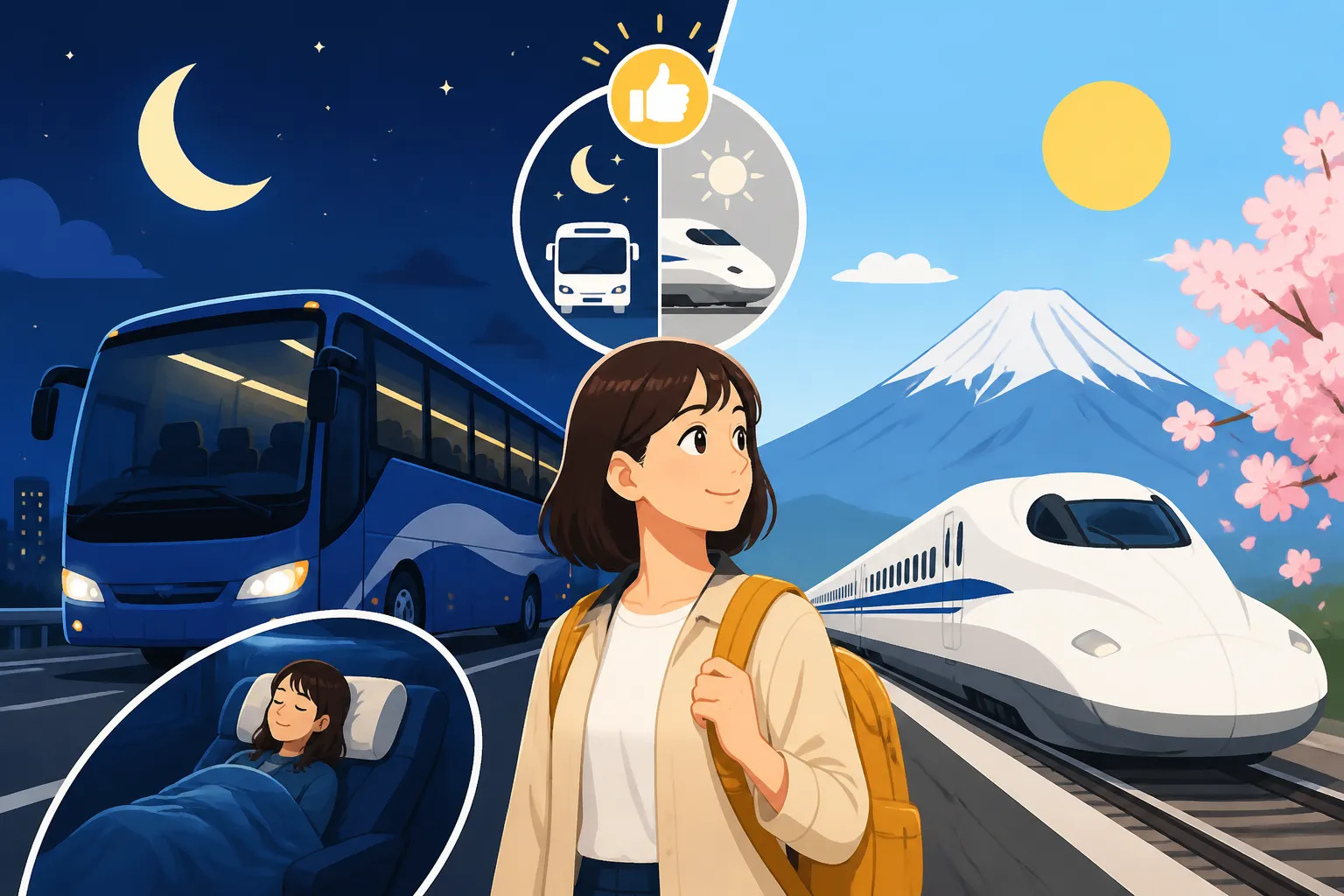
Highway Bus Passes in Japan: When Overnight Buses Beat the Shinkansen
You booked a Tokyo to Osaka trip, priced the shinkansen for two people, added a hotel night, and watched your budget shrink. An overnight highway bus can cover that same distance while you sleep, sometimes for much less. This guide explains when a bus pass or overnight ticket beats the bullet train, when it does not, and how to book through Klook.
Disclosure: This post may contain affiliate links. We may earn a commission at no extra cost to you if you make a purchase through these links. Read full disclosure.
Why Overnight Highway Buses Still Make Sense in Japan
I spent my first winter in Japan on a teacher’s salary, juggling rent, key money, and a growing list of places I wanted to see. The shinkansen was the dream. The reality was that a round trip from Tokyo to Kyoto, plus two hotel nights in peak season, took a painful bite out of my monthly budget. A coworker said, “Just take the yakou bus,” the night bus. I was skeptical. I am tall, I sleep badly, and I had pictured a cramped coach with a snoring stranger on my shoulder.
What I found was a network of highway buses that is clean, punctual, quiet, and well organized. That first ride did not convert me completely. It taught me that the overnight bus is a tool, not a replacement for the train. Used on the right route, it saves real money and buys you a full extra day of sightseeing.
The Real Math: Transport Plus Accommodation
Comparing a bus fare with a shinkansen fare misses the point. The overnight bus is transport and a night’s lodging in one ticket. Take the shinkansen in the evening and you still need a bed when you arrive. Take a 23:00 bus from Busta Shinjuku and you wake up in Osaka around dawn, and the hotel night is gone from your spending.
That matters most in expensive, high-demand periods. Cherry blossom season in Kyoto, autumn leaves weekends, and the big holiday blocks push hotel rates up sharply. For those weeks, see Golden Week, Obon, and New Year: Japan’s Three Worst Weeks to Book Late. A traveler who uses one overnight bus in each direction can skip two of those hotel nights entirely.
How Highway Bus Passes Work
There are two ways to ride. You can buy a single ticket for one route on one date. Or you can buy a multi-day highway bus pass, which covers rides on a participating operator’s network for a set number of days within a validity window. Willer Express is the name most foreign travelers meet first, and its pass format has become a reference point for the category.
Most of these passes share a few traits:
- The pass covers the fare, but each ride still needs its own seat reservation.
- Only the participating operators and routes are covered, so check the network before you plan around it.
- There may be limits on how many rides you can take in a single day.
- Premium seat classes may cost extra on top of the pass, or may not be included at all.
The value of a pass depends on how many long rides you take. Two overnight trips in a week? A pass may pay off. One bus trip in a ten-day rail-heavy itinerary? A single ticket is usually smarter.
Seat Classes Decide Whether You Sleep
This is the part most first-timers underestimate. Highway buses come in several layouts, and the layout matters more than the operator.
- Standard four-across seating is the cheapest. Two seats on each side of the aisle, a modest recline, and you will share an armrest.
- Three-across independent seating gives every passenger a seat with its own aisle access and a much deeper recline. I recommend this as the minimum for an overnight ride.
- Premium seats add a privacy hood or curtain, leg rests, wider spacing, and sometimes a shell-style cocoon design. On a full night ride, these feel closer to a business-class flight than a coach.
- Women-only seating is offered by some operators, either as reserved sections or as rules about who sits next to whom. Solo female travelers often find this a real comfort.
For the practical side of the ride itself, including eye masks, rest stops, and what the toilets are like, see Highway Buses in Japan: Overnight Bus Comfort & Safety Tips.
Overnight Bus vs Shinkansen: An Honest Comparison
I love the shinkansen. It is fast, smooth, and almost absurdly reliable. But the comparison is not as one-sided as it looks. Here is how the two stack up for a typical long trunk route such as Tokyo to Osaka or Tokyo to Kyoto.
| Factor | Overnight Highway Bus | Shinkansen |
|---|---|---|
| Typical Tokyo to Osaka travel time | Roughly 8 hours overnight | Roughly 2.5 to 3 hours |
| Accommodation needed that night | No, you sleep on board | Yes, unless you travel in the morning |
| Fare level | Generally lower, varies by seat class and date | Generally higher, with fewer discount options |
| Comfort | Depends heavily on seat class | Consistently comfortable |
| Sleep quality | Ranges from poor to decent | Not relevant for daytime travel |
| Schedule reliability | Can be affected by traffic, weather, and snow | Very high |
| Luggage space | Under-floor hold, usually limited per passenger | Overhead racks and reserved oversized luggage areas |
| Arrival time | Early morning, often before shops open | Any time you choose |
| Best for | Budget travelers, flexible schedules, light packers | Tight schedules, poor sleepers, families with lots of luggage |
When the Overnight Bus Wins
You are on a tight budget. Students, working holiday travelers, and anyone in their first few months of living in Japan will feel the savings most. For a wider look at stretching a trip budget, see How to Travel Japan on a Budget Without Missing Highlights.
You want to maximize daylight. Arriving in Kyoto around 6:30 in the morning means you reach Fushimi Inari or Kiyomizu-dera before the tour groups. My favorite Kyoto memory is walking the torii gates in near silence while most visitors were still on their breakfast trains.
The route has no convenient shinkansen. Plenty of places tourists love are bus territory. The Fuji Five Lakes area around Kawaguchiko, the mountain stretch between Takayama and Shirakawa-go, and many smaller cities across Shikoku and San’in are easier, more direct, or simply cheaper by highway bus. On these routes the bus is often the most sensible way in, not just the budget choice.
Hotels are sold out or overpriced. During festivals and peak foliage weekends, an overnight bus can rescue a trip that otherwise would not have worked.
When the Shinkansen Is Worth Every Yen
You cannot sleep sitting up. Be honest with yourself. If you arrive wrecked and lose the whole morning to exhaustion, the money you saved has bought you nothing.
Your schedule is rigid. Highway buses run on expressways, and expressways get traffic, accidents, and in winter, snow closures. If you have a flight, a business meeting, or a timed attraction ticket the morning you arrive, take the train.
You hold a rail pass already. If a JR pass or regional pass is already covering your trunk routes, an overnight bus only makes sense to save a hotel night. For the rail pass math, see JR Pass 2026: Is the National Pass Still Worth It After the Price Increase? and Regional Rail Passes: Which One Fits Your Itinerary?.
You are traveling with kids or lots of bags. Bus luggage holds are finite, and a young child on an overnight bus can mean a sleepless night for your whole row. For booking the train side properly, see Shinkansen Tickets: Booking, Seat Types, and Luggage Rules.
A Real Scenario: The Split Itinerary
My most successful trip used both. A friend and I took a three-across overnight bus from Busta Shinjuku to Kyoto on a Thursday night. We arrived before 7:00, left our bags in a station locker, had a full Friday of temples, and checked into our hotel in the afternoon. On Sunday evening, tired and loaded with omiyage, we took the shinkansen home and were in our apartments before 22:00.
That pattern is the sweet spot for a lot of people. Use the bus at the start, when you are fresh and the saved hotel night matters, and the train on the way home, when you are tired. If you are weighing flights as well, see Shinkansen vs Domestic Flights: Cheapest Way to Travel Between Major Cities.
How to Book Highway Bus Tickets and Passes Through Klook
The first time I tried to book a highway bus, I ended up on an operator website that was only partly translated, with a payment page that rejected my foreign card. That is a common frustration, and it is where Klook earns its place. It gives you an English interface, accepts international payment methods, and shows bus options alongside the rest of your Japan bookings.
Why Klook Works Well for Foreign Travelers
There are three practical advantages. First, the listings, seat class descriptions, and boarding instructions are in English, so you are not guessing at kanji when choosing between seat layouts. Second, payment with an overseas card is usually simple. Third, you can manage your bus ticket in the same app as your airport transfer, attraction tickets, and day tours, which keeps a multi-city trip under control.
Availability varies by route and operator. Klook does not list every bus company in Japan, and smaller regional operators are often missing. For the major trunk routes and for multi-day bus passes from operators that work with international booking platforms, Klook is a convenient place to start. Fares, pass terms, and any booking charges change, so always check the current figures on the Klook listing itself before you pay. If you want to see how it stacks up against a competitor, see Klook vs KKday for Japan: Coverage, Price, and Cancellation Compared.
Step-by-Step Booking Process
- Open the Klook app or website and search for highway buses, overnight buses, or the specific bus pass you want, using your departure and arrival cities.
- Compare the departure times, boarding points, and seat classes listed for your date. Pay close attention to the boarding location, because a single city can have several bus terminals.
- Read the listing’s details on seat layout, luggage allowance, cancellation terms, and whether you receive an instant confirmation or need to wait for operator approval.
- If you are buying a multi-day pass, confirm which operators and routes are included and how seat reservations for each ride are made after purchase.
- Enter your name exactly as it appears in your passport, plus your contact details, so the operator can match you to the booking.
- Pay and save the confirmation or voucher on your phone. Take a screenshot as a backup in case your connection drops at the terminal.
- Before travel day, recheck the boarding point and departure time in the voucher. Aim to arrive at the terminal well before departure, because overnight buses leave on schedule and do not wait.
For broader advice on reserving seats directly with operators as well, see How to Buy Reserved Bus Tickets Online.
Cancellation and Changes
Bus cancellation terms can be stricter than you expect, and they often tighten as the departure date approaches. Some tickets are non-refundable after a certain point, and passes may have their own rules once activated. Klook shows the terms on each listing, so read them before you commit, especially if your plans depend on weather or a visa appointment. For how refund windows usually work on Japan bookings, see Cancellation Policies on Japan Tours: What You Get Back and When.
Making the Overnight Ride Actually Work
Booking the ticket is the easy part. The difference between “never again” and “best travel hack ever” is in the preparation.
Luggage and Terminal Logistics
Bus luggage holds usually allow one large suitcase and a small carry-on per passenger. Anything oversized may be refused, and staff are polite but firm. Large Japanese terminals such as Busta Shinjuku, Osaka’s Umeda and Namba areas, and the Hachijo side of Kyoto Station are well signed, but they get busy late at night, so give yourself time.
My solution for longer trips is to send the big suitcase ahead and travel light. For how that works, see Luggage Forwarding (Takkyubin): How to Travel Hands-Free. On arrival, a station locker lets you start sightseeing straight away. For locker sizes and backup options, see Using Coin Lockers: Sizes, Fees, and Backups.
Packing for Sleep
These small items transformed my overnight bus experience:
- An inflatable neck pillow that supports your head without pushing it forward.
- An eye mask, because the cabin lights dim but do not go fully dark at rest stops.
- Foam earplugs for snoring neighbors and engine noise.
- A light layer or scarf, since cabin temperatures can swing between warm and chilly.
- Compression socks if you are prone to swollen ankles on long rides.
- A small bottle of water and a quiet snack, eaten without crinkly packaging.
- Wet wipes and a toothbrush for a quick freshen-up at the arrival terminal.
Silence is the norm on night buses. Phone calls are off-limits, and drivers will usually announce that the cabin is entering quiet time once the bus leaves the city.
What to Do When You Arrive at Dawn
You will probably step off the bus before most cafés open, a little rumpled and very ready for coffee. Plan your first two hours in advance. Many arrival areas have 24-hour convenience stores, family restaurants serving early breakfast, and in some cities, early-opening sento or onsen facilities where a hot bath resets your body.
If you are in Kyoto, this is the perfect time for the famous sights before the crowds. For choosing a base that works with an early arrival, see Where to Stay in Kyoto: Station Area vs Gion vs Arashiyama. Many hotels will hold your bags before check-in, so you only need to carry what you need for the morning.
My Final Verdict
The overnight highway bus beats the shinkansen when money matters, when hotels are scarce or overpriced, when your route is not well served by rail, and when you can sleep reasonably well in a reclined seat. The shinkansen wins when time is critical, when comfort is non-negotiable, and when you are carrying a lot. The smartest travelers I know mix the two depending on the leg of the trip.
If you are ready to try it, start by checking overnight routes and bus passes on Klook for your next long trip. Pick a three-across or premium seat, pack your sleep kit, and plan your first sunrise in a new city. It is one of the most satisfying ways I know to stretch both your budget and your days in Japan.
Disclaimer
This article is for general informational purposes only and does not constitute professional advice. Laws, prices and regulations vary by location and change over time. Consult a qualified professional for guidance on your specific situation.





