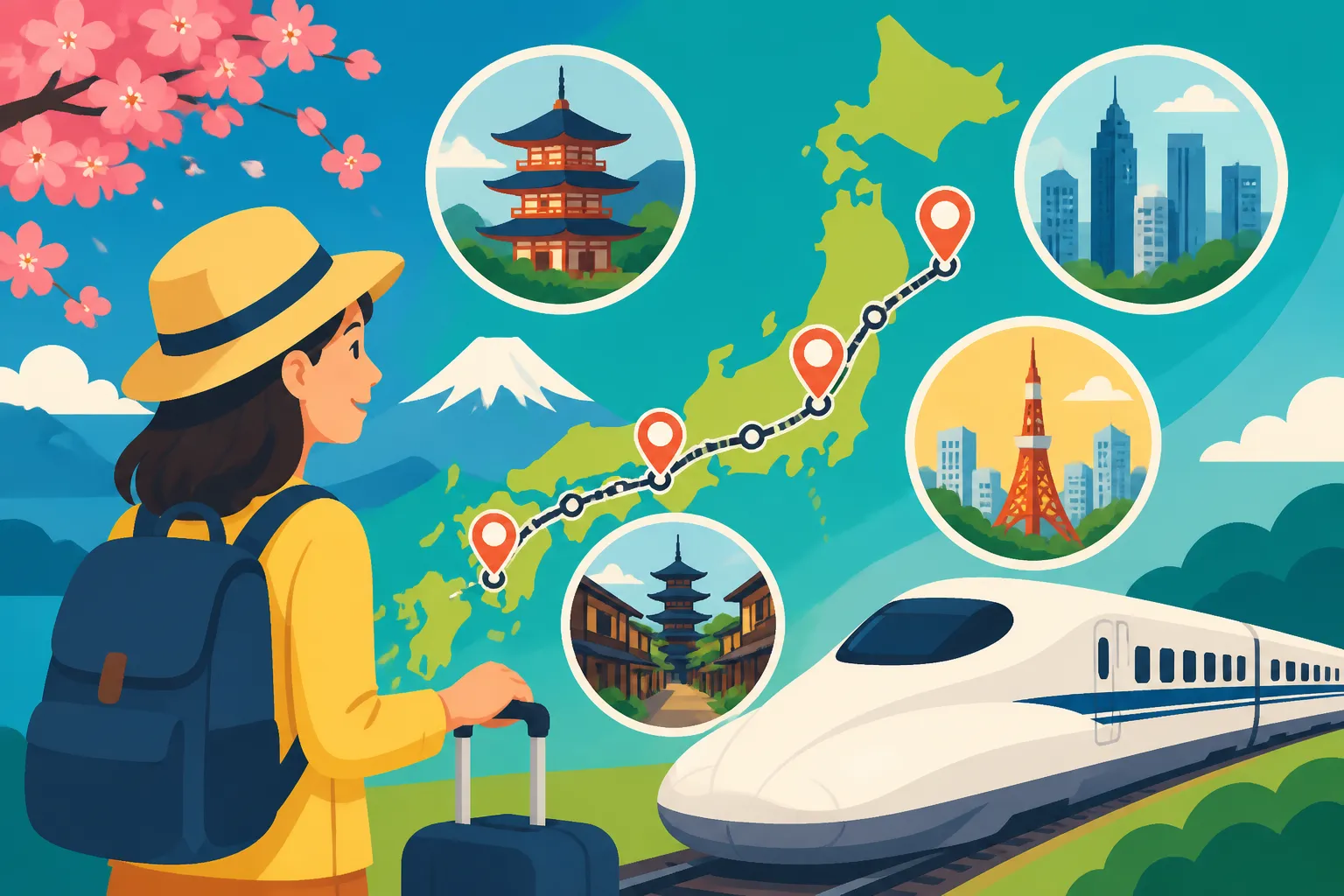
Booking Multiple Cities in One Trip: Sequencing Hotels Around Rail Routes
So, you’ve decided to tackle a multi-city adventure across Japan? Bravo! It’s truly one of the most rewarding ways to experience this incredible country, from the neon glow of Tokyo to Kyoto’s ancient whispers and Osaka’s culinary delights. But let’s be real, the sheer logistics of stringing together accommodations in different cities can feel like trying to solve a Rubik's Cube blindfolded. Many a hopeful traveler has been swallowed by the black hole of booking systems and lost train connections. This guide is here to untangle that mess, showing you how to seamlessly sequence your hotels around Japan's legendary rail routes, with a special shout-out to how a platform like Agoda can be your best travel companion in this process.
Disclosure: This post may contain affiliate links. We may earn a commission at no extra cost to you if you make a purchase through these links. Read full disclosure.
The Multi-City Dream vs. The Logistics Reality
There's nothing quite like the allure of a multi-city trip in Japan. One moment you're marveling at a bustling Shibuya scramble, the next you're strolling through serene bamboo forests in Arashiyama, and soon after, you're enjoying a plate of takoyaki in Dotonbori. The variety is unmatched, and the desire to soak it all in is completely understandable.
Why Multi-City Trips are So Appealing and Complicated
The appeal is obvious: Japan is a land of incredible contrasts. You can experience futuristic technology in Tokyo, immerse yourself in historical traditions in Kyoto, explore the vibrant food scene of Osaka, or even venture to the snowy landscapes of Hokkaido or the tropical beaches of Okinawa, all within one grand journey. Each city offers a unique flavor, a distinct cultural experience that builds into a rich tapestry of memories. For many expats and tourists, the dream is to sample as much of this diversity as possible in a single visit.
However, the very thing that makes multi-city trips so appealing is also what makes them so complicated. You’re not just booking one hotel; you’re managing several, each with its own check-in/check-out times, cancellation policies, and proximity to transport. Coordinating these elements while also planning daily activities and ensuring smooth transitions between cities can quickly turn that exciting dream into a logistical nightmare. The biggest headache often isn't even the travel itself – Japan's trains are wonderfully punctual – but rather the choreography of where to drop your bags and rest your head in each new destination. It's a dance between convenience and cost, location and comfort, and it requires a bit of foresight.
Common Pitfalls for First-Timers
I’ve seen it happen countless times, both to myself and to friends new to Japan: a glorious multi-city itinerary falls apart due to easily avoidable booking mistakes. One of the most frequent errors is booking hotels without considering their proximity to major train stations. You might snag a great deal on a lovely ryokan on the outskirts of Kyoto, only to realize that getting to Kyoto Station for your early Shinkansen departure to Hiroshima involves a convoluted series of local buses and taxis, eating up precious time and adding unexpected stress.
Another common pitfall is underestimating the sheer time it takes to travel between cities, especially if you’re covering significant distances. A journey that looks like a short hop on a map can involve multiple transfers, waiting times, and walking, particularly if your accommodations are far from the main transport hubs. Add in the hassle of dragging heavy luggage through crowded stations, and you've got a recipe for unnecessary frustration. Many visitors also book inflexible rates too far in advance, only to find their plans need to shift slightly due to unforeseen circumstances, leaving them stuck with non-refundable bookings. Trust me, the convenience of easily managing changes, sometimes even at the last minute, is invaluable when navigating a complex itinerary.
Understanding Japan's Rail Network: Your Backbone for Travel
Japan’s public transportation system is legendary for a reason. It's efficient, punctual, and connects almost every corner of the country. For a multi-city trip, it's not just a means of getting from A to B; it's the very backbone of your itinerary planning. Ignoring this fact when booking your accommodations would be a grave mistake.
The Shinkansen and Regional Lines: Your Best Friends
The Shinkansen, Japan's iconic bullet train, is your absolute best friend for inter-city travel. These marvels of engineering whisk you between major cities like Tokyo, Kyoto, Osaka, and Fukuoka at incredible speeds, often in less time than it takes to fly when you factor in airport commutes. But here’s the kicker: Shinkansen stations are often massive hubs, connecting to numerous local and regional lines. This means that staying near a Shinkansen station doesn't just make your long-distance travel easy, it also simplifies your daily explorations within a city. You're usually just a few stops away from popular tourist spots and bustling downtown areas.
For example, if you’re in Tokyo, staying near Tokyo Station or Shinagawa Station provides direct Shinkansen access. In Kyoto, Kyoto Station is the obvious choice. For Osaka, Shin-Osaka Station is key for the Shinkansen, while Umeda and Namba are central for local sightseeing. Making these major train hubs the center of your accommodation strategy ensures you minimize daily commute times and maximize sightseeing. For a deeper dive, check out How to Use Japan’s Train System (Local, Limited Express, Shinkansen) to get a handle on the various types of trains you'll encounter. And when it comes to those bullet train journeys, understanding the nuances of booking is crucial, so consider reading Shinkansen Tickets: Booking, Seat Types, and Luggage Rules beforehand.
The Importance of Rail Passes in Hotel Sequencing
Many multi-city travelers to Japan opt for a Japan Rail Pass or a regional pass to save on travel costs. These passes offer fantastic value, but they also dictate your travel patterns and, by extension, where it makes sense to book your hotels. If you have a JR Pass, you'll want to prioritize hotels within easy walking distance or a short local train ride from JR stations to maximize the pass's utility and avoid additional transport costs.
Think about it: if your pass covers the Shinkansen, you want your hotel to be as close to that Shinkansen station as possible to make early morning departures stress-free. Conversely, if you're using a regional pass that covers, say, the Kansai area (Osaka, Kyoto, Nara, Kobe), you might choose a central hub like Osaka's Umeda or Namba districts, or even Kyoto Station, and do day trips from there. This strategic approach to hotel sequencing, with your rail pass firmly in mind, is where your trip truly begins to flow smoothly. It prevents those moments of panic when you realize your charming, secluded inn is going to cost you a fortune in taxi fares to reach your included train.
Strategic Hotel Booking: Proximity and Convenience
Once you've wrapped your head around Japan's incredible train network, the next logical step is to weave your hotel choices into that understanding. This isn't just about saving a few yen; it's about saving time, energy, and minimizing stress during your precious travel days.
Why Staying Near Major Stations is a Game-Changer
I cannot stress this enough: for a multi-city trip in Japan, proximity to a major train station is paramount. It’s not just about convenience; it’s about unlocking the full potential of your itinerary. Imagine arriving in Tokyo after a long flight, navigating through the airport, and then being able to walk a mere five minutes from the Narita Express platform to your hotel. Or, after a full day exploring temples in Kyoto, knowing that your hotel is literally above or next to Kyoto Station, meaning you can drop your shopping bags and relax almost instantly.
Staying near major stations like Tokyo Station, Shin-Osaka, or Kyoto Station offers a multitude of benefits:
- Seamless Transitions: Getting to and from your Shinkansen or regional express trains becomes effortless. No last-minute dashes, no expensive taxis.
- Local Connectivity: These stations are usually major hubs for local subway lines, buses, and other regional trains, making it easy to access all parts of the city.
- Amenities Galore: Major stations are often mini-cities themselves, packed with restaurants, cafes, convenience stores, department stores, and luggage lockers. You’ll never be far from a late-night snack or an essential purchase.
- Early Departures/Late Arrivals: If you have an early train to catch or arrive late in the evening, being right at the station means minimal hassle and maximal sleep.
This strategy truly transforms your experience, making travel days feel less like chores and more like smooth segues.
Leveraging Online Booking Platforms for Multi-City Stays
Now, how do you find these perfectly located havens? This is where a reliable online booking platform becomes indispensable. I’ve personally found Agoda to be a fantastic resource for booking hotels in Japan, especially for multi-city itineraries. Its interface is intuitive, and it offers robust search filters that are a lifesaver for travelers prioritizing location.
When you're searching on Agoda, you can easily filter by "near station" or use the map view feature to pinpoint accommodations directly adjacent to major stations. This visual tool is incredibly helpful in ensuring you're genuinely close to the action, not just a vague 15-minute walk away. Agoda also provides a wide range of hotel types, from budget-friendly business hotels (often right by stations) to luxurious international chains, giving you options no matter your preference. The user reviews and ratings are invaluable too, as they often include specific comments about a hotel's proximity to transport and the ease of access.
Crucially, for complex multi-city plans, Agoda frequently offers flexible booking options, including free cancellation. This is a non-negotiable for me when planning trips that involve multiple stops. Knowing that you can tweak your plans without financial penalty if something unexpected pops up (a common occurrence in travel!) provides immense peace of mind. Many of my expat friends use Agoda for their domestic travels because of its competitive pricing and the sheer volume of choices, often even finding options that cater to more specific needs like Serviced Apartments and Short-Term Rentals in Japan: Options for New Expats which might be useful for longer stays in one spot.
Crafting Your Itinerary: Step-by-Step Sequencing
Alright, you understand the why. Now let's talk about the how. Sequencing your hotels for a multi-city Japan trip isn't just about picking random places; it's an art form that blends logical travel with personal preferences.
Phase 1: Sketching Your Route and Duration
Before you even open a booking website, grab a pen and paper (or a digital equivalent). Start by sketching out your desired route and the approximate number of nights you want to spend in each city. Don't worry about perfection at this stage; this is your rough draft.
For example, a classic route might look like:
- Tokyo: 4 nights
- Kyoto: 3 nights
- Osaka: 2 nights
- Hiroshima: 1 night
Consider your pace. Are you a "see everything at warp speed" traveler, or do you prefer to linger and soak things in? Japan offers endless attractions, but trying to cram too much into too few days will lead to burnout. Remember that travel days between cities are effectively half-days. If you check out of a Tokyo hotel in the morning and arrive in Kyoto in the afternoon, you've used a significant chunk of that day for transit. Be realistic about what you can achieve. Think about potential day trips too – Hakone Day Trip: Onsen, Ropeway, and Mt. Fuji Views or Nara Day Trip: Deer Park Etiquette and Temple Route are common from Tokyo and Kyoto/Osaka respectively. Knowing your home base makes planning these excursions much simpler.
Phase 2: Finding and Securing Your Stays
With your basic itinerary sketched out, it's time to start finding those hotels. This is where Agoda truly shines for multi-city bookings. I always recommend booking your cities sequentially on the platform, starting with your first destination and working your way through.
Here's how I approach it:
- Start with City 1 (e.g., Tokyo): Go to Agoda, input your dates for Tokyo, and immediately use the filters. Look for hotels with high ratings and, crucially, those listed as "near station" or visible on the map adjacent to major hubs like Tokyo Station, Shinjuku Station, or Shinagawa Station. Read recent reviews, especially those from international travelers, to get a sense of the actual walking distance and convenience.
- Move to City 2 (e.g., Kyoto): Once you have a Tokyo hotel tentatively selected (or even booked with free cancellation), repeat the process for Kyoto. Your focus here will likely be Kyoto Station. Search for your Kyoto dates on Agoda, filter, and review.
- Continue the Chain: Proceed city by city, using the same methodology. This ensures that each hotel choice flows logically into the next, building your itinerary block by block. Always prioritize locations that minimize your travel time from your hotel to the main train station for your next leg of the journey.
A critical step here is to pay close attention to the cancellation policies. For complex, multi-city trips, always opt for refundable rates if your budget allows. While it might be slightly pricier upfront, the flexibility that Agoda often provides with these options is invaluable. Circumstances can change, a train might get delayed, or you might simply realize you want an extra night somewhere. That ability to adjust without losing a significant chunk of money is a game-changer.
Incorporating Luggage and Local Travel
One of the biggest headaches of multi-city travel is luggage. Nobody wants to haul a massive suitcase through crowded Tokyo commuter trains or up and down countless station stairs. This is where you need to be smart.
- Luggage Forwarding (Takkyubin): Japan has an incredible service called Takkyubin (or Takuhaibin) which allows you to send your large luggage directly from one hotel to your next. This is a total lifesaver. You check out, send your big bags ahead, and travel light with just a small overnight bag. Many hotels can arrange this for you directly. It usually takes a day, so plan accordingly. Seriously, look into Luggage Forwarding (Takkyubin): How to Travel Hands-Free – it will transform your trip.
- Pack Smart: Even with forwarding services, try to pack efficiently. Smaller, lighter bags are always easier to manage.
- Local Connectivity: Your station-adjacent hotels will put you in prime position for local sightseeing. Grab an IC Cards Explained: Suica, PASMO, ICOCA (Where They Work) at your first major station, load it up, and you'll be zipping around on local subways and buses with ease. These cards make tapping in and out a breeze, no fumbling for cash or deciphering ticket machines.
| Factor | Hotel Near Major Station (e.g., Tokyo Station) | Hotel in Residential/Tourist Area (e.g., Gion, Kyoto) |
|---|---|---|
| Inter-City Travel | Excellent (direct Shinkansen, express lines) | Requires local transport to major station (bus, subway) |
| Local Sightseeing | Great (direct subway/JR lines to many popular spots) | Excellent for specific area, but may require transfers to other parts of city |
| Luggage Management | Easiest for drop-off/pick-up, luggage forwarding services | Can be more challenging with luggage, especially with multiple transfers |
| Dining & Amenities | Abundant restaurants, convenience stores, shopping within station complex and area | More local, often charming, but may have fewer late-night options or international choices |
| Flexibility | Often more business hotels with diverse booking options available on platforms like Agoda | Boutique hotels/ryokans may have stricter cancellation policies |
| Atmosphere | Bustling, modern, efficient | Quaint, traditional, quieter (depending on area) |
Flexibility and Backup Plans
No matter how meticulously you plan, travel throws curveballs. I’ve learned this the hard way more times than I care to admit. The difference between a minor hiccup and a major disaster often comes down to how much flexibility you’ve built into your bookings.
The Value of Flexible Bookings
Imagine you’ve booked a non-refundable hotel for three nights in Osaka, and then a typhoon rolls in, canceling all Shinkansen services for a day, meaning you're stuck in Kyoto for an extra night. Suddenly, you're paying for two hotels at once. It's a real buzzkill. This is why flexible bookings are not just a nice-to-have, they're a necessity for multi-city travel in Japan.
When searching on platforms like Agoda, always check for options with free cancellation. While these rates might sometimes appear slightly higher than non-refundable ones, the peace of mind they offer is truly priceless. Agoda is great at displaying these options clearly, and often, the difference in price is minimal compared to the potential cost of losing a full night's stay. If you’re booking months in advance, this flexibility allows you to fine-tune your itinerary as your understanding of Japan grows or as local events (festivals, cherry blossom forecasts) become clearer. It's an investment in stress-free travel.
What to Do When Things Go Sideways
Even with flexible bookings, actual travel hiccups can still be jarring. Here are a few common scenarios and how to navigate them:
- Lost or Delayed Luggage: This is always a pain. If you've used a luggage forwarding service and your main bags are already en route, it mitigates the issue significantly. If not, contact your airline immediately. Inform your hotel if your arrival time is affected.
- Train Delays or Cancellations: While rare for Shinkansen, local lines can experience delays. Always check train schedules on apps like Google Maps or Japan Transit Planner before heading out. If a major disruption occurs, check your Agoda booking; if you have a flexible rate, you can often modify or cancel your reservation directly through the app or website with minimal fuss.
- Emergencies: For any health-related issues, remember Japan's emergency services. Having essential contact details for your hotel and any English-speaking support lines saved in your phone is smart. And speaking of emergencies, it's always wise to secure comprehensive Travel Insurance for Japan Trips: What to Check before you embark on your journey. It provides a safety net for unexpected medical costs, cancellations, or even lost belongings.
The key takeaway here is preparedness. A well-chosen platform like Agoda, combined with strategic booking practices, significantly reduces the potential impact of unforeseen circumstances.
Beyond the Hotel: Maximizing Your Multi-City Experience
Your hotel isn't just a place to sleep; it's your launchpad for adventure. A strategically chosen hotel, especially one booked efficiently through a platform like Agoda, can dramatically enhance your entire multi-city experience.
Optimizing Your Days from Your Hotel Base
With your hotel ideally situated near a major train station, your options for daily exploration expand exponentially. Instead of spending precious hours commuting, you're directly connected to the pulse of the city and its surrounding regions.
- Effortless Day Trips: From your Tokyo base, you can easily venture out to places like Hakone for stunning Mt. Fuji views and onsen, or Nikko for its UNESCO World Heritage shrines. From Kyoto or Osaka, popular day trips include the deer of Nara or the castles of Himeji. A hotel right by the main station means you can grab an early train, explore a fantastic new area, and be back in time for dinner without feeling rushed or exhausted. It truly broadens the scope of your trip without having to pack up and move hotels constantly.
- More Time for Exploration: When you minimize transit time between your hotel and your daily activities, you gain more hours to actually experience Japan. That extra hour in the morning can mean visiting a peaceful temple before the crowds arrive, or that extra hour in the evening means enjoying a leisurely dinner and a stroll through a lively district.
- Return for R&R: Knowing your comfortable, well-located hotel is just a short hop away encourages you to take breaks when needed. Maybe you want to drop off some shopping, recharge for an hour, or simply enjoy a quiet moment before heading out again. This level of convenience significantly improves your overall travel comfort.
Dining and Entertainment Near Your Accommodation
One of the great joys of Japan is its incredible food culture. When your hotel is located near a major transport hub, you're usually spoiled for choice when it comes to dining and entertainment.
Major train stations are often culinary treasure troves, featuring everything from quick and delicious ramen shops and izakayas to upscale restaurants offering regional delicacies. You can easily find a fantastic meal, whether you're looking for a quick bite after a long day of sightseeing or a more elaborate dining experience. Beyond food, these areas also typically boast:
- Shopping: From department stores to quirky souvenir shops.
- Convenience Stores: Ubiquitous and essential for quick snacks, drinks, and even small meals.
- Entertainment: Arcades, movie theaters, and sometimes even karaoke bars are often found in these bustling districts.
This means that even if you're tired from a day of exploring, you don't have to venture far for a satisfying end to your day. It adds another layer of seamlessness to your journey, ensuring that every aspect of your multi-city trip, from transit to dinner, is as enjoyable and stress-free as possible. Don't forget, staying connected with a Staying Connected in Japan: Pocket WiFi vs eSIM can also help you find the best local eateries right near your hotel!
Disclaimer
This article is for general informational purposes only and does not constitute professional advice. Laws, prices and regulations vary by location and change over time. Consult a qualified professional for guidance on your specific situation.





