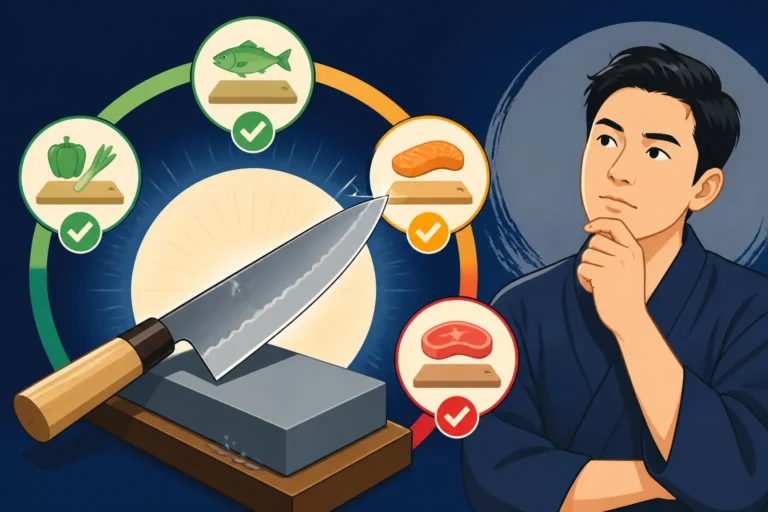
How Often Should You Sharpen Your Japanese Knife?
Japanese knife maintenance schedules depend on steel type, ingredient hardness, and cooking frequency, ranging from daily honing to seasonal sharpening.
Electric sharpeners and whetstones differ in speed, blade preservation, and suitability for single and double bevel Japanese knives.
Japanese knife care requires handwashing because dishwashers cause rust, thermal shock, and blade dullness with harsh chemicals and high heat.
Wooden knife handle maintenance prevents cracking and fuzziness by applying oil to control moisture absorption.
Carbon steel knife discoloration can be beneficial protective patina or destructive red rust, depending on the specific type of oxidation.
Japanese knife damage explains how to assess blade chips and determine whether to attempt home repair using whetstones or seek professional help.
Choosing the right Japanese knife length explains how to match blade measurements to your height, cutting style, and kitchen space.
Proper Japanese kitchen knife dimensions, handle styles, and blade lengths provide comfortable control and safety for cooks with smaller hands.
Traditional Japanese sushi knives, including the yanagiba and takohiki, provide the precise single-bevel blade needed for clean home sashimi slices.
Japanese knife selection involves specific blades like the deba, yanagiba, sujihiki, and honesuki for preparing meat and fish.