Long Hospital Stays in Japan: Daily Room Charges, Sashigaku Beds, and Cover Limits
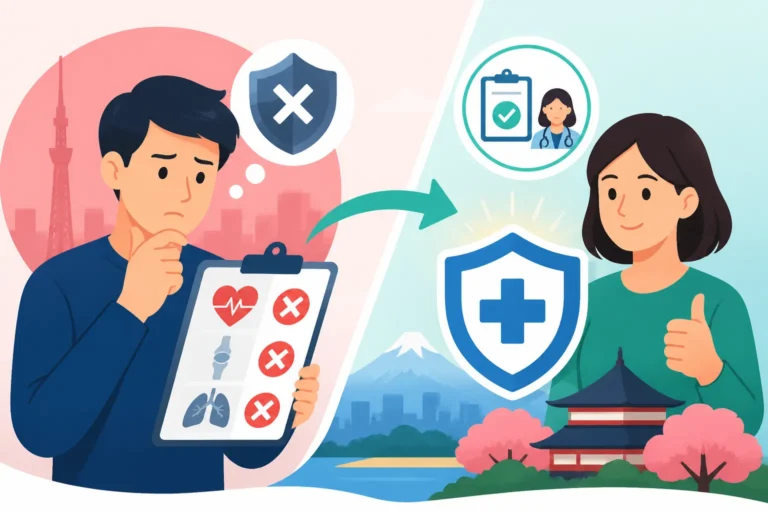
Navigating a long hospital stay in Japan can feel like wandering through a maze, especially when it comes to understanding the elusive daily room charges and what your insurance actually covers. It’s a common frustration for us expats – you're already worried about your health, and then the complex billing system throws another wrench into your peace of mind. This guide is here to shed some light on those confounding sashigaku beds, explain where your National Health Insurance (NHI) might fall short, and introduce you to solutions like SafetyWing that can help ensure you're not left with a mountain of unexpected medical debt after an extended stay.
Disclosure: This post may contain affiliate links. We may earn a commission at no extra cost to you if you make a purchase through these links. Read full disclosure.
Understanding Daily Room Charges in Japanese Hospitals
When you’re admitted to a hospital in Japan, it’s not just the medical procedures and consultations that stack up on your bill. The cost of your room, often overlooked or misunderstood, can quickly become a significant expense, especially during a prolonged stay.
The Basics of Hospital Room Fees (Nyūin-ryō)
First off, let’s talk about standard hospital room fees, or nyūin-ryō. Generally, when you’re hospitalized, Japan’s National Health Insurance (NHI) covers 70% of your medical treatment costs, including basic room charges if you are in a standard ward. This usually means a shared room with multiple beds. These shared rooms are designed for efficiency, sometimes housing up to four or six patients, though two-bed rooms are also common. The idea is to provide essential care at a subsidized rate. For most routine admissions where you don't specifically request a private room, these standard ward charges are usually covered under your NHI, meaning you only pay your 30% co-payment.
However, the definition of a "standard room" can sometimes be a little blurry depending on the hospital. Some larger, more modern facilities might consider a two-person room as their standard, while smaller, older clinics might only have larger, multi-bed wards. It’s always worth clarifying what "standard" means at the hospital you're admitted to, even if your Japanese isn't perfect. Don’t be afraid to ask for clarification, or bring a friend who can help translate. The last thing you want is a surprise bill because of a misunderstanding about room type.
The Infamous Sashigaku Beds (Differential Room Charges)
Now, let's dive into the trickiest part of hospital room charges: sashigaku (差額ベッド代), or differential room charges. This refers to the extra fees you pay for choosing a private room (koshitsu) or a semi-private room (jun-koshitsu) over a standard shared ward. And here’s the kicker, the one that often catches expats off guard: NHI does not cover sashigaku bed fees. Not even a yen of it. This means if you opt for, or are placed in, a private or semi-private room, you're on the hook for 100% of that additional daily charge.
Why does this happen? Well, privacy is a luxury, and in Japan, it’s a paid luxury in hospitals. A private room offers a quiet space, often with its own bathroom, and sometimes amenities like a TV or small fridge. Semi-private rooms might offer two beds but still provide more space and privacy than a larger ward. The costs for these sashigaku beds can vary wildly, from a few thousand yen to tens of thousands of yen per day, depending on the hospital, its location (Tokyo hospitals will be pricier, naturally), and the level of luxury.
I’ve heard countless stories, and experienced some close calls myself, where foreign residents found themselves in a private room either by misunderstanding, lack of available standard beds, or simply not knowing the implications. One friend, after a minor surgery, woke up in a spacious private room, thinking it was a kindness from the hospital. That kindness turned into a 20,000 yen per day surprise on his discharge bill! It’s crucial to proactively ask about room options and their associated costs upon admission, and explicitly state your preference for a standard, NHI-covered room if budget is a concern. Even then, sometimes, if no standard beds are available, you might find yourself temporarily in a sashigaku room. In such cases, you should clarify upfront how long you’ll be there and if they can move you as soon as a standard room frees up. Don't be shy; your wallet will thank you.
Navigating Health Insurance Coverage for Extended Stays
Understanding what Japan's public healthcare system covers is essential, but equally important is knowing its limitations, especially for those longer, more complex hospitalizations.
National Health Insurance (NHI) and Your Cost Burden
As mentioned, Japan's National Health Insurance (NHI) is fantastic for covering the majority of medical treatment costs, typically 70%. For a standard, multi-bed hospital ward, your 30% co-payment covers the basic room charge. However, the moment you move into a sashigaku bed (private or semi-private room), NHI stops covering those differential costs entirely. This can lead to a significant financial burden, particularly during extended hospitalizations where those daily fees accumulate quickly. Imagine staying for a month in a private room costing 20,000 yen per day – that's an extra 600,000 yen you have to pay out of pocket, on top of your 30% co-payment for all medical procedures, tests, and medications.
Moreover, while NHI is comprehensive for medical services, it often doesn't cover non-medical costs that can arise during a long stay. Things like meals (beyond a basic dietary contribution), laundry, personal care items, or even TV rentals might be extra. While these are minor compared to sashigaku fees, they add up over time. It's a system designed to provide universal access to essential care, not to cover every amenity or personal choice during your treatment. For more comprehensive details on the public system, you can always refer to resources like "Japan’s National Health Insurance: What You Need to Know (2026 Guide)".
The Role of Private Health Insurance
This is where private health insurance truly shines, acting as a critical safety net for many expats. While NHI covers the core medical expenses, a good private health insurance policy can step in to cover those sashigaku bed fees and other incidentals that NHI leaves behind. Many international private insurance plans specifically include provisions for private room upgrades, often up to a certain daily limit or an overall maximum. This means you can choose a private room for comfort and privacy without dreading the enormous bill.
For those of us living the digital nomad life or working independently, a robust travel medical insurance like SafetyWing is absolutely invaluable. While SafetyWing is primarily known as travel insurance for digital nomads, their Nomad Insurance plan often provides coverage for unexpected medical emergencies and hospital stays, including room and board charges. This can be a godsend if you're suddenly hospitalized for an extended period and need the privacy of a single room to recover or simply to feel more comfortable. It bridges the gap left by the NHI regarding sashigaku beds and offers peace of mind when unforeseen health issues arise. Always check the specifics of your chosen SafetyWing plan, as coverage limits and terms can vary, but generally, they aim to cover essential medical needs during your travels or temporary residence. This type of plan is particularly helpful for those who might not have access to corporate health insurance or are not permanent residents yet.
Maximizing Your Insurance Cover and Avoiding Surprises
The key to a smooth hospital stay, especially an extended one, is proactive engagement with your insurance provider. Don't wait for the bill to arrive.
Pre-Approval and Communication with Your Insurer
This cannot be stressed enough: contact your private insurance provider as soon as hospitalization is anticipated or occurs. Many private health insurance policies, especially for longer or more expensive treatments, require pre-approval. This means you (or the hospital on your behalf) need to inform the insurer about your admission, the nature of your condition, and the estimated length of stay. Ignoring this step could jeopardize your claim.
For example, with SafetyWing, their policy often states that you should contact them as soon as reasonably possible in case of hospitalization. They can guide you through the process, confirm your coverage, and even liaise directly with the hospital if necessary. This can be a huge relief, especially if you're dealing with a language barrier. Think of them as your advocate in a system that can often feel overwhelming. Having a direct line to someone who understands your policy and can communicate with Japanese hospital staff in English can make all the difference. This proactive communication also helps manage expectations regarding what will and won't be covered, avoiding nasty surprises down the line. If you're looking for English-speaking help at hospitals, reading about "International Patient Services: Getting English Help at Hospitals" can also be useful.
Understanding Policy Limits and Exclusions
Just like any insurance, private policies come with their own set of rules, limits, and exclusions. It’s absolutely crucial to familiarize yourself with these before you need the coverage.
- Daily Room Limits: Many policies will have a specific daily limit for room and board, especially for private rooms. For instance, your plan might cover up to $200 per day for a private room. If the hospital charges 25,000 yen (roughly $160-$170 depending on the exchange rate) for a private room, you're fine. But if it's a swanky hospital charging 40,000 yen (approx. $250-$270), you'll be responsible for the difference.
- Overall Caps: There might also be an overall maximum benefit for any single hospitalization or for an entire policy year. For a truly long stay, hitting these caps is a real possibility.
- Deductibles and Co-insurance: Don't forget your deductible (the amount you pay before your insurance kicks in) and co-insurance (a percentage you might still pay even after your deductible is met).
- Pre-existing Conditions: This is a major one. Most travel medical and some private plans will not cover pre-existing conditions. If you're hospitalized for something you already had before the policy started, you might find your claim denied. Always be transparent with your insurer and understand their stance on pre-existing conditions.
- Exclusions: Read the fine print for general exclusions. Some policies exclude elective procedures, treatments for self-inflicted injuries, or certain high-risk activities.
It's a lot to take in, I know. But a little bit of homework can save you a world of financial pain. When comparing policies, don't just look at the premium; delve into the coverage for hospital stays, especially the room benefits.
The Importance of English-Speaking Support
Navigating a hospital stay in a foreign country is stressful enough without the added burden of a language barrier, especially when discussing complex financial and medical details. This is precisely why English-speaking support from your insurance provider is so invaluable.
Imagine trying to explain your policy's nuances to a Japanese hospital administrator who speaks limited English, while you're feeling unwell or recovering from a procedure. It's a recipe for miscommunication and frustration. Providers like SafetyWing often boast excellent multilingual customer service. This means you can call them, explain your situation in your native language, and they can then communicate directly with the hospital staff, clarifying coverage details, arranging direct billing if possible, and ensuring you receive the appropriate care without unnecessary financial worry. This level of support significantly eases the mental load during an already challenging time. When you are already grappling with "Communicating with Doctors: Language Tips for Non-Japanese Speakers", having insurance support is a blessing.
Practical Tips for Managing Long Hospital Stays
Beyond insurance, there are practical steps you can take to manage the financial and personal aspects of an extended hospital visit in Japan.
Communicating with Hospital Staff About Costs
Even with private insurance, clear communication with hospital staff is paramount. Japanese medical culture tends to prioritize care over immediate cost discussions, which can lead to uncomfortable surprises.
Upon admission, or as soon as you're able, don't hesitate to ask about room charges and your options. You can use phrases like "Koshitsu wa ikura desu ka?" (How much is a private room?) or "Zōdaishitsu wa arimasu ka?" (Are there shared rooms?). If you explicitly want an NHI-covered room, state, "Hoken de kabaa sareru heya ga ii desu" (I want a room covered by insurance). Even if you speak limited Japanese, having these phrases ready, or writing them down, can be very helpful. If available, inquire about international patient services or an English-speaking coordinator, as discussed in "International Patient Services: Getting English Help at Hospitals". They can be a bridge between you and the billing department.
Also, ask for an itemized bill regularly, especially if your stay is prolonged. This allows you to track expenses and ensure they align with what you've discussed and what your insurance covers. Don't be shy about asking for explanations for any charges you don't understand. It's your right to know where your money is going.
Financial Planning for Unexpected Hospitalization
Nobody plans to be hospitalized, but proactive financial planning can significantly cushion the blow.
- Emergency Fund: Have a dedicated emergency fund that can cover at least a few months of living expenses, and ideally, some potential medical co-payments or uncovered sashigaku fees. While insurance helps, there might still be out-of-pocket costs.
- Review Your Policies Annually: Don't just set and forget your insurance policies. Review them annually to ensure they still meet your needs, especially if your health status, residency status (e.g., transitioning from a digital nomad visa to a work visa), or financial situation changes. Are the limits still adequate for potential long stays? Are there new exclusions to be aware of?
- Consider High-Cost Medical Care: Japan offers exceptional medical care, but some advanced treatments or elective procedures can be very expensive, even with NHI. If you anticipate needing such care, ensure your private insurance is tailored for it.
- High-Cost Medical Expense System (Kogaku Ryoyohi Seido): Don’t forget Japan’s public High-Cost Medical Expense System. This system caps your monthly out-of-pocket medical expenses (excluding sashigaku beds, meals, and other non-covered items) based on your income. Once you hit that cap, NHI covers 100% of the covered expenses for the rest of the month. You usually need to apply for a certificate (限度額適用認定証, gendogaku tekiyo ninteisho) from your city hall or health insurance association before your hospital stay, or apply for a reimbursement after the fact. This is an absolute lifesaver for long, expensive hospitalizations, so make sure to look into it! You can find more details in "Understanding Japanese Medical Bills and Insurance Claims".
Case Studies and Real-Life Scenarios
Let's look at a couple of common scenarios to illustrate how these charges play out in real life for expats.
The "Accidental Private Room" Scenario
Meet Sarah, a new expat in Osaka on a work visa. She’s enrolled in NHI, but hasn't opted for any private insurance. One evening, she experiences severe appendicitis and is rushed to an emergency hospital. After a successful surgery, she's placed in a private room because, as the hospital explained later, all shared rooms were full. Sarah, relieved and recovering, didn't question it.
Her stay was for five days. The surgical procedure and basic medical care were largely covered by NHI, leaving her with a 30% co-payment of around 150,000 yen (approx. $1,000). However, the private room charged 18,000 yen (approx. $120) per day. Over five days, this added an extra 90,000 yen (approx. $600) to her bill, entirely out of pocket, because NHI doesn't cover sashigaku. This unexpected charge came as a shock. Had she been more assertive about requesting a shared room or had a private insurance plan with private room coverage (like some SafetyWing plans, which would cover this up to a limit), this surprise could have been avoided. This situation highlights the importance of clarifying room types and costs upfront. For more about preparing for hospital visits, "Hospital Admission in Japan: What Expats Should Prepare and Expect" is a helpful read.
The Long-Term Illness and Coverage Exhaustion
Consider David, a freelance web developer in Tokyo, working on a Digital Nomad Visa. He has SafetyWing Nomad Insurance to meet his visa requirements and provide basic health coverage, but he opted for a lower-tier plan. He develops a serious lung infection that requires a month-long hospitalization in a Tokyo general hospital.
During his initial week, he chose a semi-private room at 10,000 yen per day. SafetyWing covered the sashigaku portion up to his daily limit, and NHI covered 70% of his medical treatments. However, as his condition worsened, he was moved to an intensive care unit (ICU) and then back to a private room for the rest of his stay. While the initial week went smoothly, the mounting costs, particularly for the extended private room stay (which exceeded his daily private room limit on his basic SafetyWing plan), started to add up. His SafetyWing plan had a good overall limit for medical expenses, but the room & board specific sub-limit meant he started paying a portion of the private room costs out of pocket after a certain period. The High-Cost Medical Expense System helped cap his medical treatment co-payments, but not the sashigaku for his room. This scenario underscores that even with good private insurance, knowing your specific plan's sub-limits for room and board is vital for truly long, complex stays. It also highlights the need for a plan with robust coverage if you anticipate needing higher levels of care or prefer private rooms consistently. For freelancers and digital nomads, a plan like SafetyWing offers that critical baseline, but understanding your chosen tier's specific limits is key to avoiding surprises. If you are a digital nomad, "Insurance Tips for Digital Nomads in Japan (Healthcare & Travel)" provides useful context.
A Final Word on Your Hospital Stay
Dealing with a long hospital stay in Japan is daunting, especially as an expat. The cultural differences, language barriers, and distinct billing practices can compound the stress of illness. But with the right information and a bit of foresight, you can navigate these challenges with greater confidence. Remember that sashigaku beds are a major financial differentiator, and your National Health Insurance won't touch those costs.
This is precisely why having a reliable private insurance plan is not just a luxury, but often a necessity for expats and digital nomads in Japan. A plan like SafetyWing offers critical coverage for unforeseen medical emergencies and hospitalizations, including those differential room charges that NHI leaves hanging. Don't leave your financial well-being to chance. Take the time to understand your coverage, communicate clearly with your medical providers, and ensure you have a robust safety net in place. Your peace of mind is worth every bit of preparation.
Disclaimer
The information provided in this guide is for general informational purposes only and does not constitute medical, legal, or financial advice. Healthcare regulations and insurance policies in Japan can be complex and subject to change. Always consult with a qualified healthcare professional, immigration lawyer, tax advisor, or insurance specialist for advice tailored to your specific situation. We strive to keep information up-to-date, but cannot guarantee its absolute accuracy or completeness at all times.