Bunka vs Santoku: Which to Buy?
Japanese kitchen knife comparisons help you choose between the versatile Santoku and the precise Bunka based on your cooking style.
Choose your perfect blade.
Knife types and steel explained, top brands and regions, where to buy authentic blades, cutting boards and cookware, and how to keep them razor-sharp.
Japanese kitchen knife comparisons help you choose between the versatile Santoku and the precise Bunka based on your cooking style.
Personalized Japanese knives feature custom laser or hand-carved engravings on blades and handles for names, dates, or kanji symbols.
Selecting a Japanese knife as a gift involves evaluating the recipient’s cooking style, steel preferences, and maintenance habits.
Japanese knife gift sets offer information on steel types, handle materials, and set configurations to help buyers choose the right culinary present.
Selecting Japanese kitchen knives as presents involves matching recipient cooking styles, steel types, cultural traditions, and proper maintenance.
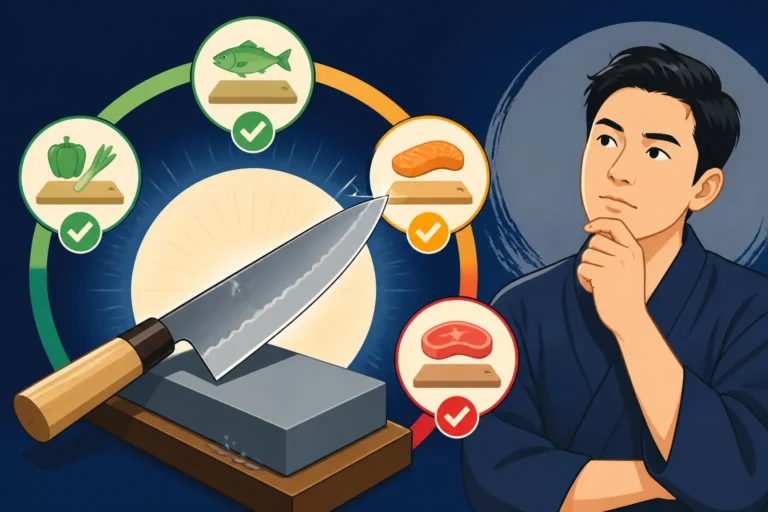
Japanese knife maintenance schedules depend on steel type, ingredient hardness, and cooking frequency, ranging from daily honing to seasonal sharpening.
Electric sharpeners and whetstones differ in speed, blade preservation, and suitability for single and double bevel Japanese knives.
Japanese knife care requires handwashing because dishwashers cause rust, thermal shock, and blade dullness with harsh chemicals and high heat.
Wooden knife handle maintenance prevents cracking and fuzziness by applying oil to control moisture absorption.
Carbon steel knife discoloration can be beneficial protective patina or destructive red rust, depending on the specific type of oxidation.