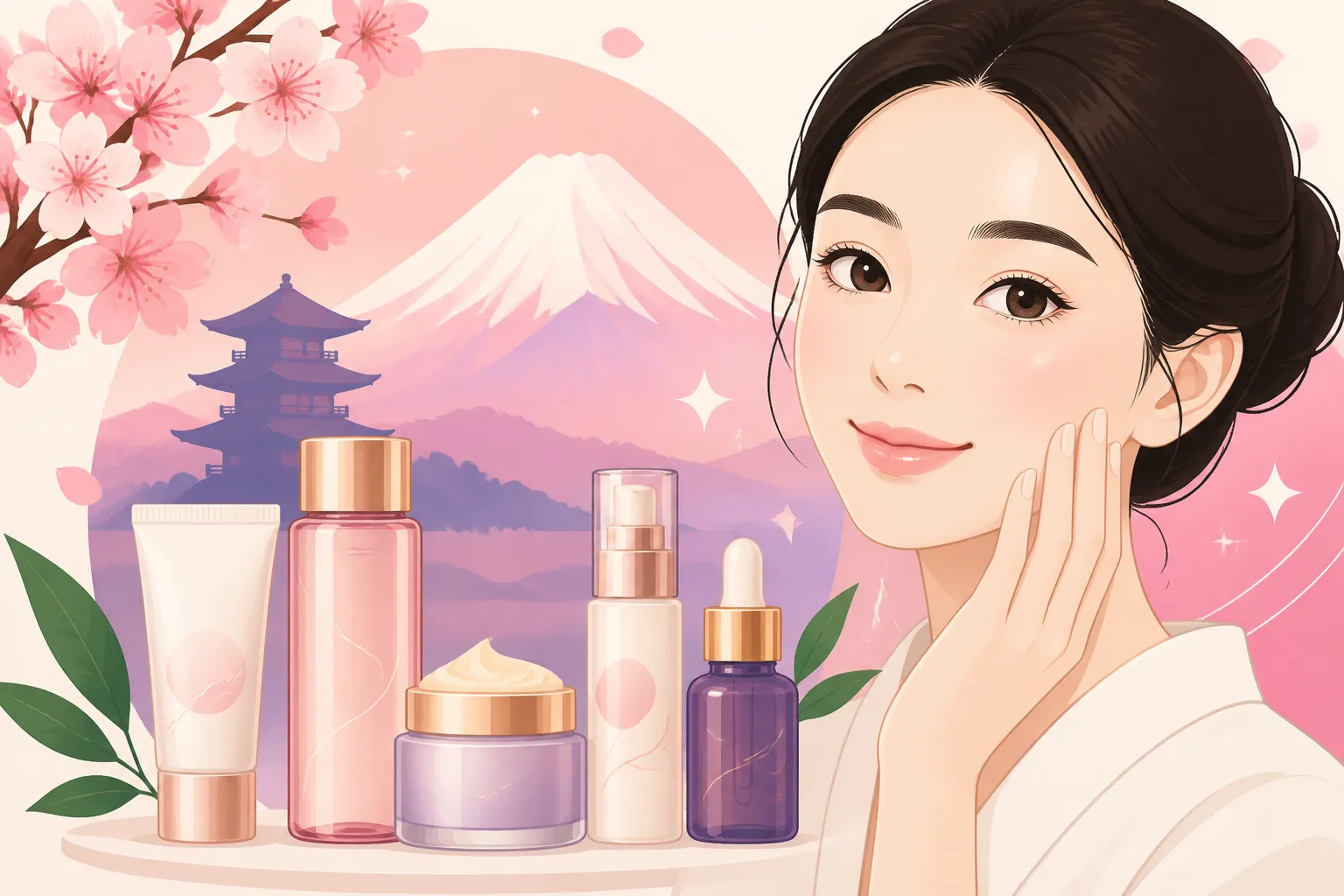
Best Japanese Skincare for Anti-Aging
Moving to Japan often means a rude awakening for your skin. Between the brutal Tokyo summer humidity and the bone-dry winter air, your complexion takes a beating that often accelerates fine lines and sunspots. This guide provides an exhaustive breakdown of the best Japanese anti-aging skincare, bridging the gap between high-end department store legends and affordable drugstore miracles.
Disclosure: This post may contain affiliate links. We may earn a commission at no extra cost to you if you make a purchase through these links. Read full disclosure.
Understanding the Japanese Approach to Aging Gracefully
In the West, we often wait for a wrinkle to appear before we attack it with aggressive retinols or chemical peels. In Japan, the philosophy is fundamentally different. It is built on the concept of mishōen, or preventing the problem before it manifests. As an expat who has spent years navigating the aisles of Matsumoto Kiyoshi and department stores like Isetan, I can tell you that the local focus is consistently on hydration, barrier protection, and "translucency."
Prevention Over Correction and the Mochi Skin Ideal
The Japanese ideal for aging skin is often referred to as mochi-hada (mochi skin). Think of the soft, plump, and bouncy texture of a rice cake. To achieve this as you age, the focus shifts away from "scrubbing away" old skin and toward "plumping up" the layers you have. This means that even if you are in your 40s or 50s, you won't find many Japanese products that leave your face red or peeling. Instead, the focus is on calming inflammation, which is a secret driver of aging.
When I first arrived in Tokyo, I was obsessed with high-strength acids. My Japanese friends looked at my irritated skin with genuine concern and pointed me toward soothing lotions. They explained that a compromised skin barrier is a fast track to deep-set wrinkles. By keeping the skin constantly hydrated, you create a "cushion" that prevents the skin from creasing. This is a life-changing mindset shift for most foreigners who are used to the "no pain, no gain" approach to skincare.
The Role of Fermentation and Natural Ingredients
If you look at the back of any premium Japanese anti-aging bottle, you will likely see ingredients that sound more like a grocery list: rice, soy, green tea, and seaweed. However, these aren't just raw extracts. The Japanese skincare industry is a world leader in fermentation technology. Fermentation breaks down these natural ingredients into smaller molecular weights, allowing them to penetrate deeper into the dermis where they can actually stimulate collagen production.
Japanese Skincare Ingredients to Know: Rice, Sake, and Collagen are the backbone of many legacy brands. For example, the use of Koji (the mold used to make sake) was discovered by observing the elderly workers in sake breweries who had incredibly smooth, youthful hands despite their age. This isn't just folklore; it’s a biological reality that fermented rice filtrate contains a cocktail of amino acids and minerals that mimic the skin's Natural Natural Moisturizing Factors (NMF).
Essential Ingredients in Japanese Anti-Aging Products
While the global market obsesses over Retinol, the Japanese market has spent decades perfecting ingredients that address "aging" through the lens of brightening and firming. In Japan, anti-aging is often synonymous with bihaku (whitening or brightening), not because people want to change their skin tone, but because fading "age spots" is considered the most effective way to look younger.
Pitera and Rice Ferment Filtrate
You cannot talk about Japanese anti-aging without mentioning Pitera. This proprietary ingredient, famously used by SK-II, is a clear liquid rich in vitamins, amino acids, minerals, and organic acids. It works by dramatically increasing the skin's surface renewal cycle. As we age, our skin cells take longer to turn over, leading to that dull, greyish cast that we often associate with getting older.
Using a product with a high concentration of rice ferment filtrate essentially tells your skin to behave like it’s ten years younger. I’ve found that while it takes about a month to see the results, the "glow" it produces is unlike anything else. If you are curious about whether the investment is worth it, you might want to read our deep dive into SK-II: Is the Facial Treatment Essence Worth It? to see how it performs on different skin types common among the expat community.
Vitamin C and Tranexamic Acid
In the humid Japanese summers, UV damage is the primary cause of premature aging. Japanese formulations rely heavily on stable versions of Vitamin C and a powerhouse ingredient called Tranexamic Acid. While Vitamin C is a well-known antioxidant that fights free radical damage, Tranexamic Acid is the secret weapon for melasma and stubborn hyperpigmentation.
I personally struggled with "sun mustaches" and dark patches on my cheekbones after my first summer in Kanagawa. My dermatologist recommended switching to a routine heavy in Tranexamic Acid. Unlike some brightening agents that can be drying, Japanese formulations usually pair these with hyaluronic acid to ensure that you are treating the spots without sacrificing the skin's moisture. This dual-action approach is what makes Japanese serums so effective for Best Japanese Products for Brightening and Dark Spots.
Soy Isoflavones and Collagen
Soy is a staple of the Japanese diet, but it is also a powerhouse for mature skin. Soy contains isoflavones, which are phytoestrogens that help to maintain skin elasticity, especially for women going through hormonal changes. Brands like Sana Soy Milk (Nameraka Honpo) have built entire empires around this single ingredient because of its ability to plump the skin without using heavy oils.
Then there is collagen. While the scientific community is still debating how well topical collagen penetrates the skin, Japanese companies use "hydrolyzed" or "low-molecular" collagen designed to sit on the surface and act as a humectant. When combined with soy, it creates a formidable barrier against the "crepey" texture that often appears on the neck and around the eyes. For those looking for targeted help, check out our guide on Best Japanese Skincare for Mature Skin Over 50.
Top-Tier Japanese Anti-Aging Product Recommendations
Navigating the price points in Japan can be confusing. You have the "Petit-Pla" (Petit Price) items in the drugstore and the "Depa-Cos" (Department Store Cosmetics) that cost as much as a night at a Ryokan. The good news is that in Japan, even budget products often use high-quality, stable ingredients backed by the same parent companies that own the luxury brands.
High-End Luxury Picks: SK-II and Shiseido
If your budget allows for it, the luxury sector in Japan offers some of the most technologically advanced skincare in the world. Shiseido’s Vital Perfection line is specifically engineered for "lifting" and "firming." They use a complex called KURENAI-TruLift which focuses on restoring the skin's ability to regenerate. For an expat living in a high-stress environment like Tokyo, these products often feel like a necessary luxury for the soul as much as the skin.
Another legend is the SK-II LXP Ultimate Perfecting Cream. It is arguably one of the most expensive creams on the market, but it contains the highest concentration of Pitera. For those who can afford it, this is the gold standard of Best Luxury Japanese Skincare Worth the Splurge. These luxury lines are perfect for those who want a simplified routine where one or two high-performance products do all the heavy lifting.
Effective Drugstore Alternatives: Hada Labo and Melano CC
You do not have to spend a fortune to see real results in Japan. Hada Labo is a household name for a reason. Their "Gokujyun Alpha" line (the red bottles) is specifically formulated for anti-aging. It contains 3D hyaluronic acid, collagen, and elastin. It has a slightly thicker, bounce-like texture that feels incredibly nourishing on dry, aging skin. You can find more about their various lines in our guide to Hada Labo: Best Products and Routine.
For targeted treatment, Melano CC is a cult favorite. It is an affordable Vitamin C essence that comes in a specialized tube that prevents the product from oxidizing. It is fantastic for fading those small sunspots that seem to pop up overnight after a weekend trip to the Izu Peninsula. Because it’s so affordable, many expats use it as a preventative measure on their hands and décolletage as well.
Building Your Japanese Anti-Aging Routine
A Japanese skincare routine is not just a list of products; it is a ritual. The order in which you apply things matters just as much as what is in the bottles. If you are new to this, it is worth checking out The Japanese Skincare Routine: A Step-by-Step Guide for Beginners to get the foundational steps down. For anti-aging, we focus on a few specific modifications.
The Double Cleansing Method for Mature Skin
The first step in any Japanese routine is the double cleanse. First, you use an oil-based cleanser to dissolve makeup and sunscreen, followed by a water-based foaming cleanser. For aging skin, the choice of oil is critical. You want something that provides "slip" so you aren't pulling or tugging at your skin. Many high-end Japanese cleansing oils use rice bran oil, which is naturally rich in Vitamin E.
When you move to the second step, avoid the "squeaky clean" feeling. If your skin feels tight after washing, you have stripped away the precious lipids that keep you looking young. Look for "milk" or "cream" cleansers that leave a slight veil of moisture behind. This ensures that your next step—the lotion—can be absorbed more effectively.
Layering Lotions and Emulsions
In Japan, "Lotion" (Keshosui) is not a toner. It is a liquid hydrator meant to be patted into the skin with your hands, not swiped with a cotton pad. For anti-aging, the "pressing" motion is vital. It stimulates blood flow to the face. After the lotion, you apply an "Emulsion" (Nyuji), which is a light milky moisturizer.
This layering technique is what gives Japanese skincare its efficacy. Instead of one thick cream that sits on top of the skin, you are applying multiple thin layers of hydration that penetrate different levels of the stratum corneum. This keeps the skin "inflated" throughout the day, preventing fine lines from becoming deep-set wrinkles.
| Product Type | Goal | Key Ingredient Example |
|---|---|---|
| Cleansing Oil | Remove Sunscreen/Makeup | Rice Bran Oil |
| Lotion (Keshosui) | Deep Hydration | Hyaluronic Acid / Pitera |
| Serum (Essence) | Targeted Treatment | Vitamin C / Tranexamic Acid |
| Emulsion (Nyuji) | Seal in Moisture | Soy Isoflavones |
| Sunscreen | Prevent Future Damage | Zinc Oxide / Octinoxate |
Crucial Final Steps: Sunscreen and Eye Care
If you skip sunscreen in Japan, you might as well throw the rest of your skincare in the trash. The UV index here can be surprisingly high even on overcast days in March. Eye care is also a specific focus in the local market, as the skin around the eyes is the first to show the physical toll of living in a fast-paced society.
The Non-Negotiable: High-Tech Sunscreen
Japanese sunscreens are light years ahead of their Western counterparts in terms of texture and protection. They use the PA rating system, which measures protection against UVA rays (the ones responsible for aging and wrinkles). You should always look for a rating of PA++++.
Many local sunscreens, such as those from Anessa or Biore, are now formulated with anti-aging ingredients built directly into the base. This means your sunscreen is working as a daytime serum. I always recommend finding a formula that is "friction resistant" if you are a commuter, as the constant taking on and off of face masks can rub away your protection. For more on this, see Japanese Sunscreen: Why It's the Best in the World.
Targeted Eye and Neck Care
The Japanese market offers incredible "concentrated" creams for the eye area. Unlike global brands that often just use a thicker version of their face cream, Japanese eye creams frequently include ingredients to combat kuma (dark circles) and puffiness, which are common complaints among the overworked expat population.
Don't forget your neck. In Japan, the neck and the backs of the hands are considered the most honest tell-tales of a person's age. Many people apply their leftover emulsions and sunscreens all the way down to their chest. There are also specific "neck deco" creams available at most drugstores that focus on the horizontal lines caused by "tech neck"—a common issue if you spend your days on the Yamanote line staring at your phone.
Where to Buy Authentic Japanese Skincare Internationally
If you aren't currently living in Tokyo or Osaka, getting your hands on these products can be tricky. Counterfeits are a real problem on large global marketplaces. It is essential to use authorized retailers who source directly from the Japanese domestic market (JDM) to ensure you are getting the potent, original formulas.
Using Reliable Retailers: YesStyle and The JBeauty Collection
For a massive selection of both drugstore and high-end brands, YesStyle is a fantastic resource for those outside of Asia. They carry everything from Hada Labo to Shiseido and often have helpful user reviews from people with various skin tones and concerns. I have personally used them to ship gifts back to family in Europe, and the packaging is always secure.
If you are looking for a more curated, luxury experience, The JBeauty Collection focuses on bringing high-concept, artisanal Japanese brands to the international stage. They often feature brands that emphasize traditional ingredients like Ume (plum) and Yuzu. Shopping through YesStyle or The JBeauty Collection ensures that you are getting products that haven't been sitting in a hot warehouse for years, which is vital for maintaining the efficacy of anti-aging ingredients like Vitamin C.
Navigating Shipping and Customs
When ordering from Japan or authorized retailers, keep in mind that liquids can sometimes be heavy, which affects shipping costs. Many people prefer to "haul" once or twice a year to maximize shipping discounts. Also, be aware of your country's import duties. Most major retailers like YesStyle provide clear information on whether taxes are included at checkout.
For more detailed advice on sourcing your routine, you can check our comprehensive guide on How to Buy Japanese Skincare and Cosmetics Online Worldwide. It covers everything from proxy buyers to direct shipping sites, ensuring you never run out of your favorite "mochi-skin" essentials.
Disclaimer
The information provided in this guide is for informational and educational purposes only and does not constitute medical or dermatological advice. Skincare results can vary significantly based on individual skin types, allergies, and environmental factors. Always perform a patch test before introducing new products into your routine, and consult with a qualified dermatologist if you have specific skin conditions or concerns. The author and publisher are not responsible for any adverse reactions resulting from the use of products mentioned in this article.





