Are Damascus Knives Just for Looks?
Damascus knives combine patterned cladding with hard cutting cores, offering practical food release and protection alongside striking visual appeal.
Damascus knives combine patterned cladding with hard cutting cores, offering practical food release and protection alongside striking visual appeal.
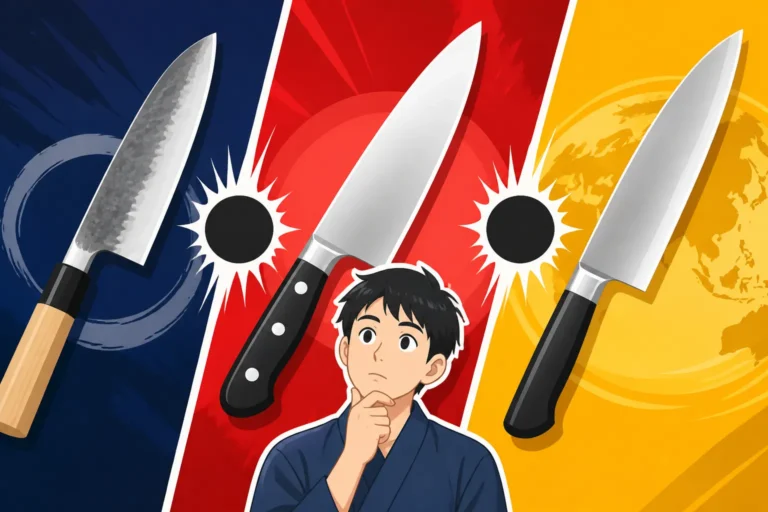
Tojiro, Mac, and Global knives offer beginners a comparison of steel types, maintenance needs, and handle ergonomics for cooking in Japan.
The comparison between Shun Classic and Shun Premier kitchen knives details their blade finishes, handles, and performance differences.
San Mai knife construction explains how a hard carbon steel core and softer cladding create a balanced, durable, and easily sharpened kitchen tool.
Stainless-clad and full carbon Japanese kitchen knives differ in maintenance needs, rust resistance, sharpening ease, and overall durability.
Choosing between a 210mm and 240mm Gyuto knife involves comparing kitchen space, prep volume, ergonomics, and cutting board requirements.
The functional differences between a Japanese petty knife and a Western paring knife determine whether small kitchens require owning both tools.
Japanese kitchen knife comparisons clarify the differences between the versatile Gyuto and the specialized Kiritsuke, helping you select the right blade.
Japanese kitchen knife comparisons help you choose between the versatile Santoku and the precise Bunka based on your cooking style.
Personalized Japanese knives feature custom laser or hand-carved engravings on blades and handles for names, dates, or kanji symbols.