Japanese Bathrooms & Toilets: Bath Culture Tips for Expats
Mastering the high-tech buttons of a Japanese toilet and understanding the deep soaking culture of the Ofuro is a rite of passage for every expat. From decoding the control panel to preventing mold and following proper etiquette, this guide ensures your bathroom experience is relaxing, hygienic, and culturally correct.
Disclosure: This post may contain affiliate links. We may earn a commission at no extra cost to you if you make a purchase through these links. Read full disclosure.
The Great Divide: Why the Toilet and Bath are Separate
In many Western homes, the toilet, sink, and bathtub are all in one room. In Japan, this is considered unhygienic. If you look at the floor plan of a standard Japanese apartment (often called a “Mansion”), you will usually see two distinct rooms.
The Toilet Room
This is a small, dry room dedicated solely to the toilet. It often has a tiny sink attached to the top of the toilet tank or a small basin in the corner so you can wash your hands immediately.
The Bath Room (Ofuro-ba)
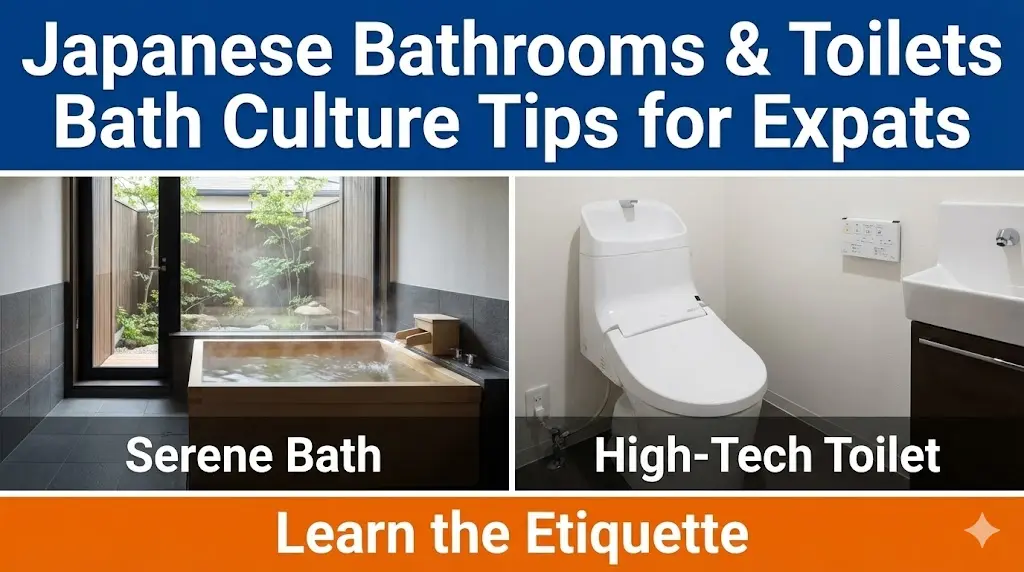
This is a “wet room.” The entire floor is waterproof and has a drain. This room contains the deep bathtub and a washing area with a shower and a faucet. You are meant to splash water everywhere in this room—it is designed for it.
The Exception: The Unit Bath
If you live in a budget single-person apartment or stay in a business hotel, you might encounter a “Unit Bath.” This is a prefabricated plastic pod where the toilet, sink, and tub are squeezed into one space. In this specific case, you shower inside the tub with the curtain closed, just like in the West. But for most family homes and larger apartments, the separation is the standard.
Read more about Housing Types in Japan: Mansion vs Apartment
Decoding the Buttons: Your First Encounter with the Washlet
The Japanese electronic toilet seat, famously popularized by the brand TOTO as the “Washlet,” is a life-changing invention. Once you get used to a heated seat in the middle of winter and the hygienic spray functions, it is very hard to go back to a standard toilet.
However, the control panel can be intimidating. Here is a breakdown of the most common buttons you will find on the wall or the side of the seat.
| Japanese Text | Pronunciation | Meaning | Function |
| 止 | Tomaru | Stop | Stops the spray immediately. Memorize this one first! |
| おしり | Oshiri | Rear | The standard spray for your backside. |
| ビデ | Bide | Bidet | A gentler, front-facing spray (usually for women). |
| やわらか | Yawaraka | Soft | A softer version of the rear spray. |
| 乾燥 | Kansou | Dry | Blows warm air to dry you off. |
| 音姫 | Otohime | Sound Princess | Plays a flushing sound or music to mask noises. |
| 大 | Dai | Big flush | Use for solid waste. |
| 小 | Sho | Small flush | Use for liquid waste (saves water). |
Power Saving Mode
You might see a button labeled “Eco” or “Setsuden.” This puts the toilet seat heater and water heater into sleep mode when not in use to save electricity. If you sit down and the seat is cold, this mode might be active.
Check out Cost of Living in Japan: Utilities and Rent
The Sacred Art of the Japanese Bath (Ofuro)
In Japan, taking a bath is not about getting clean. It is about soaking and warming the body. This is a crucial distinction. The cleaning happens outside the tub.
If you jump into a Japanese bathtub with soap on your body or without scrubbing first, you are committing a major cultural faux pas. This is because, in a Japanese household, the bathwater is shared. The same hot water is used by the father, the mother, and the children, one after another.
How to Bathe Like a Local
- Undress: Leave your clothes in the changing area (often where the vanity and washing machine are).
- Enter the Wet Room: Take a small stool and a bucket. Sit down in the washing area next to the tub.
- The Pre-Wash: Use the shower head or scoop water from the bucket to rinse your body. Use soap and shampoo to scrub yourself completely clean.
- Rinse Thoroughly: Make sure there are no soap suds left on your skin or on the floor.
- The Soak: Only when you are sparkling clean do you enter the bathtub. Sit and relax. The water is usually deeper and hotter (40°C to 42°C) than in the West.
- Exit: When you are done soaking, get out. Do not drain the water (unless you are the last person or you live alone).
Managing the Bath Control Panel
Just like the toilet, the bathtub often comes with a computer on the wall. This panel controls the gas water heater. Understanding this panel is the key to a luxurious bath experience.
Oidaki (Reheat)
This is arguably the best feature of Japanese baths. Because you reuse the water, it might get cool after 30 minutes. Pressing the Oidaki button circulates the water back through the heater and returns it to the tub hot, without adding new water. This saves a massive amount of water and energy.
Jido (Automatic)
If you have a modern system, pressing Jido will automatically fill the tub to your preferred level and temperature, and then stop. It will even announce “The bath is ready” with a melody.
Yobidashi (Call)
This button rings a chime in the kitchen. It is designed for children or elderly people to call for help if they feel dizzy, or simply to yell “Bring me a beer!” to their spouse in the other room.
Dealing with Mold (Kabi) and Ventilation
If there is one enemy of the Japanese resident, it is mold, or Kabi. The high humidity of Japanese summers, combined with a wet room that is used daily, creates the perfect breeding ground for black and pink mold.
If you do not actively fight Kabi, your beautiful bathroom will turn into a biology experiment within weeks.
The 24-Hour Ventilation System
Most modern apartments have a switch labeled “24-Hour Ventilation” (Niju-yon-jikan Kanki). Never turn this off. It is designed to pull moisture out of the apartment constantly.
Drying the Room
After you finish your bath, you should squeegee the walls or wipe them down. If your bathroom control panel has a “Kansou” (Dry) button, use it. This turns the bathroom into a giant clothes dryer (which is also great for drying laundry on rainy days!).
Kabi-Killer
Go to the drugstore and buy a bottle of “Kabi-Killer.” It is a strong bleach spray in a red bottle. Spray it on the grout lines and corners every few weeks, wait 5 minutes, and rinse. Be careful—it will bleach your clothes if you splash it.
Read more about Cleaning Your Apartment: Supplies and Tips
Public Baths: Sento and Onsen
Once you master the home bath, you are ready for the public bathhouse (Sento) or the natural hot spring (Onsen).
The etiquette is exactly the same as your home bath: wash first, soak later. However, there are a few extra rules for communal spaces.
The “Modesty Towel”
You will be given a large towel (for drying) and a small, thin towel. You bring the small towel into the bathing area with you. You can use it to wash your body. When you walk around, you can hold it in front of you for modesty. When you enter the tub, do not put the towel in the water. Fold it and place it on your head or on the side of the tub.
Tattoos
Historically, tattoos were associated with the Yakuza (Japanese mafia). While attitudes are slowly changing, many Onsens still ban guests with visible tattoos. If you have small tattoos, you can cover them with waterproof bandages. If you have large tattoos, look for “Tattoo Friendly” facilities or book a private family bath (Kashikiri).
Tie Up Long Hair
If you have long hair, you must tie it up. It should not touch the bathwater.
Check out Weekend Getaways: Best Onsen Towns
Toilet Paper and Plumbing
Japanese plumbing is generally excellent, but there are differences in the paper products.
Single vs. Double Ply
In the supermarket, you will see “Single” and “Double” toilet paper. Japanese people often prefer “Single” because it dissolves easier and they use the bidet function for cleaning, so they rely less on thick paper.
Flushable Items
Do not flush anything except toilet paper. Do not flush “flushable” wipes, tampons, or tissues. Japanese pipes are narrower than in some Western countries, and a clog can be an expensive disaster.
The “Triangle Fold”
You might notice in hotels or even offices that the end of the toilet paper roll is folded into a neat little triangle. This signals that the toilet has been cleaned. While you don’t need to do this at home, it is a nice touch if you have guests.
Sustainability and Water Reuse
You might wonder, “Isn’t a deep bath every day a waste of water?”
Japan has a clever solution for this. Because the bathwater remains clean (since you washed beforehand), many families reuse the water for laundry the next day.
Modern washing machines in Japan often come with a built-in pump and a hose. You throw the hose into the bathtub, and the machine sucks up the lukewarm water for the first wash cycle. It then uses fresh tap water for the final rinse. This system, known as Nokori-yu sentaku, significantly reduces water consumption.
Troubleshooting Common Issues
Living in a new country means facing new problems. Here is how to handle common bathroom emergencies.
The Toilet Won’t Stop Spraying
If you press “Stop” and nothing happens (a rare but terrifying malfunction), look for the main power plug of the Washlet unit and pull it out. Alternatively, there is usually a sensor on the seat that detects skin contact. If you stand up, the spray should stop automatically—though you might get a bit wet in the process!
The Drain Smells
If your bathroom drain smells, it might be the “trap.” Japanese drains have a water trap that prevents sewer gas from coming up. If you haven’t used the shower in a while (like after a long vacation), the water might have evaporated. Run the water for a minute to fill the trap. Also, remove the hair catcher and scrub the slime that accumulates there.
No Hot Water
If you have gas heating, check the control panel. Is it turned on? Sometimes, during an earthquake (even a small one), the gas meter’s safety valve trips. You might need to go outside to the gas meter and press the reset button.
Conclusion
The Japanese bathroom is a microcosm of Japanese culture: it emphasizes cleanliness, consideration for others, technological innovation, and relaxation.
While the array of buttons and rules might seem overwhelming at first, you will likely find yourself missing them when you travel elsewhere. The warmth of the seat on a cold morning, the deep relaxation of a nightly soak, and the brilliant efficiency of the Oidaki system are luxuries that make living in Japan truly special.
So, press that button, fill up the tub, and let the stress of the day melt away. You have earned it.
Disclaimer
This article is for general informational purposes only and does not constitute professional advice. Laws, prices and regulations vary by location and change over time. Consult a qualified professional for guidance on your specific situation.





