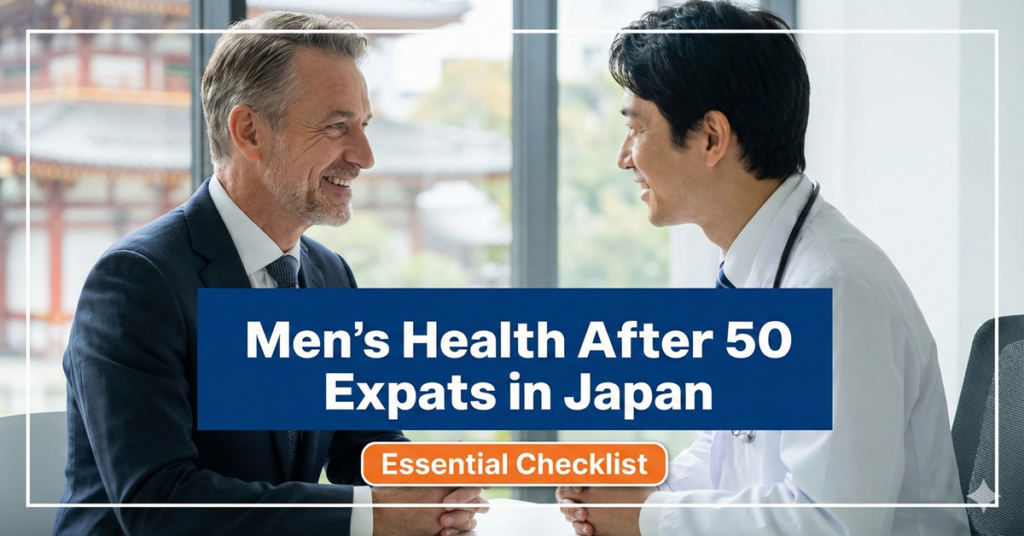
Men’s Health After 50: Prostate Checks and More for Expats in Japan
Turning 50 in Japan does not have to be scary. This guide explains prostate checks, other key screenings, and how health checkups work for expat men, with clear steps to book care, talk to doctors, and stay healthy.
Disclosure: This post may contain affiliate links. We may earn a commission at no extra cost to you if you make a purchase through these links. Read full disclosure.
Quick note: This article is general information for expats in Japan. It is not a substitute for personal medical advice. Always discuss your own situation with a qualified doctor.
Why men’s health after 50 matters in Japan
Japan is famous for long life expectancy, but like many countries, cancer and heart disease are leading causes of death, especially in older adults. Prostate cancer is one of the main cancers affecting men worldwide, with more than 1.4 million new cases in 2022.
Japan has strong national screening programs for several cancers. Municipalities and workplaces offer regular screening for stomach, colorectal, lung, breast, and cervical cancer, based on evidence-based guidelines developed by the National Cancer Center and related research groups.
However, prostate cancer screening is handled differently. There are screening guidelines and many local programs, but prostate checks are not always part of the standard city-run or company-run packages. They are often done as:
- An optional add-on to a health check
- Part of a Ningen Dock (full-body health screening)
- A test ordered by a urologist
This means expat men over 50 need to be a bit proactive.
To support that, Japan Handbook also has related articles such as:
- Men’s Health in Japan: Clinics and Check-ups
- Cancer Screenings in Japan: Tests Expats Should Consider
- Full-Body Health Screenings in Japan: How to Book & What to Expect
You can link between these topics as you build your own men’s health plan in Japan.
How health checkups work for men over 50 in Japan
Before we zoom in on the prostate, it helps to understand the basic checkup system.
1. Annual workplace health check (kenshin / kenko shindan)
If you work for a Japanese company, you are usually offered a yearly health check. This is required under Japanese labor law for most full-time employees. Typical items include:
- Height, weight, BMI
- Blood pressure
- Blood and urine tests
- Chest X-ray
- Vision and hearing tests
Some companies add extra tests (ECG, abdominal ultrasound, tumor markers, etc.) or offer discounted Ningen Dock upgrades. However, prostate tests are not guaranteed. It depends on your company, age, and the package they buy.
You can often pay extra to add a PSA (Prostate-Specific Antigen) blood test – ask the clinic or your HR department.
For more details on these programs, see Annual Work Health Check in Japan: A Guide for Expats.
2. City- or ward-run cancer screening programs
Your local city hall (shiyakusho) or ward office (kuyakusho) usually sends out vouchers for cancer screenings, based on your age and insurance status. These focus mainly on:
- Stomach cancer
- Colorectal cancer
- Lung cancer
- Breast and cervical cancer (for women)
Nationally, most of these programs start from age 40, with intervals of one or two years depending on the cancer type.
Some municipalities also promote PSA testing for older men, but this is not uniform across Japan. You’ll need to check your specific city’s leaflet or website (often there’s an English section).
To understand the overall system, it’s helpful to read Understanding Japanese Medical Bills and Insurance Claims and Japan’s National Health Insurance: What You Need to Know.
3. Ningen Dock – full-body health screenings
Ningen Dock is Japan’s famous full-body health check, originally designed to “dock” humans for a full inspection before disease appears.
Depending on the plan, a Ningen Dock for men over 50 may include:
- Detailed blood tests
- ECG and sometimes stress tests
- Ultrasound, CT, or MRI
- Gastrointestinal tests (endoscopy, barium)
- PSA test for prostate (commonly recommended for men above a certain age)
Some Ningen Dock packages are marketed specifically to international residents and offer English-language support. For a practical walkthrough, see Full-Body Health Screenings in Japan: How to Book & What to Expect.
Understanding your prostate and risk after 50
The prostate is a small gland that sits below the bladder and surrounds the urethra. It helps make semen. As men age, the prostate often enlarges (a benign condition called BPH – benign prostatic hyperplasia), which can cause symptoms like:
- Needing to urinate more often, especially at night
- Weak urine stream or difficulty starting
- Feeling the bladder isn’t fully empty
Prostate cancer can cause similar symptoms, but in early stages it often causes no symptoms at all, which is why screening and checkups matter.
Globally, prostate cancer is one of the most common cancers in older men, and incidence has risen in many countries due to aging populations and wider use of PSA testing.
In Japan, statistics show that urological cancers, including prostate cancer, have increased over the past decades, reflecting both lifestyle changes and better detection.
Key risk factors include:
- Age – risk climbs after 50 and rises further after 65
- Family history of prostate cancer
- Certain genetic factors (for example, BRCA mutations)
- Possibly diet and lifestyle
Because every man’s risk profile is different, most guidelines now stress shared decision-making – talking with your doctor about whether and when to be screened.
Prostate checks in Japan step by step
Japan has formal clinical guidelines for prostate cancer published by the Japanese Urological Association (JUA), and also cancer screening guidelines supported by the National Cancer Center. These documents emphasize evidence-based screening and careful use of PSA testing to avoid overdiagnosis.
Here’s what prostate checks commonly look like in Japan for men over 50.
1. Symptom check and medical history
Your doctor (often an internal medicine doctor or urologist) will ask about:
- Urinary symptoms
- Sexual function
- Past medical history and medications
- Family history of prostate or other cancers
This may be part of a general consultation or built into a Ningen Dock questionnaire.
2. Physical exam and digital rectal exam (DRE)
The doctor may:
- Check your abdomen and genital area
- Perform a digital rectal exam: gently insert a gloved, lubricated finger into the rectum to feel the back of the prostate
The DRE is quick and often uncomfortable, but usually not painful. It helps the doctor detect obvious lumps or irregularities but cannot rule out cancer on its own.
3. PSA blood test
The PSA test is a simple blood test that measures a protein made by prostate cells. High or rising PSA can indicate:
- Prostate cancer
- Benign enlargement
- Infection or inflammation
In Japan, many clinics and Ningen Dock centers offer PSA testing for men over a certain age, often around 50 or older, but the exact cutoff varies by facility and risk profile.
International guidelines (for example, from the American Urological Association) generally suggest discussing PSA screening from around age 50 for average-risk men, and earlier (around 45) for higher-risk groups such as those with strong family history.
Japan’s guidelines stress that:
- PSA screening should be informed – you understand benefits and harms
- Elevated PSA usually leads to repeat tests and possibly imaging or biopsy, not an automatic cancer diagnosis
4. Imaging and biopsy if needed
If your PSA is high or rising, or if the DRE is suspicious, the urologist may recommend:
- Transrectal or transperineal ultrasound
- MRI of the prostate
- Prostate biopsy – taking small tissue samples to check under a microscope
Biopsy is the only way to confirm prostate cancer. However, it also carries risks (bleeding, infection), so doctors in Japan follow guideline-based criteria for when to recommend it.
5. Follow-up and long-term monitoring
If your PSA is normal and symptoms are mild, your doctor may simply suggest:
- Regular repeat PSA tests (for example, every 1–2 years; the exact timing is individualized)
- Lifestyle changes and watchful waiting for mild urinary issues
If cancer is found, treatment options can range from active surveillance (close monitoring) to surgery, radiation, hormone therapy, or a combination. Treatment details are beyond this article, but major centers and English-friendly hospitals in Japan can explain options clearly.
Key checks for men over 50 in Japan
The table below sums up common health checks for men over 50. Availability and starting ages vary by city, employer, and clinic, so use this as a starting guide and confirm locally. Programs are based on national screening policies and preventive health practices in Japan.
| Check or Screening | Typical Starting Age* | Where You Usually Get It | Notes for Expats |
|---|---|---|---|
| Blood pressure, cholesterol, blood sugar | 40–50+ | Workplace health check, city check, Ningen Dock | Essential for heart and stroke prevention. |
| Prostate check (PSA ± DRE) | Around 50+ (earlier if high risk) | Ningen Dock, urology clinic, optional add-on at checkup | Not always included by default; ask specifically. |
| Colorectal cancer screening | 40–50+ | City program, workplace, Ningen Dock | Often a stool test or colonoscopy referral. |
| Stomach cancer screening | 40+ | City program, workplace, Ningen Dock | Endoscopy or X-ray depending on program. |
| Lung cancer screening | 40+ | City program, workplace, Ningen Dock | Usually chest X-ray; heavy smokers may need more. |
| Eye and hearing check | 40–50+ | Workplace check, Ningen Dock, eye clinic | Important for driving and work safety. |
| Bone density (osteoporosis check) | 50–60+ | Ningen Dock, orthopedic/internal medicine clinic | Consider if thin, family history, or long-term medication use. |
| Dental and oral health | Any age, focus 50+ | Dental clinics | Gum disease is linked to heart disease; aim for regular cleanings. |
*Exact ages and intervals differ by municipality, employer, and risk factors.
For more detail on these, see Cancer Screenings in Japan: Tests Expats Should Consider, Full-Body Health Screenings in Japan: How to Book & What to Expect, and Dental and Vision Care in Japan: A Foreigner’s Guide.
How to book prostate and men’s health checks as an expat
Step 1 – Decide which route suits you
You usually have three main options:
- Upgrade your existing checkup
- Ask your workplace clinic or the health check center:
- “Can I add a PSA test?”
- “Is prostate screening included in my course?”
- Ask your workplace clinic or the health check center:
- Book a Ningen Dock with PSA included
- Look for centers that advertise English support and clear package menus.
- Many large hospitals and private centers in major cities offer this.
- Visit a urology clinic directly
- Search for “urology clinic + city name + English” or ask your embassy/HR for a referral.
- Examples of English-supporting clinics and hospitals include Sasaki Urology Clinic in Tokyo and Nomura Urology in Osaka, as well as hospital lists of English-speaking providers in Osaka and other cities.
For background on navigating the system, Private Health Insurance and Clinics for Expats in Japan and Finding English-Speaking Medical Specialists in Japan are helpful reads.
Step 2 – Check costs and insurance
- National Health Insurance (NHI) and employee insurance usually cover:
- Ordinary doctor visits
- Necessary diagnostic tests ordered by a doctor (including PSA, imaging, biopsy if medically indicated)
- However, Ningen Dock packages and some optional screenings may not be fully covered and can be mostly out-of-pocket.
If cost is a concern, you can:
- Ask your city hall about subsidized screenings
- Choose a basic checkup + targeted prostate test, instead of an expensive full Dock
- Use Japan’s National Health Insurance: What You Need to Know and Healthcare for Retiree Expats in Japan: Elder Care and Long-Term Insurance as planning guides.
Step 3 – Bring the right information
When you go for your appointment, it helps to bring:
- Your insurance card and residence card
- A list of current medications and supplements
- Your family history (who had prostate, colon, or other cancers and at what age)
- Previous PSA results or health check reports
Beyond the prostate: other health priorities after 50
Looking after your prostate is important, but men’s health after 50 is bigger than one organ. In Japan, screening and prevention also focus on:
Heart and blood vessels
- High blood pressure, high cholesterol, and diabetes are major risks for heart disease and stroke.
- Annual checks at work or city clinics usually include blood pressure and basic blood tests.
Colon and stomach
Because stomach and colorectal cancers are major issues in Japan, there are strong screening programs, especially for adults over 40.
- Stool tests, colonoscopy, and endoscopy can catch problems early.
- If you have rectal bleeding, persistent stomach pain, or unexplained weight loss, do not wait for the next routine check – see a doctor promptly.
Mental health and sleep
Stress, loneliness, and work pressure are common among expats. Poor sleep and chronic stress can worsen blood pressure, blood sugar, and even pain.
You can explore support options in Mental Health for Expats: Counseling and Support in Japan and Teletherapy in Japan: Online Counseling Options for Expats.
Sexual health
After 50, many men experience:
- Erectile difficulties
- Reduced libido
- Changes related to medication, diabetes, or cardiovascular disease
In Japan, these are often handled by urologists or sometimes internal medicine doctors. Don’t hesitate to bring them up – they may be linked to bigger health issues like heart disease.
Everyday habits to stay healthy after 50 in Japan
Living in Japan actually makes some healthy habits easier if you lean into the local lifestyle.
Move a bit every day
- Use the train and walking culture to your advantage – get off one stop early, take stairs when you can.
- Aim for 150 minutes of moderate exercise per week (for example, 30 minutes, 5 days a week).
Eat “Japanese plus”
A traditional Japanese-style diet – more fish, vegetables, soy, and smaller portions of red meat – is generally heart- and prostate-friendly.
Practical ideas:
- Choose grilled fish over deep-fried options when possible
- Load your tray with vegetables and seaweed at teishoku restaurants
- Watch salt intake (ramen, pickles, and some convenience foods can be very salty)
Keep alcohol and tobacco in check
- Heavy drinking and smoking are common in some social circles, but both are linked to cancer and cardiovascular disease.
- City health programs and clinics often offer smoking cessation support; see Quitting Smoking in Japan: Resources for Expats.
Sleep and stress management
- Try to maintain 7–8 hours of sleep when possible.
- Look for onsen, sento, and nature walks as gentle ways to unwind, especially if your doctor allows hot baths. For more on this angle, see Onsen & Sento 101: Japanese Bathhouse Culture for Health & Relaxation.
Talking to Japanese doctors about men’s health
Even if you use an English-speaking clinic, some Japanese terms are useful.
Key words
- Prostate – 前立腺 (zenritsusen)
- Prostate cancer – 前立腺がん (zenritsusen gan)
- PSA test – PSA検査 (ピーエスエーけんさ)
- Urology – 泌尿器科 (hinyōkika)
- Health check – 健康診断 (kenkō shindan)
- Ningen Dock – 人間ドック (ningen dokku)
Simple phrases you can use
- “I am over 50 and I would like a prostate check.”
- 50歳を過ぎているので、前立腺の検査をお願いしたいです。
- “Can I add a PSA test to my health check?”
- 健康診断にPSA検査を追加できますか。
- “I have urinary symptoms and I’m worried about my prostate.”
- 排尿に症状があり、前立腺が心配です。
- “Could you explain the results in simple English?”
- 結果をやさしい英語で説明していただけますか。
For broader language help, check Communicating with Doctors: Language Tips for Non-Japanese Speakers and Overcoming Language Barriers at the Hospital: Using Interpreters & Translation Services.
Final checklist for expat men over 50 in Japan
Here is a simple action plan you can follow over the next few months:
- Confirm your insurance status
- Make sure you’re enrolled in Japan’s National Health Insurance or an employee plan, and know your coverage basics.
- Review your recent health checks
- Look back over the last 1–2 years: did you have PSA tested, colon screening, stomach screening, and blood tests?
- Schedule a prostate-focused visit or upgrade
- Either:
- Add a PSA test to your next work or city check, or
- Book a Ningen Dock that includes prostate screening, or
- Arrange a visit to a urologist directly.
- Either:
- Target other age-appropriate screenings
- Use Cancer Screenings in Japan: Tests Expats Should Consider as a checklist for colon, stomach, and lung screening.
- Tune up everyday habits
- Aim for more movement, balanced Japanese-style meals, and better sleep.
- If you smoke or drink heavily, make a plan to cut back or quit.
- Build your care team in Japan
- Identify a regular clinic (internal medicine), a dental clinic, and, if needed, a urology clinic that you feel comfortable with.
- Talk openly about symptoms
- Mention urinary changes, sexual health concerns, fatigue, mood changes, or sleep problems. They are all part of men’s health after 50.
The big picture
Living in Japan as an expat man over 50 gives you access to strong preventive health systems – from city-run screenings to advanced Ningen Dock packages. By understanding how prostate checks fit into this landscape, and by taking simple steps to book tests, manage lifestyle, and communicate with doctors, you can use Japan’s system to stay healthy and confident in the years ahead.
Disclaimer
This article is for general informational purposes only and does not constitute professional advice. Laws, prices and regulations vary by location and change over time. Consult a qualified professional for guidance on your specific situation.