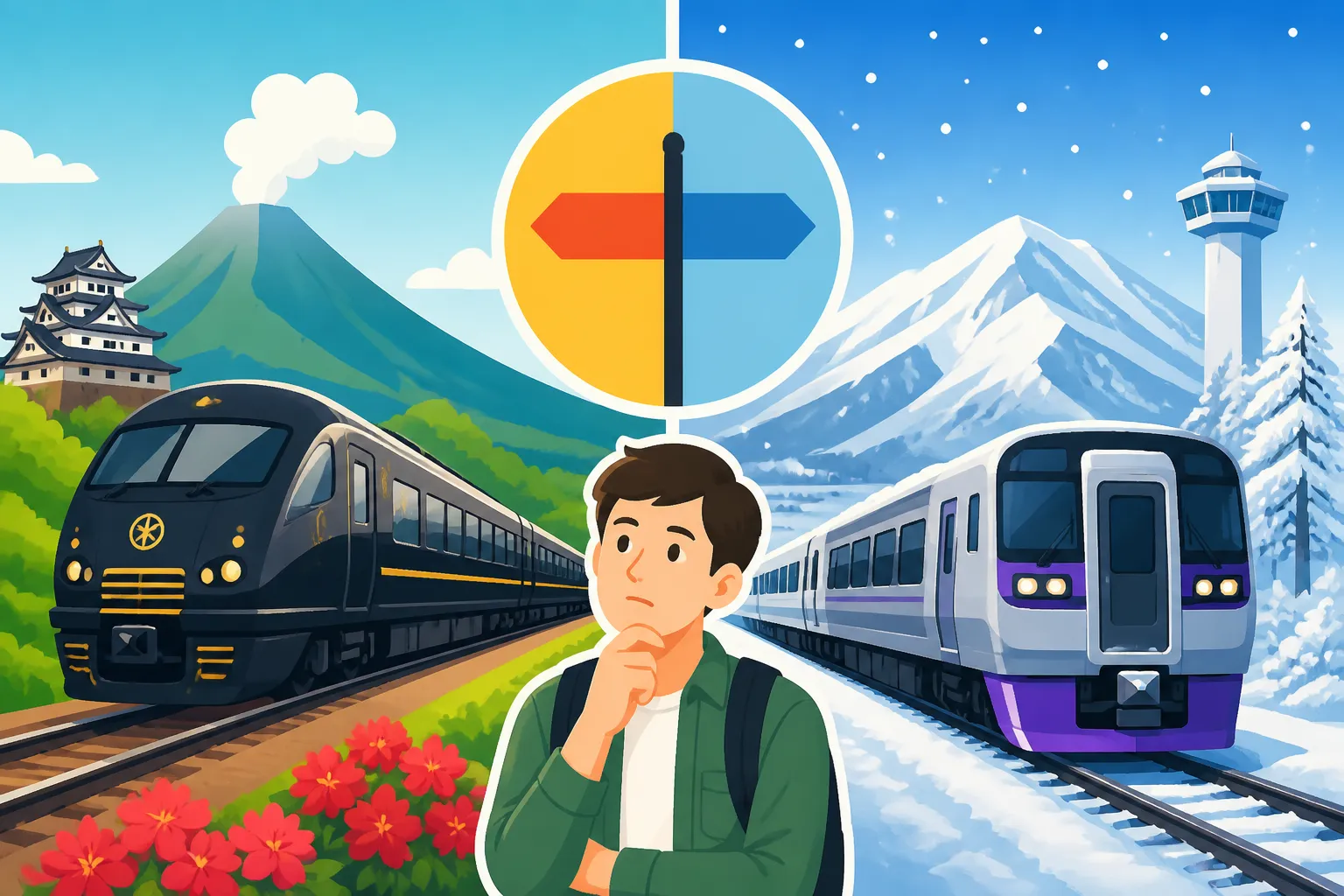
JR Kyushu and JR Hokkaido Passes: Which Routes Justify the Price
Ah, Japan’s rail system! It's a marvel, truly, but for us expats and keen tourists, navigating the sheer number of passes and figuring out which one actually makes sense for our specific trip can feel like trying to decipher ancient riddles in a foreign language. You scour forums, pore over maps, and just when you think you’ve got it, another rule pops up to challenge your sanity. That's why we're going to break down two of the most popular regional options, the JR Kyushu Pass and the JR Hokkaido Pass, to help you figure out if they’re truly worth the investment for your adventures, and how platforms like Klook can simplify your purchasing journey.
Disclosure: This post may contain affiliate links. We may earn a commission at no extra cost to you if you make a purchase through these links. Read full disclosure.
Understanding Japan Rail Passes: More Than Just a Ticket
Let's face it, the Japan Rail Pass system is a beast. While the national Japan Rail Pass used to be the default for almost every tourist, the landscape has shifted, and often, regional passes offer much better value if you're focusing on one specific part of the country. But how do you know which one to pick? It's not just about getting from A to B; it's about understanding the network, the limitations, and the true cost-benefit for your travel style.
The Basic Premise and Why It's Tricky for Expats
The core idea behind these passes is simple: unlimited travel on JR lines within a specified region for a set number of days. Sounds great, right? But here’s the rub. These passes are primarily designed for temporary visitors to Japan, meaning we long-term residents and expats are often excluded from purchasing some of the more advantageous versions. You often need a "Temporary Visitor" visa stamp in your passport, which is something many of us living here don't have. So, first check the eligibility requirements very, very carefully. If you’re visiting Japan on a tourist visa, you’re usually good to go!
Another layer of complexity is the sheer variety. It's not just "a Kyushu Pass" or "a Hokkaido Pass." Many regions offer several different passes, each with varying durations (3-day, 5-day, 7-day, etc.), coverage areas (e.g., Northern Kyushu, All Kyushu), and even types of trains included (sometimes you can't ride the fastest Shinkansen services). This means comparing prices, mapping out your itinerary precisely, and knowing exactly what you want to see and do before you even think about buying one. It's a puzzle, and it can be frustrating when you just want to book something and get exploring.
Types of Regional Passes and Their Limitations
Beyond the eligibility, each regional pass comes with its own set of rules that can make or break its value for your trip. For example, some passes might cover local JR lines and limited express trains, but exclude the faster Shinkansen services that crisscross the region. Others might include the Shinkansen but only for specific routes or non-reserved seats. Then there are those that limit travel to a certain number of days within a larger timeframe, say, four flexible days within a ten-day period.
It’s crucial to understand these nuances. Imagine planning an epic journey across Hokkaido, only to discover your pass doesn’t cover the fastest train to your destination, or that the specific scenic route you dreamed of is operated by a private railway. These are the kinds of disappointments we want to help you avoid. Platforms like Klook are fantastic resources for comparing these different pass types side-by-side, offering clear breakdowns of what each pass covers and its specific limitations. This transparency is invaluable when you’re trying to make an informed decision and ensure your travel plans align perfectly with your pass purchase. Checking Klook's detailed descriptions before you commit can save you a world of headaches!
Diving Deep into the JR Kyushu Pass
Kyushu, the southernmost of Japan's four main islands, is a treasure trove of volcanic landscapes, steaming onsen towns, rich history, and incredible food. It's a region that truly rewards exploration, but its diverse geography means a regional rail pass can be a massive boon if you plan your trip right.
Exploring Kyushu: Regions and Highlights
Kyushu is incredibly diverse, offering everything from bustling cities like Fukuoka and Kumamoto to the ethereal volcanic landscapes of Mount Aso, the steamy onsen resorts of Beppu and Yufuin, and the historical charm of Nagasaki.
- Northern Kyushu tends to be the most popular for first-time visitors, encompassing Fukuoka (a major transport hub), the pottery towns of Arita and Imari, the hot spring haven of Yufuin, and the cultural sites of Nagasaki. This area is easily navigable by train.
- Southern Kyushu is home to Kagoshima, with its dramatic Sakurajima volcano, and Miyazaki, known for its beautiful coastline and ancient shrines. Traveling further south often involves more reliance on local trains or even buses.
- Central Kyushu is dominated by the majestic Mount Aso caldera and the vibrant city of Kumamoto with its impressive castle. Accessing some of the more remote parts of Aso might require bus connections from major train stations.
The beauty of Kyushu is that you can stitch together a journey blending city experiences with nature and relaxation. But without careful planning, train tickets can add up quickly. This is where a JR Kyushu Pass shines, especially if you're hitting multiple popular spots. You'll want to leverage the Shinkansen for longer distances and then branch out with limited express trains. For those looking to explore Kyushu, Klook provides a straightforward way to plan your itinerary for Kyushu by offering not just the passes, but also various local tours and activities to enhance your journey.
JR Kyushu Pass Varieties and Coverage
JR Kyushu offers several types of passes, usually broken down by geographical area and duration, which makes sense given the island’s varied topography.
- All Kyushu Pass: This is the most comprehensive, typically available for 3, 5, or 7 consecutive days. It covers almost all JR Kyushu lines, including the Kyushu Shinkansen (from Hakata to Kagoshima-Chuo) and all limited express trains within the entire island. This is your best bet if you're planning a grand tour hitting multiple prefectures, say, starting in Fukuoka, heading to Kagoshima, then perhaps over to Miyazaki or Oita.
- Northern Kyushu Pass: Often available for 3 or 5 consecutive days, this pass focuses on the popular northern half of the island, including major cities like Fukuoka, Kumamoto, Nagasaki, Beppu, and Yufuin. It usually includes the Kyushu Shinkansen only up to Kumamoto and all limited express trains within its designated area. This pass is often a fantastic value if your itinerary is concentrated in this tourist-dense region.
- Southern Kyushu Pass: Less commonly purchased by international tourists but available, this pass covers the southern prefectures like Kagoshima and Miyazaki. It's ideal for those who fly directly into Kagoshima or simply want to explore this beautiful, sunnier part of the island more deeply.
The key distinction lies in where you want to go. If you envision a trip focused solely on Fukuoka, Nagasaki, and perhaps a hot spring town like Yufuin, the Northern Kyushu Pass could be perfect. But if the volcanic caldera of Aso or the tropical vibe of Kagoshima is on your list, the All Kyushu Pass is the way to go. Each pass typically allows for reserved seats, which is a huge plus, especially during peak travel times or on popular routes. Just remember to make those reservations at a JR ticket office (Midori no Madoguchi) once you activate your pass.
Is the JR Kyushu Pass Worth It? Sample Itineraries & Cost Analysis
Determining if a JR Kyushu Pass justifies its price really comes down to your itinerary. Let's look at some hypothetical scenarios.
Scenario A: Northern Kyushu Blitz (3-day Northern Kyushu Pass)
- Day 1: Fukuoka to Nagasaki (Limited Express Kamome) – Cost: Substantial
- Day 2: Nagasaki to Kumamoto (Limited Express Kamome + Shinkansen) – Cost: Significant
- Day 3: Kumamoto to Yufuin (Shinkansen + Limited Express Yufu no Mori) and back to Fukuoka – Cost: Very high
In this common itinerary, the individual ticket costs would quickly surpass the price of a 3-day Northern Kyushu Pass. The iconic Yufu no Mori train ride alone can be quite pricey, and adding multiple Shinkansen legs makes the pass an undeniable winner. Booking your pass through Klook simplifies this, giving you a clear upfront cost and the ability to combine it with other activities.
Scenario B: All-Island Adventure (5-day All Kyushu Pass)
- Day 1: Fukuoka to Kagoshima-Chuo (Kyushu Shinkansen)
- Day 2: Explore Kagoshima, day trip to Sakurajima
- Day 3: Kagoshima to Beppu (Limited Express Sonic)
- Day 4: Explore Beppu, day trip to Yufuin (Limited Express Yufu)
- Day 5: Beppu back to Fukuoka (Limited Express Sonic)
This ambitious itinerary would be eye-wateringly expensive with individual tickets. The sheer number of long-distance Shinkansen and limited express journeys makes the All Kyushu Pass almost a necessity. This is precisely the kind of trip where a regional pass, especially when purchased efficiently through Klook, proves its immense value.
The general rule of thumb: if you plan to travel between at least two major cities in Kyushu, or undertake more than three significant train journeys (e.g., Fukuoka-Nagasaki, Nagasaki-Kumamoto, Kumamoto-Beppu), the pass will almost certainly save you money. The further and more frequently you travel, the more value you extract. Don't forget, you can secure your JR Kyushu Pass easily through Klook, ensuring you have your travel sorted before you even land.
Navigating the JR Hokkaido Pass
Hokkaido is a world away from Kyushu – literally. Japan's northernmost prefecture is a vast expanse of stunning natural beauty, from snowy mountains and lavender fields to rugged coastlines and pristine national parks. Traveling here often involves covering significant distances, and the JR Hokkaido Pass is designed to help you do just that.
Hokkaido's Vast Landscape and Travel Challenges
Hokkaido is massive, accounting for nearly 20% of Japan's total land area. Its sheer size means that travel between its major cities and natural attractions can take hours, even on express trains.
- Sapporo is the capital and main gateway, a vibrant city with a distinct culture.
- Hakodate in the south is known for its beautiful night views and historical sites.
- Otaru offers picturesque canals and glassworks, a short ride from Sapporo.
- The Furano and Biei area is famous for its rolling hills and lavender fields in summer.
- Eastern Hokkaido includes national parks like Shiretoko and the Kushiro Wetlands, known for their wildlife and untouched nature.
Unlike Kyushu, which has a relatively dense rail network, Hokkaido's trains are more spread out, and many of its truly spectacular natural sights require bus connections or a rental car. Weather can also be a major factor; winters bring heavy snowfall, potentially causing train delays or cancellations, while summers are pleasantly mild but can be very popular. Planning your trip well in advance, especially during peak seasons, is vital. Platforms like Klook are great for pre-booking passes and also for finding local tours that connect the dots between train stations and more remote attractions, ensuring a seamless experience even in this vast region. This makes travel planning in Hokkaido much smoother, helping you overcome the unique logistical challenges of such a large and sparsely populated area.
JR Hokkaido Pass Options and Coverage
Similar to Kyushu, JR Hokkaido offers a variety of passes tailored to different travel durations and needs.
- Hokkaido Rail Pass (All Hokkaido): This is the flagship pass, available for 5 or 7 consecutive days, or sometimes a flexible 4-day option within a 10-day period. It covers all JR Hokkaido lines, including limited express trains and some local buses operated by JR Hokkaido. This pass is essential if you plan to travel across the island, for example, from Sapporo to Hakodate and then to Furano.
- Sapporo-Otaru Welcome Pass: A much smaller, localized pass designed for short trips around Sapporo and Otaru. This is generally for day-trippers or those staying primarily in the Sapporo area but wanting to visit the scenic port town of Otaru.
Crucially, the Hokkaido Shinkansen line (connecting Shin-Hakodate-Hokuto to Honshu) is generally not covered by the standard JR Hokkaido Pass. If you're arriving in Hokkaido via Shinkansen from mainland Japan, you'd need to purchase those specific Shinkansen tickets separately, or use a broader pass like the JR East-South Hokkaido Rail Pass or the national Japan Rail Pass, if eligible. However, for travel purely within Hokkaido, the Hokkaido Rail Pass is your go-to. Making seat reservations for limited express trains is highly recommended, especially on popular routes like the Super Hokuto to Hakodate or the Lavender Express to Furano during peak season. You can easily get these done at JR ticket offices.
Is the JR Hokkaido Pass Worth It? Seasonal Travel & Pricing Factors
Hokkaido's immense scale means that any significant amount of inter-city train travel makes the JR Hokkaido Pass a strong contender for value.
Scenario A: Hokkaido Winter Wonderland (5-day Hokkaido Rail Pass)
- Day 1: New Chitose Airport to Sapporo, explore
- Day 2: Sapporo to Otaru (day trip)
- Day 3: Sapporo to Furano/Biei (Limited Express to Asahikawa, then local train) – Very expensive if individual
- Day 4: Sapporo to Hakodate (Limited Express Super Hokuto) – A single trip is a significant cost
- Day 5: Hakodate exploration, then back to New Chitose Airport (Super Hokuto to Sapporo, then airport rapid)
This itinerary involves several long, expensive limited express journeys. A one-way limited express ticket from Sapporo to Hakodate alone can be quite steep, and multiplying that by multiple long-distance trips rapidly escalates individual ticket costs far beyond the pass price. The Hokkaido Rail Pass would offer substantial savings here. When you use Klook to purchase your pass, you get a clear breakdown of the cost and can factor in potential savings compared to buying individual tickets.
Scenario B: Summer Flower Fields & Coastal Vistas (7-day Hokkaido Rail Pass)
- Day 1: Arrive Sapporo, travel to Furano
- Day 2: Explore Furano/Biei (local trains, some buses)
- Day 3: Furano to Abashiri (Limited Express)
- Day 4: Explore Abashiri (Drift Ice Museum, prison museum), day trip to Shiretoko (bus)
- Day 5: Abashiri to Kushiro (Limited Express)
- Day 6: Explore Kushiro Wetlands (local train, bus)
- Day 7: Kushiro back to Sapporo (Limited Express Ozora)
This East Hokkaido loop is definitely a pass-justified adventure. The train routes in Eastern Hokkaido are long, and individual limited express tickets are costly. If you're dreaming of vast landscapes and multiple distinct destinations, the Hokkaido Rail Pass is almost indispensable. With Klook, not only can you purchase your pass, but you can also often bundle it with activity bookings for places like the Shiretoko National Park, making your travel seamless. Think about all the Outdoor Adventures in Japan: Camping, Hiking & Exploring Nature you could access with the freedom of a pass.
In short, if your Hokkaido trip involves extensive travel between cities (e.g., Sapporo, Hakodate, Furano, Kushiro, Abashiri), the JR Hokkaido Pass is almost always a cost-effective choice. The more ground you cover, the more value you’ll unlock.
Key Considerations for Regional Pass Holders
So, you’ve decided a regional pass is for you. Great! But the journey doesn't end with buying the pass. There are still a few quirks and considerations unique to Japan's rail system that can impact your travel experience. Being prepared for these can save you time, stress, and even a little money.
Reserved vs. Non-Reserved Seats: What Expats Need to Know
Most JR regional passes allow you to use both reserved (指定席, shiteiseki) and non-reserved (自由席, jiyūseki) seats on limited express trains and Shinkansen. While the freedom of hopping on any non-reserved carriage sounds appealing, reserving a seat is almost always the smarter move, especially for long journeys or during peak travel times like Golden Week or Obon.
Here's why:
- Guaranteed Seat: On a busy train, non-reserved carriages can get absolutely packed, leaving you standing in the aisle with your luggage for hours. A reserved seat ensures you have a spot.
- Comfort: Reserved seats often feel less chaotic. You can relax, enjoy the view, or even catch up on some work if you're a digital nomad on the go.
- Specific Trains: For popular sightseeing trains, like the "Yufu no Mori" in Kyushu or the "Lavender Express" in Hokkaido, reserving a seat isn't just recommended, it's often mandatory as these trains might not even have non-reserved sections.
You make reservations at any JR ticket office (Midori no Madoguchi) at major stations by showing your pass. It's free with the pass, so there's no reason not to do it! This small step is a big part of maximizing your comfort and enjoyment, making your extensive rail travel in Japan much more pleasant. When buying your passes through Klook, you'll find it clearly explained how to make these essential seat reservations.
The Role of Local Trains and Buses
While regional rail passes offer incredible value for long-distance travel, remember that they usually only cover JR lines. Many of Japan's most charming destinations and specific local attractions are served by private railways, subways, or buses that are not included in your pass.
For example, in Hokkaido, while your pass gets you to Furano, exploring the individual flower farms or Biei's "patchwork road" might require local buses or a rental car. In Kyushu, going from a JR station to a specific onsen ryokan might involve a short bus ride. Don't fall into the trap of thinking your pass covers absolutely everything.
Always factor in these additional local transport costs. Having an IC card like Suica or PASMO (which you can buy and load easily) is invaluable for seamless travel on these non-JR lines and buses. Even if your IC Cards Explained: Suica, PASMO, ICOCA (Where They Work) works, be aware that not all local buses accept them. Keep some coins handy! Platforms like Klook often have options to book local tours or even rental cars, which can complement your rail pass for those "last mile" connections.
Unexpected Costs and How to Budget
Even with a comprehensive rail pass, a trip to Japan can incur some unexpected costs for the unwary traveler. Beyond the aforementioned local transport, consider:
- Accommodation: Your pass gets you around, but you still need a place to sleep! Researching Hotels vs Ryokan vs Minshuku: Choosing the Right Stay and booking in advance, especially in popular regions or during peak season, is crucial.
- Food: Japan’s food scene is incredible, but it can be expensive if you're constantly dining out. Budget for meals, and consider balancing fancy dinners with delicious, affordable options like konbini (convenience store) food, depachika (department store food halls, especially before closing time for discounts), or local teishoku (set meals). Check out our guide on Eating Cheap but Well: Teishoku, Standing Soba, Depachika Deals for some great ideas.
- Activities & Entry Fees: Most temples, museums, and attractions have entry fees. While some are modest, they can add up, especially if you're visiting many sites. Look for bundles or city passes if available.
- Luggage Storage/Forwarding: If you're doing a multi-city tour, using luggage forwarding services (Takkyubin) can be a lifesaver, allowing you to travel light between destinations. This incurs a fee, but it's often worth it for the convenience. Read more about Luggage Forwarding Takkyubin: How to Travel Hands-Free to simplify your journey.
- Shopping: Japan is a shopper's paradise. Souvenirs, fashion, unique local crafts – it all beckons. Set a budget and stick to it, or you might find your yen disappearing faster than a Shinkansen on a clear track!
By anticipating these expenses and planning for them in advance, you can ensure your trip remains enjoyable and within budget. Leveraging platforms like Klook for both your pass and pre-booking activities helps you get a clearer overall picture of your travel expenses, preventing budget surprises later on.
Maximizing Your Regional Pass Value
Having a regional pass is like holding a golden ticket, but simply having it isn't enough. You need to use it smartly to truly unlock its full potential and get the most bang for your buck. After all, you’re here to explore and experience, not just ride trains!
Strategic Itinerary Planning for Cost-Effectiveness
The biggest factor in maximizing your pass value is, without a doubt, your itinerary. Don't just pick a pass and then plan your trip; it should be the other way around. First, identify all the places you genuinely want to visit within your chosen region. Then, look up the individual train ticket prices for each leg of your journey. Sum up those costs. If the total is significantly higher than the price of the regional pass, then you've got a winner!
Here are some strategic planning tips:
- Cluster Your Travel Days: Aim to consolidate your longest train journeys within the consecutive days your pass is active. If you have a 5-day pass, try to pack most of your inter-city travel into those five days, and save local sightseeing days for when your pass isn't active.
- Utilize Round Trips: Passes really shine on longer, more expensive round trips. For instance, if you're in Fukuoka and want to spend a few days exploring Kagoshima and its surroundings, the Kyushu Shinkansen round trip alone might almost pay for an All Kyushu Pass, making any other travel within the covered area essentially "free."
- Avoid Backtracking: While sometimes unavoidable, try to plan a linear route (e.g., from Fukuoka down to Kagoshima, then across to Miyazaki, then up to Oita, and finally back to Fukuoka if using the All Kyushu Pass). Excessive backtracking means you're repeatedly covering the same ground, which isn't the most efficient use of your pass days.
- Research Specific Trains: Identify if there are any special limited express trains or scenic routes you want to experience. Often, these are the priciest individual tickets and can rapidly push the pass into "worth it" territory. The Yufu no Mori in Kyushu or specific routes in Hokkaido are prime examples.
When you purchase your regional pass through Klook, you gain access to a platform that not only provides the pass but also often allows you to browse and book complementary activities or even alternative transportation options. This integrated approach to planning, using Klook, helps ensure your itinerary is both efficient and packed with experiences.
Off-Peak Travel and Hidden Gems
Traveling during off-peak seasons or even during non-rush hours can significantly enhance your experience, though it doesn't directly affect the price of your pass. Fewer crowds mean more comfortable train rides, easier seat reservations, and a more relaxed atmosphere at popular attractions.
- Avoid Major Holidays: Golden Week (late April/early May), Obon (mid-August), and New Year's are notorious for packed trains and fully booked accommodations. If your schedule allows, travel outside these periods.
- Discover Lesser-Known Spots: While the major tourist hubs are fantastic, Japan is full of incredible "hidden gems" that are just as accessible by train. Instead of always aiming for the most famous temple, seek out a smaller, quieter shrine a few stops away. Your regional pass gives you the flexibility to do this without worrying about additional ticket costs.
- Early Bird or Night Owl: Traveling on the first train of the day or later in the evening can help you avoid the busiest times, even during generally popular seasons.
Leveraging your pass to explore beyond the "Top 10 Tourist Attractions" can provide a deeper, more authentic cultural experience. Klook, beyond selling passes, is also a hub for unique local experiences and tours that cater to different interests, allowing you to easily discover those hidden gems and book them with confidence. For example, you might find interesting cooking classes or Japanese Tea Ceremony Basics: Booking a Class, Etiquette in a smaller town, which your pass makes accessible.
Combining Passes with Other Transport Options
Sometimes, even the best rail pass isn't enough to get you everywhere you want to go. Especially in vast, rural areas of Hokkaido or mountainous regions of Kyushu, trains are great for the backbone of your journey, but other forms of transport are essential for the capillaries.
- Buses: As mentioned, local buses are frequently needed to reach specific points of interest from train stations. Some regional passes do include a few JR bus routes, so check your pass's specific terms and conditions.
- Rental Cars: For ultimate flexibility, especially in areas like Hokkaido (think driving around the national parks) or the Aso caldera in Kyushu, renting a car for a day or two can be an excellent complement to your rail pass. This allows you to explore remote areas at your own pace. Just be aware of the cost of tolls and gasoline.
- Ferries: Kyushu, being an island, has various ferry services connecting it to smaller islands or even parts of mainland Japan. While not typically covered by a JR pass, they offer unique scenic experiences. For example, you might take a short ferry ride in Kagoshima to get closer to Sakurajima volcano.
- IC Cards: For any short hops on private lines or subways not covered by your JR pass, your IC card will be your best friend. Load it up and tap away!
By strategically combining your JR regional pass with these other transport options, you create a truly seamless and comprehensive travel experience. Your regional pass becomes the foundation, and these other modes of transport fill in the gaps, giving you the freedom to reach every corner of your chosen region. Klook can be an excellent resource for booking car rentals, specific bus tours, or even local excursions that complement your train travel. This holistic approach ensures you get the most out of your time and money, whether you're taking Long-Distance Train Travel: Using the Shinkansen and Express Trains or exploring local villages.
Comparing JR Kyushu and JR Hokkaido Passes
To help you visualize the differences and decide which pass (if any) is best for your adventure, here's a quick comparison.
| Feature | JR Kyushu Pass | JR Hokkaido Pass |
|---|---|---|
| Regions Covered | Kyushu Island (various sub-regions) | Hokkaido Island (entire prefecture) |
| Primary Attractions | Onsen (Beppu, Yufuin), volcanoes (Aso, Sakurajima), cities (Fukuoka, Nagasaki, Kumamoto), historical sites | Natural parks (Shiretoko), flower fields (Furano), cities (Sapporo, Hakodate, Otaru), winter sports |
| Travel Style | Diverse, can be dense. Shinkansen is a major asset for speed between cities. Mix of cities, nature, culture. | Long distances, vast landscapes. Focus on nature, seasonal activities (winter sports, summer flowers). Less dense rail network. |
| Shinkansen Inclusion | Kyushu Shinkansen (Hakata-Kagoshima) included on All Kyushu Pass and partially on Northern Kyushu Pass. | Hokkaido Shinkansen (to Honshu) generally NOT included. Limited Express trains are main long-distance covered option within Hokkaido. |
| Peak Seasons | Spring (cherry blossoms), Autumn (foliage), summer (coastal areas) | Winter (snow festivals, skiing), Summer (lavender, mild weather) |
| Complementary Transport | Local buses, private railways, short ferries | Local buses, private railways, often rental cars for remote areas |
| Pass Value Justification | ~2+ major inter-city trips, especially involving Shinkansen or popular Limited Express (e.g., Yufu no Mori). | ~2+ very long-distance inter-city trips (e.g., Sapporo-Hakodate, Sapporo-Kushiro) due to vast distances and high individual ticket costs. |
Ultimately, both passes can offer incredible value, but it hinges entirely on the scope and ambition of your itinerary. Planning thoroughly and using reliable platforms like Klook for your purchase are your best strategies for a smooth, enjoyable, and cost-effective trip to either of these spectacular regions of Japan. Happy travels!
Disclaimer
This article is for general informational purposes only and does not constitute professional advice. Laws, prices and regulations vary by location and change over time. Consult a qualified professional for guidance on your specific situation.





